 MSK
MSK
- About
- Browse Articles
-
Special Issues
- Pioneering strategies for overcoming bacterial drug resistance (2026)
- Advancing microbial engineering through synthetic biology (2025)
- Host-associated microbiome (2024)
- Bacterial regulatory mechanisms for the control of complex cellular mechanisms (2023)
- Two years into COVID-19 pandemic: Where are we? (2022)
- Collections
- For Contributors
- Policies
- E-Submission

- About
- Browse Articles
-
Special Issues
- Pioneering strategies for overcoming bacterial drug resistance (2026)
- Advancing microbial engineering through synthetic biology (2025)
- Host-associated microbiome (2024)
- Bacterial regulatory mechanisms for the control of complex cellular mechanisms (2023)
- Two years into COVID-19 pandemic: Where are we? (2022)
- Collections
- Policies
- For Contributors
Articles
- Page Path
- HOME > J. Microbiol > Volume 64(3); 2026 > Review
-
Review
Proteostasis-targeted antibacterial strategies - Yoon Chae Jeong1,2,†, Seong-Hyeon Kim1,†, Seongjoon Moon1,†, Hyunhee Kim1,3,*, Changhan Lee1,*
-
Journal of Microbiology 2026;64(3):e2511007.
DOI: https://doi.org/10.71150/jm.2511007
Published online: February 12, 2026
1Department of Biological Sciences, Ajou University, Suwon 16499, Republic of Korea
2Ajou Energy Science Research Center, Ajou University, Suwon 16499, Republic of Korea
3Research Institute of Basic Sciences, Ajou University, Suwon 16499, Republic of Korea
- *Correspondence Hyunhee Kim hyunheek@ajou.ac.kr Changhan Lee leec@ajou.ac.kr
- †These authors contributed equally to this work.
• Received: November 6, 2025 • Revised: November 26, 2025 • Accepted: November 26, 2025
© The Author(s), under exclusive licence to Microbiological Society of Korea 2026
This is an Open Access article distributed under the terms of the Creative Commons Attribution 4.0 International License (CC BY 4.0) (https://creativecommons.org/licenses/by/4.0/) which permits unrestricted use, distribution, and reproduction in any medium, provided the original work is properly cited.

- ABSTRACT
- Introduction
- A Proteostasis-Centered View of Protein Life Cycle
- Antibiotic Effects on Bacterial Proteostasis
- Importance of Chaperones in Antibiotic Effects
- Potentiation of Antibiotics by Chaperone Inhibition
- Aggregation-Prone Peptides (APPs)
- Targeting Proteolysis
- BacPROTAC for Targeted Protein Degradation in Bacteria
- Dormancy and Proteostasis-based Therapeutic Strategies
- Conclusion
- Notes
- References
Supplementary Information
References
Citations
Citations to this article as recorded by 
- Pioneering strategies for overcoming bacterial drug resistance
Byoung Sik Kim
Journal of Microbiology.2026; 64(3): e2603100. CrossRef - From resistance mechanisms to therapy: Antimicrobial resistance in Gram-negative bacteria
Minho Lee
Journal of Microbiology.2026; 64(8): e2604017. CrossRef - Protein aggregation as a bistable switch in bacterial cell fate: from adaptive dormancy to cytotoxic death
Yuejuan Nong, Weijie Wang, Weiwei Zhu
Frontiers in Microbiology.2026;[Epub] CrossRef
 ePub Link
 Cite this Article
 XML Download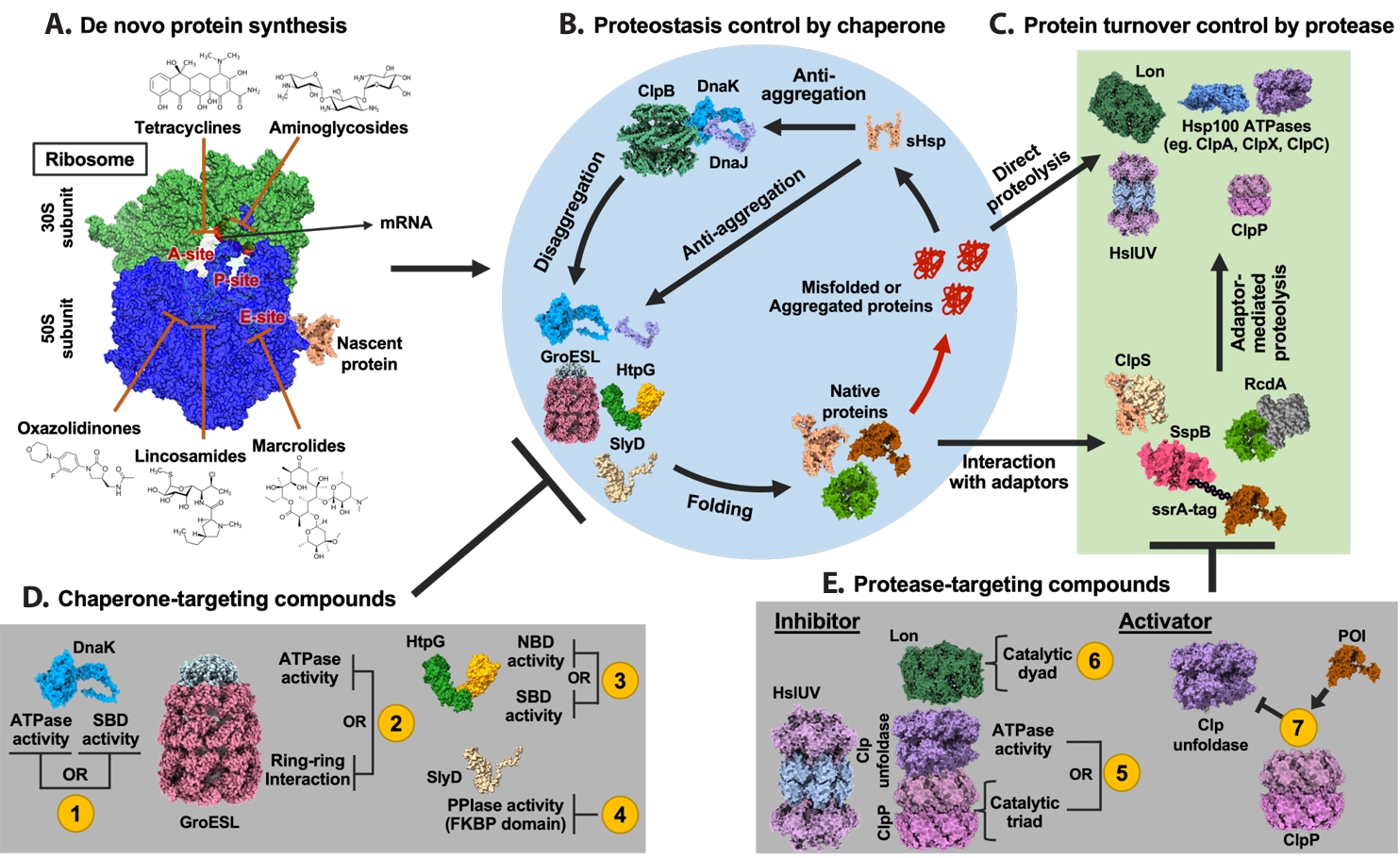
Proteostasis-targeted antibacterial strategies
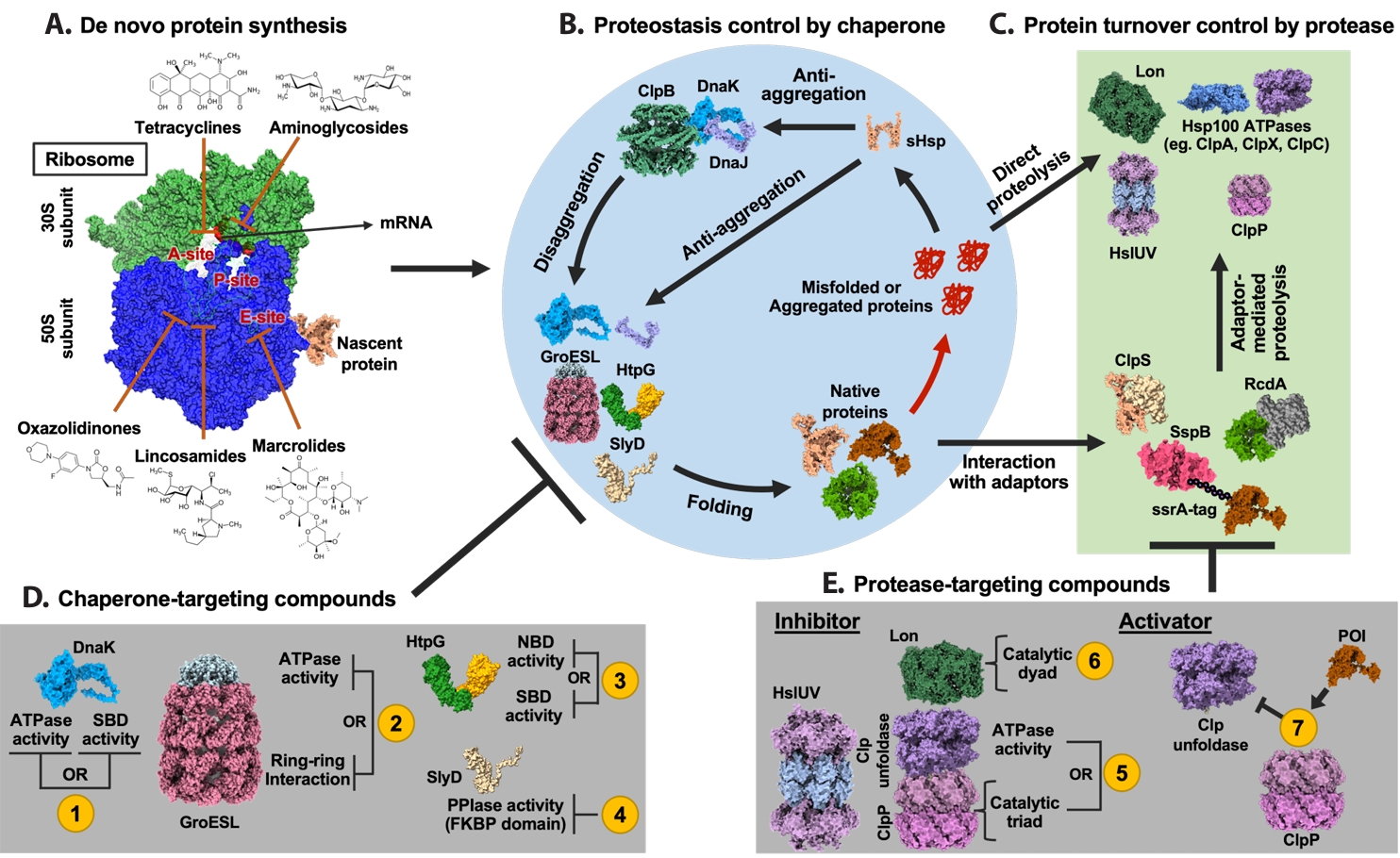
Fig. 1. Overview of antibiotics targeting proteostasis in bacterial cells. From a proteostasis-centered perspective on the life cycle of a protein, (A) existing antibiotics disrupt proteostasis in nascent polypeptides emerging from the ribosome by causing protein misfolding and aggregation. (B, C) The chaperone and protease systems, which control protein quality, protect cells from the effects of antibiotics by restoring disturbed proteostasis. (D) Antibiotics targeting chaperones inhibit their functions in maintaining proteostasis. In addition, (E) antibiotics targeting proteases not only inhibit proteolysis but also perturb the regulation of proteolytic activity, leading to indiscriminate protein degradation. The indicated numbers in (D, E) represent drugs that targeting chaperone or protease, and listed in Table 1 (SBD: substrate binding domain, NBD: nucleotide binding domain, POI: protein of interest).
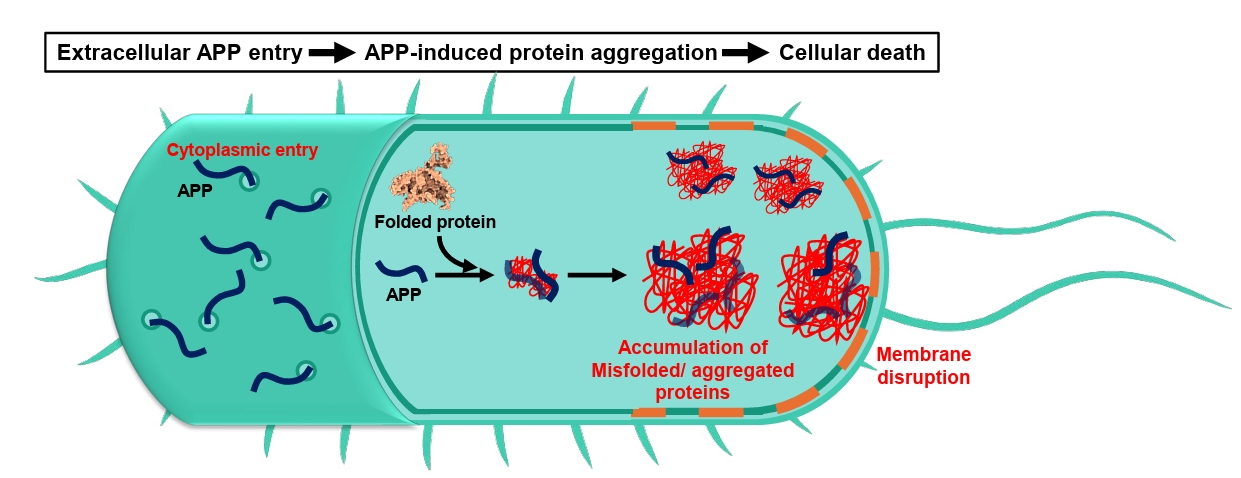
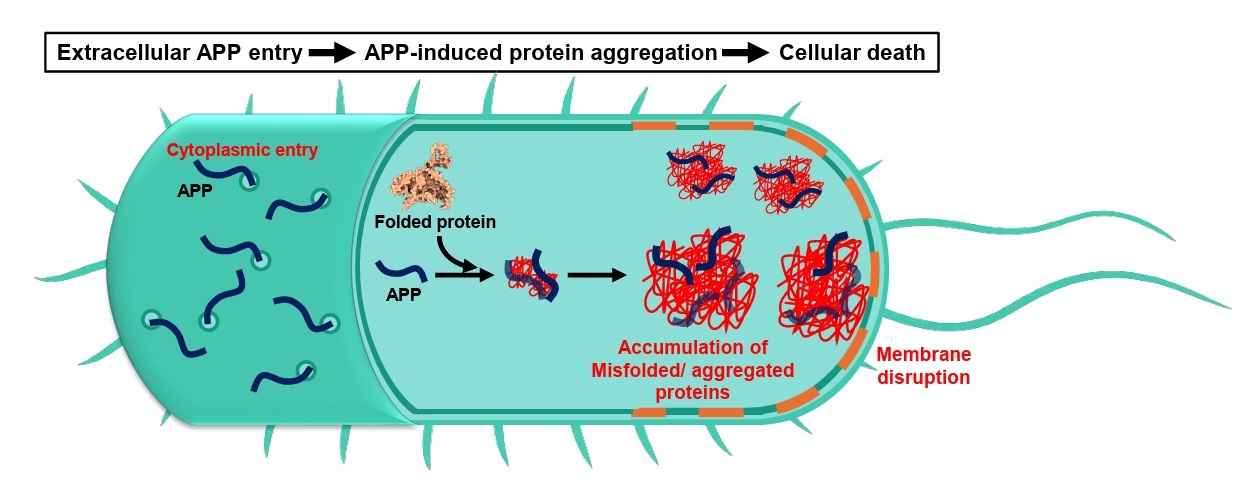
Fig. 2. Mechanistic overview of aggregation-prone peptides (APPs) disrupting bacterial proteostasis.APPs enter bacterial cells and interact with nascent or misfolded proteins, promoting aberrant aggregation. The accumulation of aggregates overwhelms chaperone and protease systems, leading to proteostasis collapse and cell death.
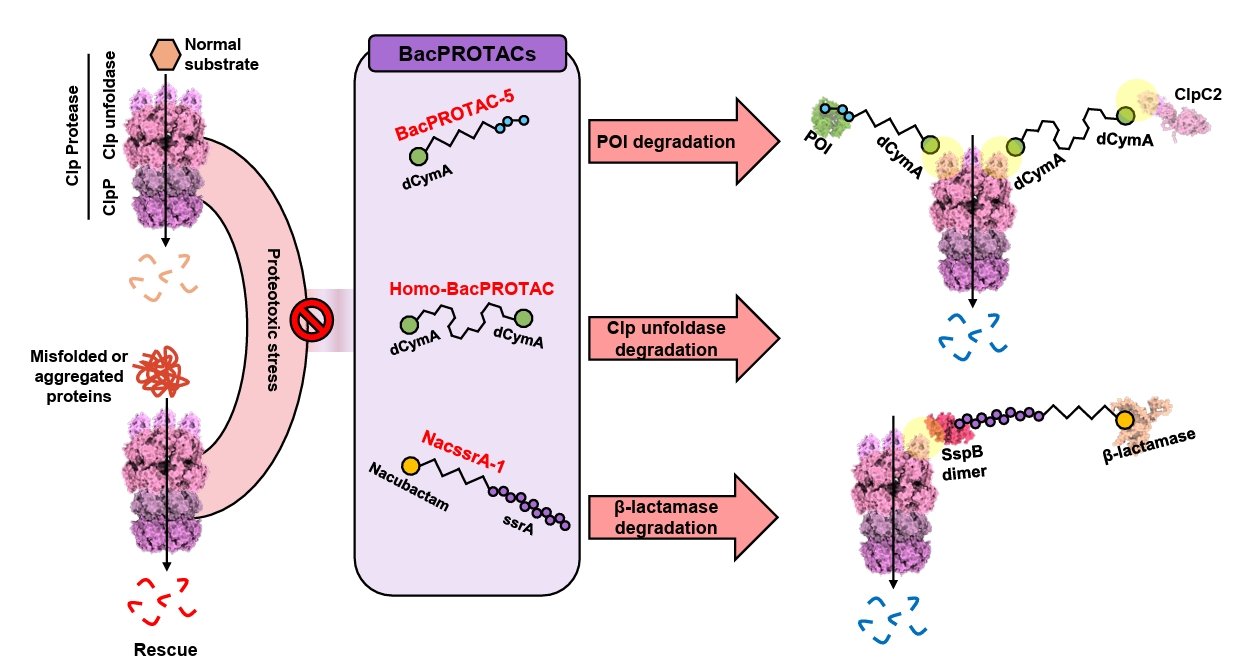
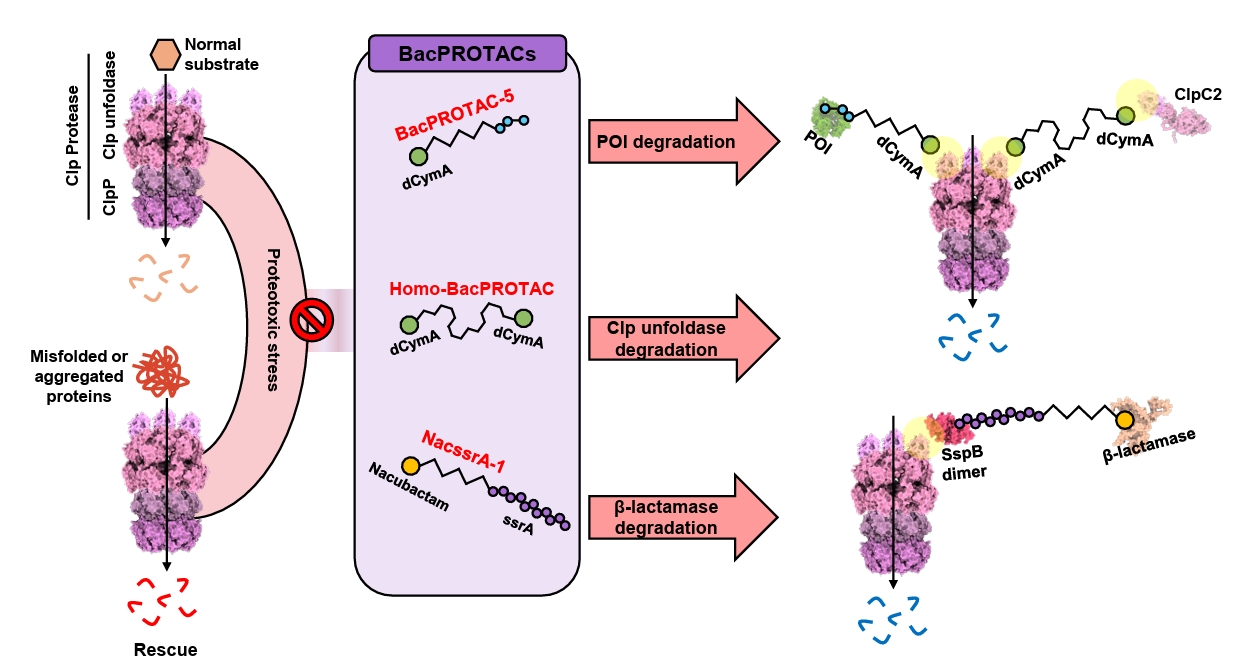
Fig. 3. Dysregulation mechanisms of ClpP protease by BacPROTACs. BacPROTACs trigger abnormal proteolysis by ClpP protease hijacking. BacPROTAC-5 mediates degradation of the POI through bait-prey interaction and shorten physical distance between POI and ClpP protease. The POI-binding ligand in BacPROTAC-5 is shown in blue circles. Homo-BacPROTAC, a modified BacPROTAC, induces disassembly of ClpP protease by Clp unfoldase degradation. NacssrA-1, a Gram-negative bacteria-optimized BacPROTAC, causes degradation of β-lactamase by SspB adaptor system.
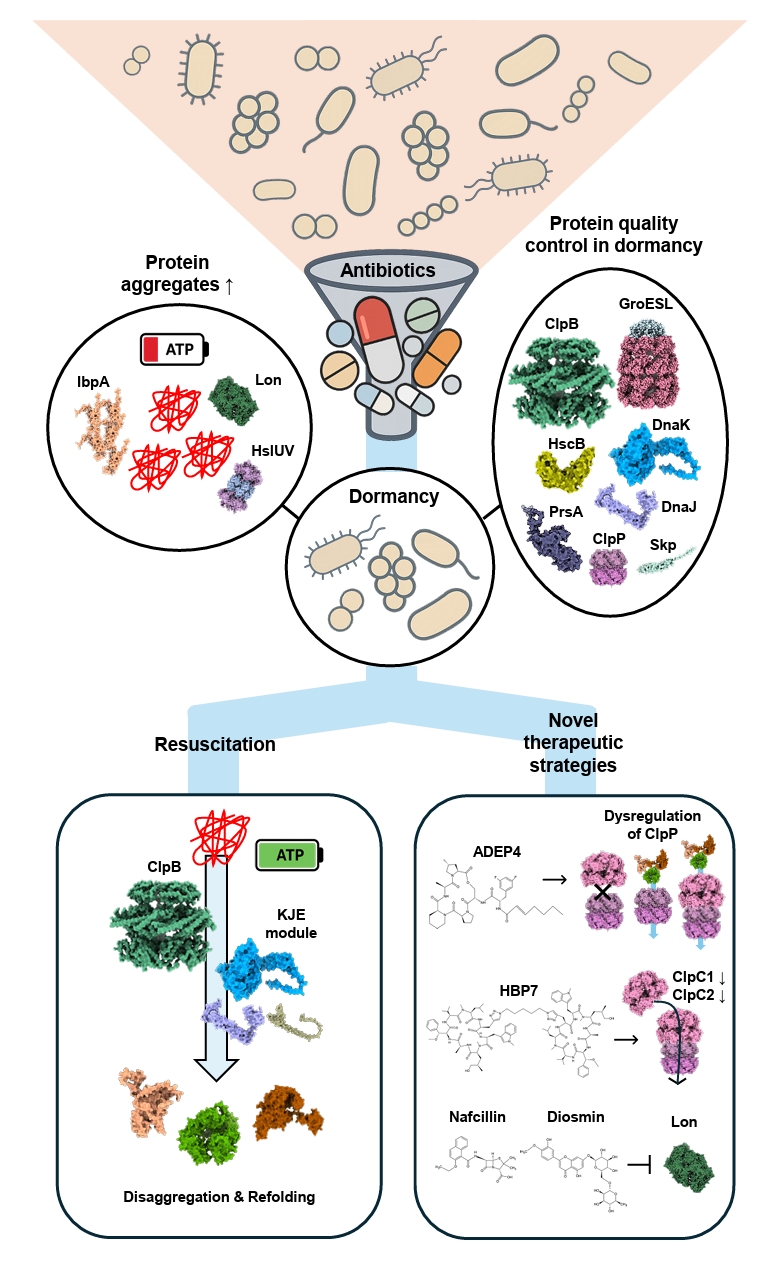
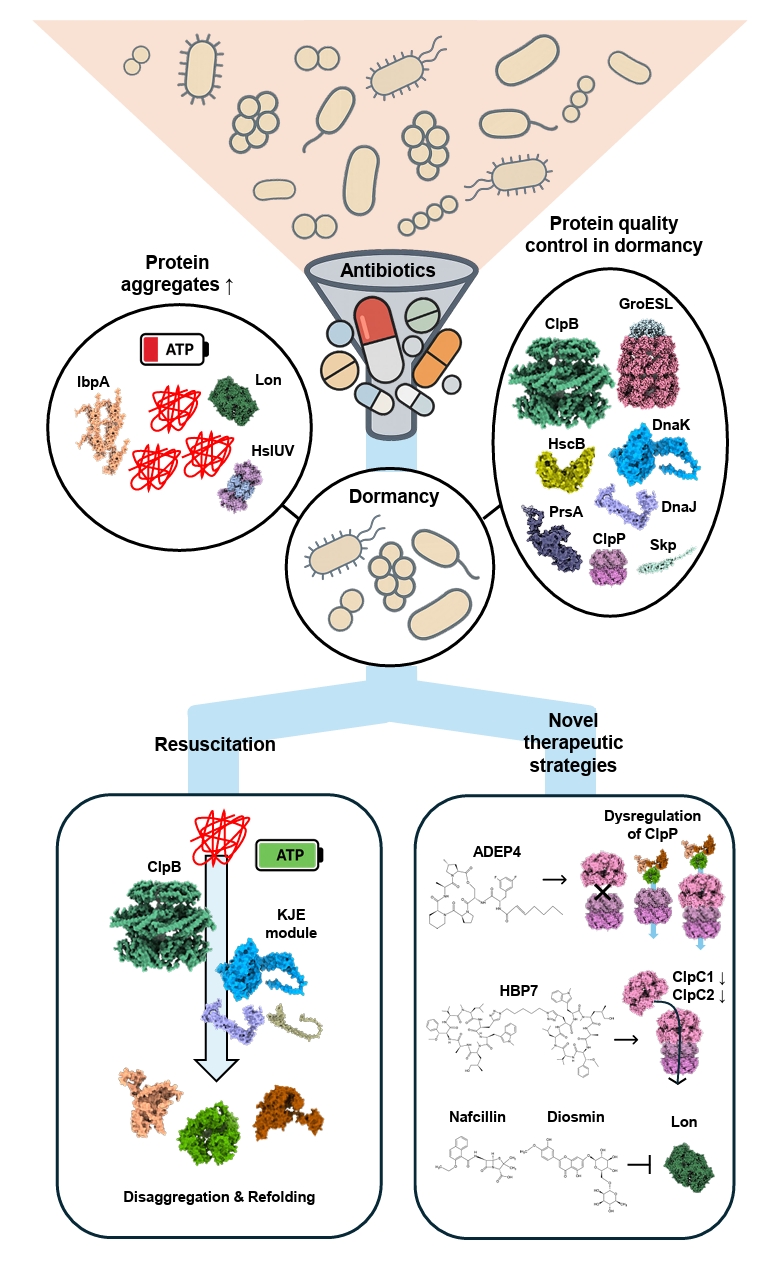
Fig. 4. Flow of dormancy development in terms of proteostasis system. Dormant cells are emerged by incomplete killing by environmental stresses such as antibiotics. Under low ATP level, protein aggresomes are accumulated in the bacterial cell bodies through constant proteostasis system. As a consequence of protein aggresome accumulation, biological activities stop and the bacterial cells are much better defended against environmental stresses. After resolving of the environmental stresses, resuscitation occurs under high ATP level and the bacterial cells resume biological activities by diaggregation and refolding of protein aggresomes. However, proteostasis-targeting antibiotics such as ADEP, BacPROTAC, and nafcillin/diosmin can directly kill the dormant cells by dysregulation or degradation of molecular chaperones/proteases which are pivotal for protein aggresome formation.
Fig. 1.
Fig. 2.
Fig. 3.
Fig. 4.
Proteostasis-targeted antibacterial strategies
| Annotation in Fig. 1 | Name | Target sites | Effects | References |
|---|---|---|---|---|
| 1 | Telaprevir | SBD | Inhibit ATPase and chaperone activities of DnaK by disrupting allosteric coupling via substrate-mimicking interaction with the SBD | |
| BI-88E3 | SBD | Disrupt allosteric interaction within DnaK | ||
| BI-88D7 | ||||
| BI-88B12 | ||||
| Nα-[Tetradecanoyl-(4-aminomethylbenzoyl)]-l-isoleucine | SBD | Inhibit the DnaK-mediated catalysis of cis/trans isomerization | ||
| Drosocin | SBD and C-terminal region | Inhibit ATPase and chaperone activities of DnaK by disrupting allosteric coupling via substrate-mimicking interaction with the SBD | ||
| Pyrrhocoricin | ||||
| Apidaecin 1a | ||||
| Bac-7 | SBD | Impair DnaK-mediated refolding of denatured proteins | ||
| CHP-105 | Unknown | Synergistic effect with levofloxacin via DnaK inhibition | ||
| PET-16 | NBD | Bind to ADP-bound DnaK and inhibit DnaK-client interaction | ||
| 2 | Compound 8 | Unknown | Bactericidal activity against Escherichia coli | ( |
| Compound 18 | ||||
| Hydroxquinolines | Unknown | Inhibit GroEL/ES activity by binding to the apical domain via a noncanonical, non-hydrophobic interaction | ||
| Nifuroxazide | Apical domain | Inhibit the GroEL/ES folding cycle through apical domain binding | ||
| Bis-sulfonamido-2-phenylbenzoxazole | Apical domain | Inhibit ring-ring interaction of GroEL, compound derived from sulfonamido-2-arylbenzoxazole | ||
| Mizoribine | Equatorial domain | Inhibit ATPase activity of GroEL | ||
| 3 | BX-2819 | N-terminal domain (NTD) | Inhibit ATPase activity of HtpG | |
| HS-291 | BX-2819 derivative binds N-terminal ATP-binding pocket of HtpG, light-activated, triggers ROS generation | |||
| Polymixn B | Inhibit HtpG chaperone function without affecting its ATPase activity | |||
| 4 | Cu2+-anthracenyl terpyridine complex | FKBP domain | Inhibit SlyD PPIase activity | |
| 5 | β-Lactone | Active site serine in ClpP | Form covalent bond with the catalytic serine of ClpP and inhibit its proteolytic activity | |
| Phenyl esters | ||||
| Peptide boronic acids | ||||
| Clipibicyclene | ||||
| PCA | G107, V88, I81 in ClpP | Inhibit ClpP proteolytic activity | ||
| CA | M31, G33 in ClpP | Inhibit ClpP proteolytic activity by binding to active site residues M31 and G33 | ||
| Ameniaspirol | ClpXP, HslUV (ClpYQ) complex | Competitively inhibit ClpXP and HslUV (ClpYQ) | ||
| CymA | NTD of ClpC1 | Induce formation of large ClpC1 supercomplexes and activate associated ClpP protease via N-terminal domain binding | ||
| Lassomycin | Stimulate ClpC1 ATPase activity while inhibiting associated ClpP proteolytic activity | |||
| Ecumicin | Stimulate ClpC1 ATPase activity while inhibiting associated ClpP proteolytic activity | |||
| 6 | Nafcillin | Proteolytic active site | Interact with the binding pocket of Lon protease via hydrogen bonding; not reported as antibiotics | |
| Diosmin | ||||
| MG262 | Form covalent bond with catalytic serine of Lon protease and inhibit its proteolytic activity | |||
| Molecule 11 | Unknown | Inhibition of Lon protease proteolytic activity | ||
| 7 | ACP | Apical pocket | Enhance ClpP proteolytic activity independent of ATPase | |
| ADEP | Junction of the ClpP subunits | Bind to ClpP tetradecamer and enhance its proteolytic activity |
| Chaperone target | Representative inhibitors | Antibiotic partners | Model organism(s) | Reported effect | References |
|---|---|---|---|---|---|
| DnaK/Hsp70 | Telaprevir (HCV protease inhibitor, repurposed) | Kanamycin, Streptomycin, Rifampicin | M. smegmatis, M. tuberculosis | Lowered MIC50 of aminoglycosides; reduced rifampicin resistance frequency; enhanced growth inhibition under heat/proteotoxic stress | |
| DnaK/Hsp70 | Proline-rich antimicrobial peptides (PrAMPs; e.g., pyrrhocoricin, synthetic dimers) | β-Lactams, Quinolones | E. coli, Salmonella spp. | Synergistic killing via disruption of DnaK folding function; accumulation of proteotoxic stress | |
| GroEL/ES | Hydroxybiphenylamide derivatives | Aminoglycosides (e.g., gentamicin) | Staphylococcus aureus | Impaired folding capacity; reduced biofilm survival; enhanced aminoglycoside bactericidal activity |
| Peptide ID | Target bacteria | Sequence feature | Aggregation morphology | Mammalian toxicity | References |
|---|---|---|---|---|---|
| C30 | MRSA | APR |
Amyloid-like | Low | |
| C29 | MRSA | APR + Arg flanks | Amyloid-like | Low | |
| Hit50 | MRSA | APR + Arg flanks | Amorphous inclusion bodies | Low | |
| Multiple APRs (263 tested) | S. aureus, E. faecalis, MRSA, Vancomycin-resistant Enterococcus | Tandem APR repeats, charged gatekeepers | Amyloid and amorphous aggregation | Low |
Table 1. Compounds targeting chaperones and proteases, and their effects described in Fig. 1
Table 2. Chaperone inhibitors that potentiate antibiotic efficacy by disrupting bacterial proteostasis
Table 3. Representative aggregation-prone peptides (APPs) and their antibacterial activity
APR; aggregation-prone region.
Table 1.
Table 2.
Table 3.
TOP


