Skip Navigation
Skip to contents

Journal of Microbiology : Journal of Microbiology

OPEN ACCESS
SEARCH
Search

Articles

Page Path
HOME > J. Microbiol > Volume 64(11); 2026 > Research article
Research article
Activation of the MazF toxin induces a translation-associated transcriptional response in Pseudomonas putida
Sooyeon Lee†, Seorim Ryu†, Juhyun Kim*orcid
Journal of Microbiology 2026;64(11):e2609013.
DOI: https://doi.org/10.71150/jm.2609013
Published online: November 30, 2026

School of Life Sciences, BK21 FOUR KNU Creative BioResearch Group, Kyungpook National University, Daegu 41566, Republic of Korea

*Correspondence Juhyun Kim juhyunkim@knu.ac.kr
†These authors contributed equally to this work.
This is an Open Access article distributed under the terms of the Creative Commons Attribution 4.0 International License (CC BY 4.0) (https://creativecommons.org/licenses/by/4.0/) which permits unrestricted use, distribution, and reproduction in any medium, provided the original work is properly cited.
• Received: September 11, 2026   • Revised: October 12, 2026   • Accepted: October 14, 2026

© 2026 The Authors. Published under licence by The Microbiological Society of Korea.

This is an Open Access article distributed under the terms of the Creative Commons Attribution 4.0 International License (CC BY 4.0) (https://creativecommons.org/licenses/by/4.0/) which permits unrestricted use, distribution, and reproduction in any medium, provided the original work is properly cited.

  • 48 Views
  • 2 Download
  • Pseudomonas putida is a promising microbial chassis, yet strategies to control the balance between host functions and heterologous gene expression remain limited. Selective mRNA degradation by MazF offers a potential strategy to reduce translational demand from competing transcripts while preserving engineered genes resistant to MazF cleavage. Here, we investigated how P. putida responds to MazF-mediated RNA cleavage and characterized its potential effects on heterologous gene expression. Unlike the pronounced growth inhibition observed in Escherichia coli, P. putida exhibited substantial tolerance to MazF activation. Transcriptomic analysis revealed a conserved translation-associated transcriptional response involving ribosome maturation, RNA modification, and protein quality control, together with distinct nutrient-dependent physiological adaptations. To determine whether selective RNA cleavage could be exploited for heterologous expression, MazF recognition sites in a GFP reporter were removed by synonymous codon replacement. The MazF-resistant reporter showed only a 21.9% reduction in expression upon MazF activation in rich medium, compared with 63.4% for the MazF-sensitive reporter, and exhibited a 16% increase in expression under nutrient-limited conditions. These findings indicate that P. putida accommodates MazF-mediated RNA cleavage through translation-associated transcriptional and nutrient-dependent responses and that transcript protection can favor heterologous gene expression during MazF activation. This work provides a physiological basis for developing MazF-mediated RNA degradation as a strategy for controlling cellular resource utilization in P. putida.
Pseudomonas putida is a metabolically versatile bacterium capable of enduring diverse environmental stresses (Nelson et al., 2002; Nikel et al., 2015). In addition, the strain lacks major virulence factors, antibiotic resistance determinants, and other genetic elements associated with pathogenicity or environmental risk (Belda et al., 2016; Nelson et al., 2002). Owing to these properties, P. putida has emerged as an attractive microbial chassis for diverse biotechnological applications, particularly for the production of value-added chemicals and heterologous proteins (Nikel et al., 2015). However, efficient engineering of this robust host still requires a better understanding and control of how limited cellular resources are allocated between native and engineered functions.
Cellular resources required for gene expression, including RNA polymerases and ribosomes, are inherently finite, creating competition between native cellular functions and engineered functions encoded by synthetic circuits (Ceroni et al., 2015; Gyorgy et al., 2015; Qian et al., 2017; Weisse et al., 2015). Growing evidence suggests that competition for translational resources represents a major source of such resource constraints, making the redirection of translational capacity toward selected transcripts an attractive strategy for chassis engineering (Kim et al., 2024; Vogeleer et al., 2024). In Escherichia coli, MazF, a sequence-specific endoribonuclease, has been exploited to selectively degrade cellular transcripts while allowing appropriately recoded transcripts to remain available for translation (Venturelli et al., 2017). This strategy redirects translational resources toward MazF-resistant transcripts, thereby enhancing the expression level of target genes (Morris et al., 2021).
MazF is the toxin component of the MazEF type II toxin–antitoxin system and is normally neutralized by its cognate antitoxin MazE in bacteria (Fraikin et al., 2020; Zhang et al., 2003, 2005). Under stress conditions, degradation of the labile MazE antitoxin releases MazF, allowing it to cleave cellular RNAs at specific sequence motifs and consequently suppress cellular translation (Culviner and Laub, 2018; Yamaguchi and Inouye, 2011). In E. coli, MazF preferentially cleaves single-stranded RNA at ACA sequences, and its activation results in pronounced inhibition of protein synthesis and cellular growth (Culviner and Laub, 2018; Yamaguchi and Inouye, 2011). This sequence-specific activity, however, also provides a means to selectively preserve the translation of engineered transcripts by eliminating MazF recognition sites from their coding sequences. Thus, MazF-mediated RNA cleavage provides a unique mechanism through which cellular translational resources can potentially be redirected from endogenous transcripts toward selected synthetic functions.
However, the physiological consequences of MazF activation in P. putida remain poorly understood. A previous study showed that P. putida MazF functions as an mRNA interferase that preferentially cleaves RNA at UAC sequences (Miyamoto et al., 2016). Nevertheless, how P. putida responds to MazF-mediated RNA cleavage at the cellular level has not been systematically investigated. Moreover, it remains unclear whether MazF activation causes the pronounced growth and translational inhibition observed in E. coli, or whether the physiological robustness of P. putida enables additional mechanisms to mitigate MazF toxicity. Understanding these responses is important not only for defining the physiological role of the MazEF system in P. putida, but also for determining whether MazF-mediated selective RNA degradation can be exploited to reallocate cellular resources toward engineered functions.
In this study, we characterized the physiological response of P. putida to MazF activation and explored its potential as a strategy for inducing transcriptional response. We examined how P. putida responds to MazF-mediated RNA cleavage under different growth conditions. Our results revealed that P. putida exhibited substantial tolerance to MazF activation through MazE-dependent neutralization, together with a broader translation-associated transcriptional response. Furthermore, removal of MazF recognition sites from a target transcript enabled its preferential expression during MazF activation. These findings highlight the potential of MazF as a tool for driving transcriptional response toward heterologous protein production in P. putida.
Bacterial culture conditions
E. coli was cultivated at 37°C in LB medium (BD, USA) for plasmid propagation and for comparative analysis of MazF activity. P. putida strains were grown at 30°C in either LB or M9 minimal medium (Sigma-Aldrich, USA) supplemented with 15 mM succinate as the sole carbon source. Antibiotics were added as required for plasmid maintenance: kanamycin (Km, 50 µg/ml), ampicillin (Amp, 500 µg/ml), and gentamicin (Gm, 20 µg/ml). Where indicated, 3-methylbenzoate (3MBz), isopropyl β-D-1-thiogalactopyranoside (IPTG), or N-(β-ketocaproyl)-L-homoserine lactone (AHL) was added to the cultures at the specified concentrations.
Construction of bacterial strains
Bacterial strains, plasmids, and primers used for the strain construction are listed in Tables S2 and S3. General methods for DNA handling followed standard protocols (Sambrook and Russell, 2001). Plasmid DNA was extracted using the ExprepTM Plasmid SV Kit (GeneAll, Korea) according to the manufacturer’s protocol. The mazEF operon (PP_0770–PP_0771) was deleted from the chromosome of P. putida KT2440 using a markerless recombination strategy as described previously (Martínez‐García and de Lorenzo, 2011). Briefly, 600 bp regions upstream (Ts1) and downstream (Ts2) of the mazEF locus were PCR-amplified using Phusion High-Fidelity DNA Polymerase (New England Biolabs, USA). The Ts2 forward primer contained a short homologous extension overlapping with the 3′ end of the Ts1 fragment, allowing the two fragments to be fused via overlap extension PCR. The fused Ts1–Ts2 product was digested with BamHI and HindIII (New England Biolabs, USA) and cloned into the plasmid pEMG. The resulting construct was introduced into E. coli SY327 λpir for plasmid propagation and then transferred into P. putida KT2440 by electroporation. The first recombination event was verified by colony PCR. To induce double-strand breaks (DSBs), pSW-I carrying the I-SceI endonuclease under control of a 3MBz-inducible promoter, was introduced into the strain. Cultures were grown in the presence of 15 mM 3MBz and ampicillin (Amp, 500 µg/ml) to induce I-SceI expression and promote site-specific cleavage. The resulting free DNA ends facilitated homologous recombination, leading to the seamless deletion of mazEF. Recombinants that had lost the kanamycin (Km) resistance marker were identified by replica plating onto LB agar plates containing Amp (500 µg/ml) with or without Km (50 μg/ml). Plasmid curing was subsequently performed by serial passaging in an antibiotic-free LB medium. Deletion of mazEF was verified by colony PCR using GoTaq® Green Master Mix (Promega, USA) and primers Ts1 forward and Ts2 reverse.
To construct the 3MBz-inducible MazF expression circuit, the mazF gene was amplified using the primer pair MazF-F/-R, digested with BamHI and HindIII, and cloned into the corresponding restriction sites of pSEVA658, yielding pSEVA658-MazF. A MazF-resistant gfp coding sequence lacking all eight 5′-TAC-3′ triplets, which correspond to the MazF recognition site 5′-UAC-3′ in the transcript, was chemically synthesized by Macrogen (Korea) without altering the encoded amino acid sequence. The synthesized gfp fragment was amplified using the primer pair GFP-P-F/-R. The resulting amplicon and pSEVA234 were digested with BamHI and HindIII, purified, and ligated to generate pSEVA234-GFP-P.
To construct the AHL-inducible GFP expression circuit, the expression module including LuxR-Plux fragment was amplified from pSEVA63-Hvio using the primer pair luxR-F/luxR-R, digested with PacI and BamHI. This fragment was used to replace the LacIq/Ptrc cassette at the corresponding restriction sites of pSEVA234-GFP-N, yielding pSEVA231-Plux-GFP-N. A MazF-resistant LuxR coding sequence lacking MazF recognition sites was chemically synthesized by Macrogen (Korea). The synthesized protected LuxR-Plux fragment was amplified using the primer pair luxR-pro-F/luxR-pro-R. The resulting amplicon and pSEVA234-GFP-P were digested with PacI and BamHI, purified, and ligated to replace the LacIq/Ptrc cassette and generate pSEVA231-Plux-GFP-P.
Measurement of bacterial growth and reporter gene expression
For growth profiling, overnight cultures of E. coli and P. putida grown in LB or M9 medium were diluted 1:100 into 1 ml of the corresponding fresh medium in 24-well flat-bottom cell culture plates (SPL Life Sciences, SPL.30024, Korea). M9 medium was supplemented with 15 mM succinate. Growth was monitored for 18 h at OD600 using a multi-well plate reader (Synergy H1, BioTek Instruments, USA).
Reporter strains carrying GFP expression systems were grown overnight in either LB or M9 minimal medium supplemented with 15 mM succinate, diluted 100-fold into fresh medium containing the appropriate inducers, and incubated for 18 h under the specified conditions. GFP fluorescence was quantified using a microplate reader (BioTek Synergy H1, Agilent, USA) with excitation and emission wavelengths of 488 and 525 nm, respectively. The cell density was determined by measuring the optical density at 600 nm to normalize the fluorescence intensity.
RNA preparation and sequencing analysis
Pseudomonas putida ΔmazEF strains harboring either pSEVA658 or pSEVA658-MazF were grown overnight in LB medium at 30°C with shaking. Cultures were diluted 1:100 into 20 ml of fresh LB medium and grown in 100 ml Erlenmeyer flasks until an optical density at 600 nm (OD600) of 0.3 was reached. For M9 minimal medium (supplemented with 15 mM succinate), overnight cultures were washed twice with fresh M9 medium before inoculation and cultivated using the same conditions as for LB. Cell density was measured using a spectrophotometer (EMCLAB, EMC11S-V, Germany). Upon reaching OD600 = 0.3, 1 mM of 3MBz was added to the samples for 15 min.
Prior to RNA extraction, 3 ml of each culture was transferred into a 15 ml conical tube (SPL Life Sciences, Korea; Cat. No. 50015), and 300 μl of stop solution (5% water-saturated phenol in ethanol, pre-chilled at 4°C) was immediately added. The mixture was vortexed and centrifuged at 1,320 × g for 15 min at 4°C. Supernatants were discarded, and the cell pellets were stored at −80°C. Each biological sample was prepared in two independent replicates. Total RNA was extracted using the miRNeasy Mini Kit (Qiagen, Germany, Cat. No. 217004) combined with on-column DNase treatment (RNase-Free DNase Set, Qiagen, Cat. No. 79254), following the manufacturer’s protocol.
Total RNA was subjected to ribosomal RNA depletion using the NEBNext rRNA Depletion Kit (Bacteria) (New England Biolabs, USA, Cat. No. E7850S). Sequencing libraries were prepared using the TruSeq Stranded Total RNA Library Prep Gold Kit (Illumina, USA, Cat. No. 20020598) according to the manufacturer's protocol. Paired-end sequencing (2 × 101 bp) was performed on an Illumina platform by Macrogen (Korea). Raw sequencing reads were evaluated using FastQC (v0.11.7). Adapter sequences and low-quality bases were trimmed using Trimmomatic (v0.38) with parameters set to LEADING:3, TRAILING:3, SLIDINGWINDOW:4:15, and MINLEN:36 (Bolger et al., 2014).
The trimmed reads were mapped to the P. putida KT2440 reference genome (ASM756v2, NCBI RefSeq accession: GCF_000007565.2) using Bowtie (v1.1.2) (Langmead et al., 2009). Gene expression levels were quantified as raw read counts using HTSeq (v0.10.0) (Anders et al., 2015), while CPM values were calculated for transcript abundance normalization and visualization. To characterize transcriptomic changes associated with MazF expression, differential gene expression was assessed between P. putida ΔmazEF pSEVA658 (control) and P. putida ΔmazEF pSEVA658-MazF, with two biological replicates per condition (n = 2 per group). Analysis of differentially expressed genes (DEGs) was conducted using the edgeR package in R (Robinson et al., 2010; Schurch et al., 2016). Genes with an absolute fold change ≥ 2, an adjusted p-value < 0.05, and a count per million (CPM) ≥ 5 were considered significantly differentially expressed. Gene Ontology (GO) enrichment analysis of the significant DEGs was performed using the topGO package with Fisher’s exact test and the weight01 algorithm. Fold enrichment for each GO term was calculated as the ratio of the observed number of significant DEGs annotated to the term to the number expected by chance under the background gene set, using the topGO package (weight01 algorithm); fold enrichment values greater than 1 indicate overrepresentation relative to the background. Benjamini–Hochberg-adjusted p-values (p-adj) are reported. GO terms annotated to at least 50 genes in the P. putida KT2440 genome were included in Table S1.
P. putida is intrinsically tolerant to its cognate MazF toxin
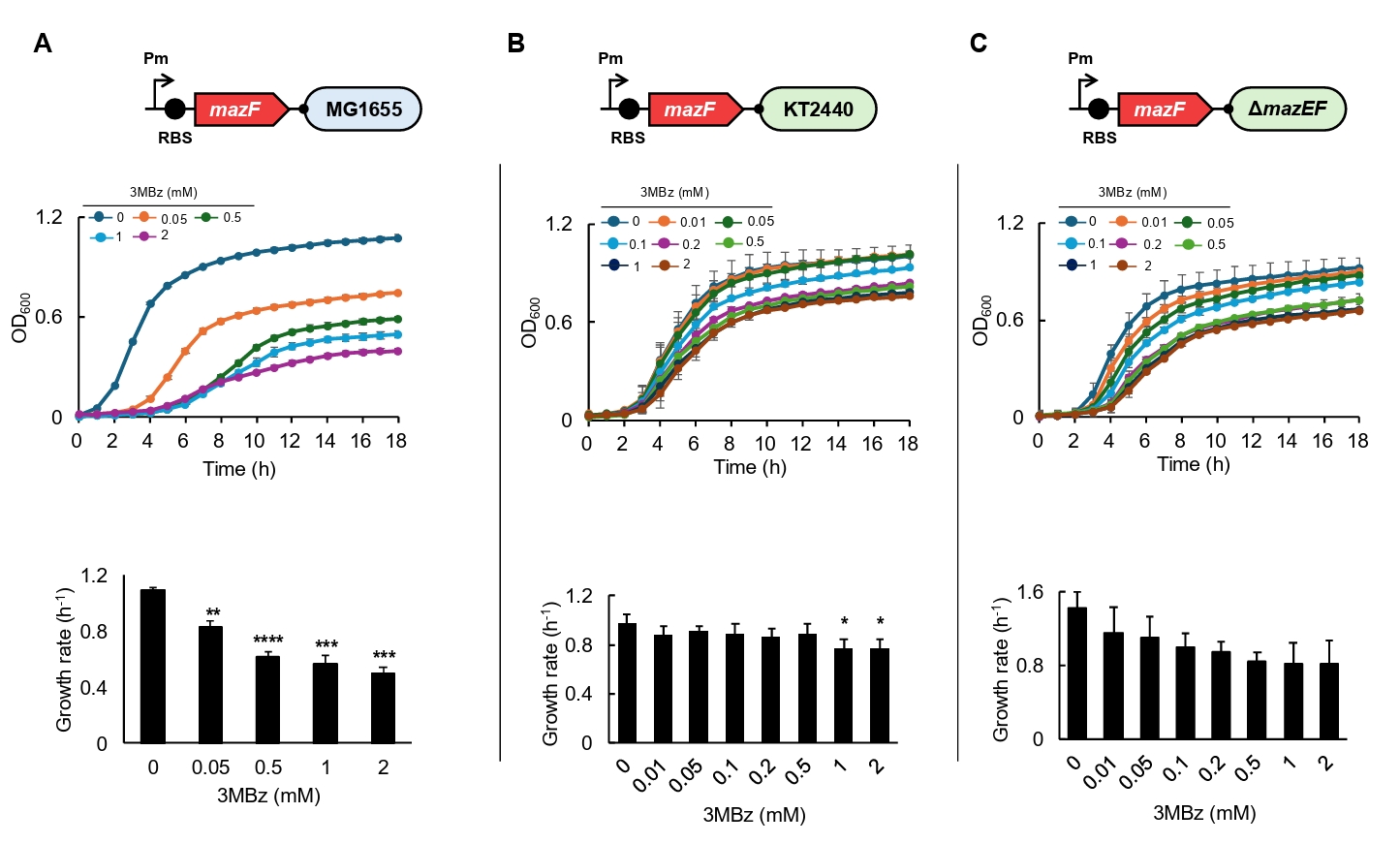
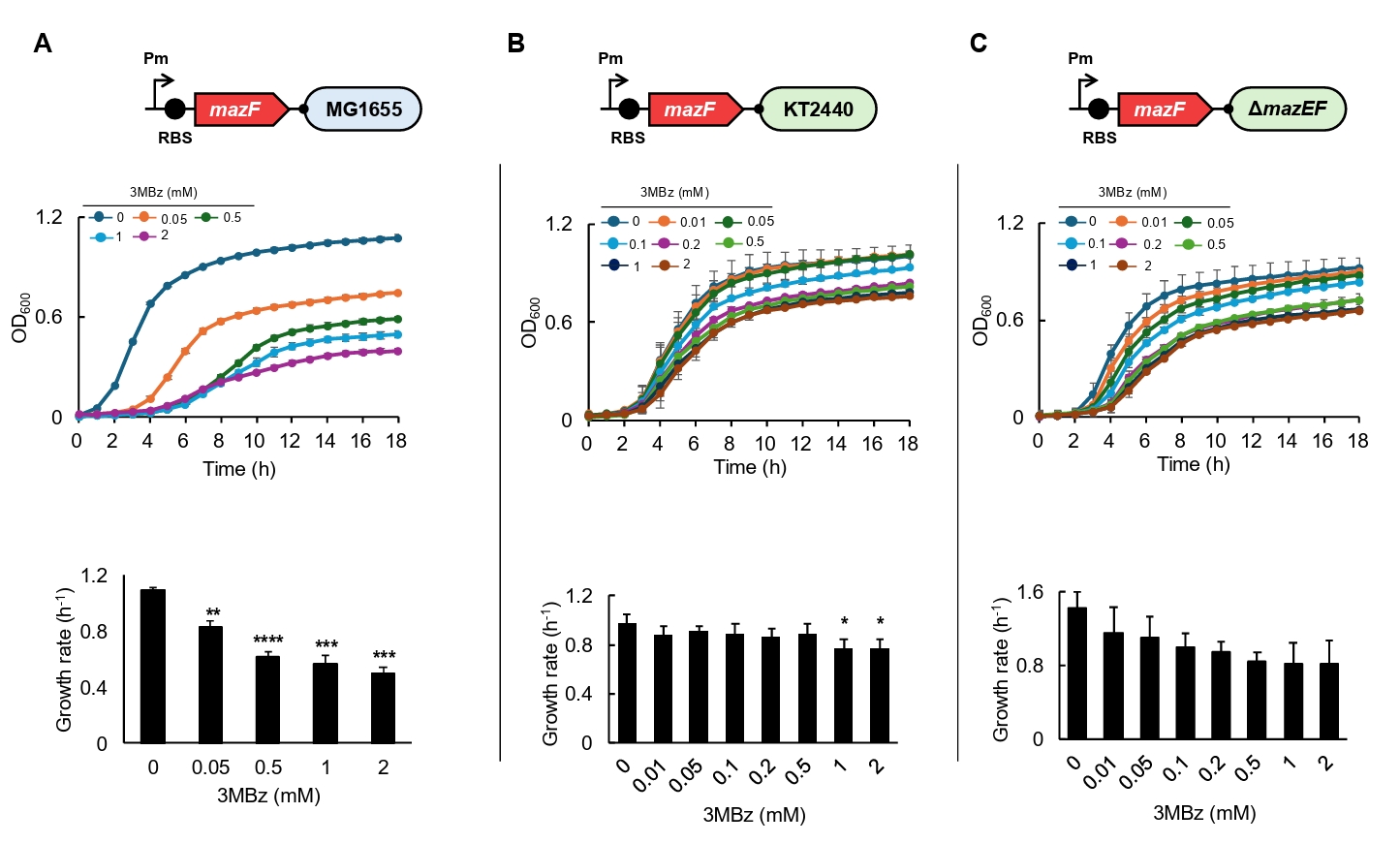
To investigate how bacterial cells respond to MazF-mediated RNA cleavage, we first constructed an inducible expression system for the P. putida mazF gene. The mazF coding sequence was cloned into pSEVA658 under the control of the 3MBz-inducible XylS/Pm system, yielding pSEVA658-MazF. The resulting construct was introduced into P. putida KT2440 and E. coli MG1655, allowing us to compare the physiological consequences of MazF activation in its native and heterologous hosts. When the E. coli MG1655 strain carrying the MazF expression system was grown in LB medium with increasing concentrations of 3MBz, MazF induction progressively impaired cellular growth (Fig. 1A). Increasing the inducer concentration prolonged the lag phase and reduced the maximum cell density reached after 18 h. Consistent with these changes, the specific growth rate also declined with increasing MazF expression (Fig. 1A), establishing a clear dose-dependent response to MazF activation. These observations demonstrate that the P. putida-derived MazF is functionally active in E. coli and imposes a dose-dependent fitness cost, suggesting that E. coli lacks an effective mechanism to counteract its ribonuclease activity. In contrast to the pronounced growth inhibition observed in E. coli, P. putida KT2440 was substantially less affected by MazF induction. When cells carrying the MazF expression system were grown in LB medium with increasing concentrations of 3MBz, no marked changes in the overall growth profile were observed (Fig. 1B). Although the maximum cell density at 18 h decreased by approximately 20% at 3MBz concentrations above 0.2 mM, neither the lag phase nor the specific growth rate was substantially affected (Fig. 1B). These results suggested that the endogenous MazE antitoxin might contribute to buffering the physiological effects of its cognate MazF toxin. To examine MazF toxicity in the absence of this potential buffering effect, the chromosomal mazEF operon was deleted, and the inducible MazF expression system was introduced into the resulting ΔmazEF strain (Fig. S1). Under the same growth conditions, MazF induction caused a modest reduction in final cell density and a prolonged lag phase compared with the WT strain, whereas the specific growth rate remained largely comparable (Fig. 1C). The substantial tolerance retained by the ΔmazEF strain suggests that P. putida possesses additional mechanisms that mitigate the physiological effects of MazF beyond direct neutralization by MazE.
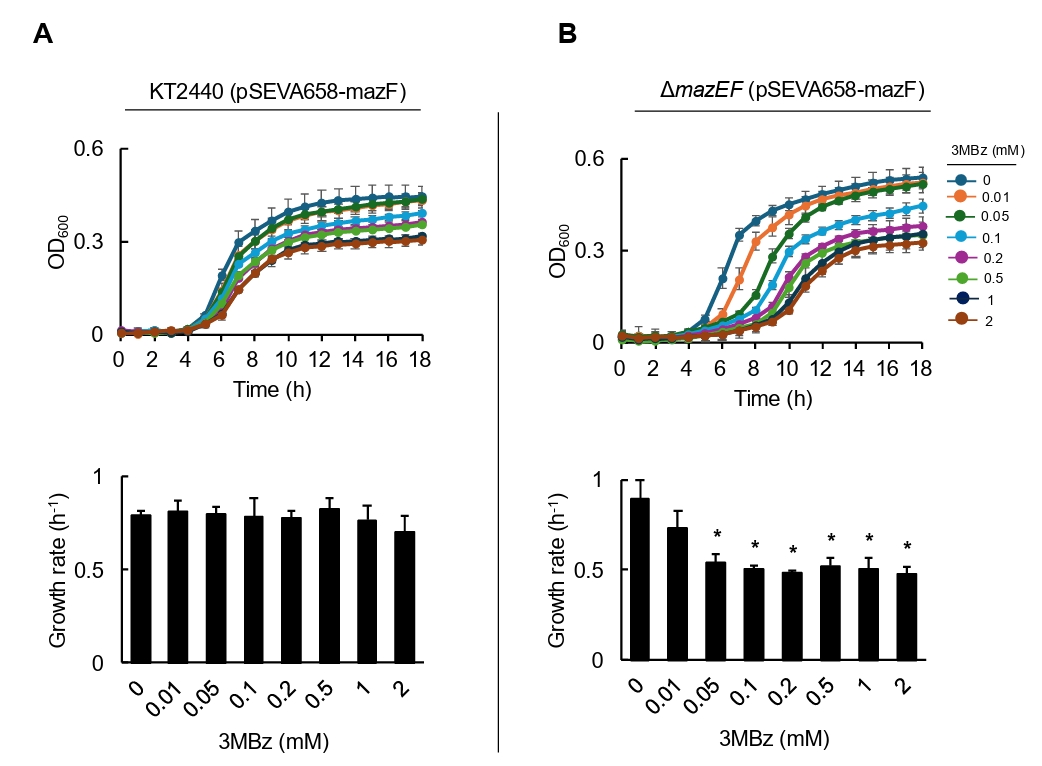
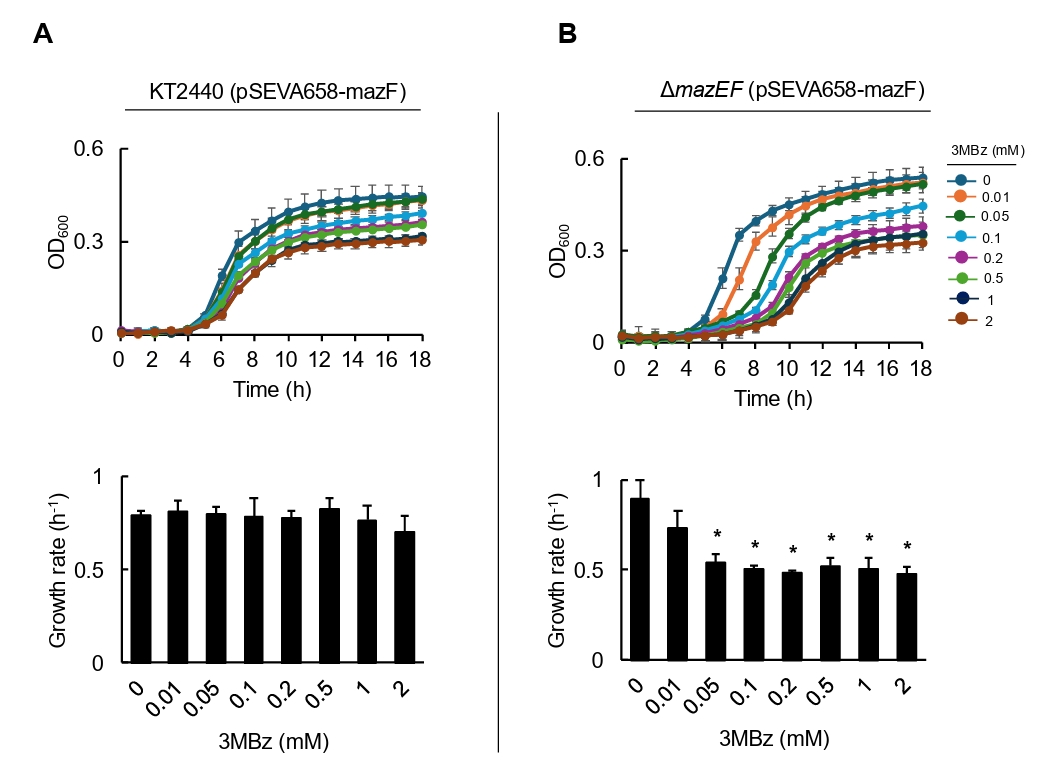
We further examined whether the response to MazF was influenced by nutrient availability by growing the strains in M9 minimal medium containing 15 mM succinate as the sole carbon source. While MazF induction had little effect on the growth of the WT strain, the ΔmazEF mutant displayed a progressively prolonged lag phase and reduced maximum cell density with increasing 3MBz concentrations (Fig. 2). Consistent with this increased sensitivity, the specific growth rate of the mutant was significantly reduced at 3MBz concentrations of 0.05 mM and above (Fig. 2B). These results indicate that the substantial MazF tolerance retained by the ΔmazEF strain in LB medium was markedly diminished under nutrient-limited conditions. Thus, although P. putida possesses MazE-independent mechanisms that can mitigate the physiological effects of MazF in rich medium, the effectiveness of these mechanisms appears to depend strongly on nutrient availability. In M9 minimal medium, the increased sensitivity of the ΔmazEF strain also revealed a greater contribution of the endogenous mazEF module to MazF tolerance. This condition-dependent tolerance raised the broader question of how P. putida accommodates MazF-mediated RNA cleavage at the cellular level. We therefore examined the genome-wide transcriptional response to MazF activation under both nutrient conditions.
P. putida mounts a conserved translation-associated transcriptional response to MazF-mediated RNA cleavage
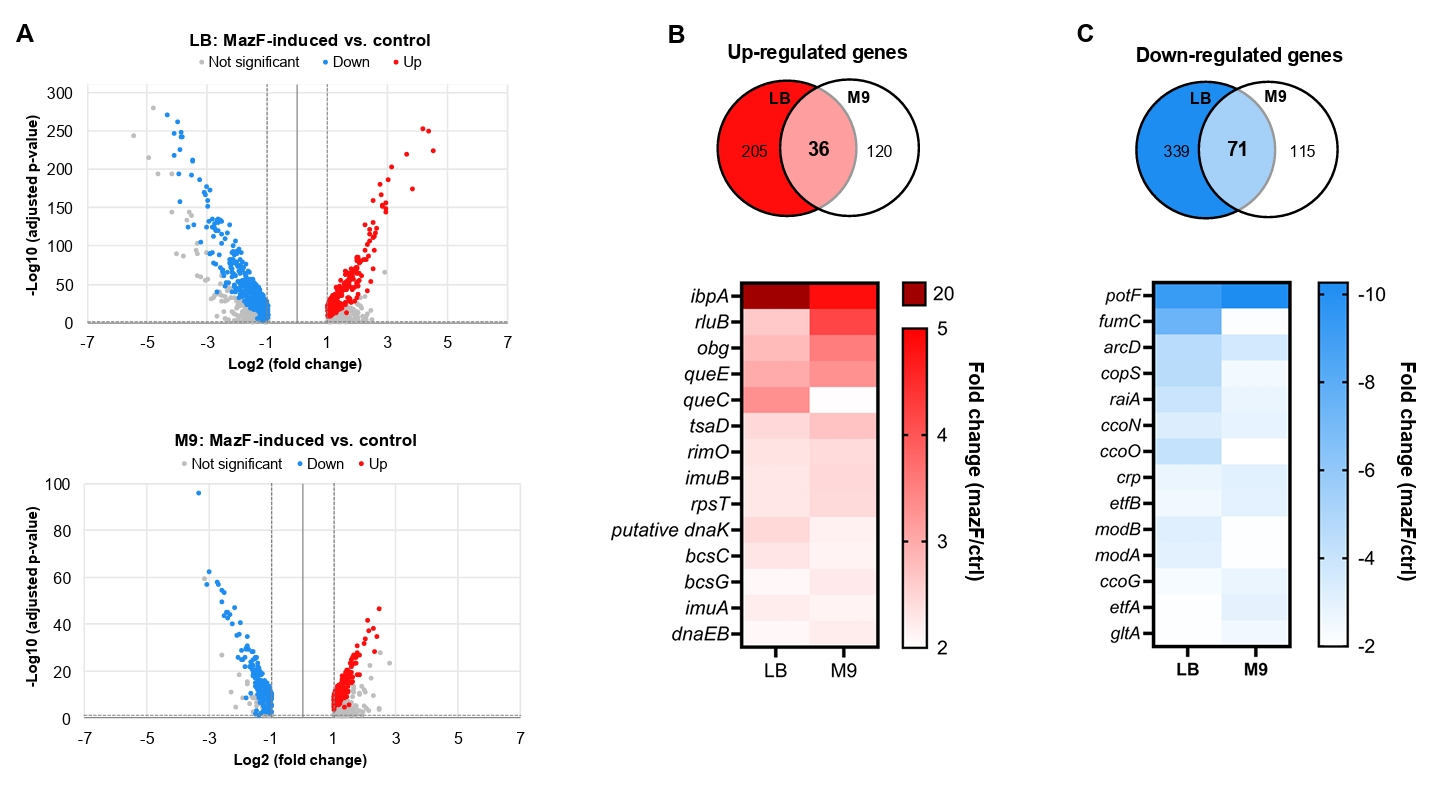
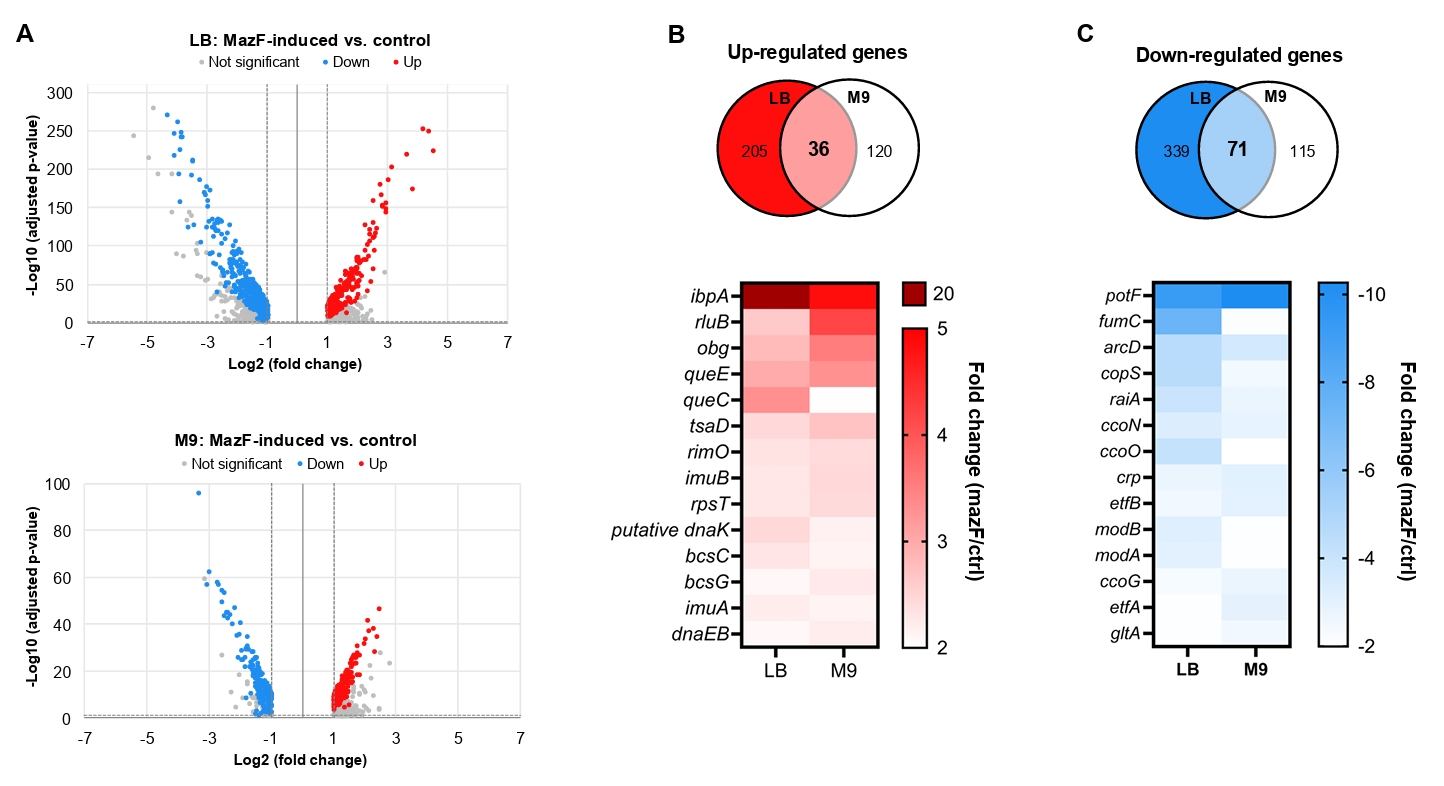
To investigate the transcriptional response of P. putida to MazF activation, we performed RNA-seq analysis using the ΔmazEF strain, thereby minimizing the potential neutralization of induced MazF by endogenous MazE. Cells carrying the MazF expression system were grown in LB or M9 minimal medium supplemented with 15 mM succinate, with or without 1 mM 3MBz, and harvested during exponential growth. Global GO enrichment analysis revealed no significantly enriched functional categories following MazF activation in either LB or M9 minimal medium, with adjusted p-values for most GO terms approaching 1.0 (Table S1). This absence of functional enrichment is consistent with the mechanism of action of MazF, which recognizes and cleaves 5′-UAC-3′ sites genome-wide rather than targeting transcripts associated with specific biological functions (Miyamoto et al., 2016). We therefore focused on genes that were consistently differentially expressed under both growth conditions. Among these, genes with well-characterized or homology-inferred functions were selected and grouped into functional categories based on genome annotations (Fig. 3A). A total of 36 genes were upregulated in both LB and M9. These included genes associated with ribosome structure and maturation, such as rpsT, encoding the 30S ribosomal protein S20 (Parsons and Mackie, 1983); cgtA (obg), encoding a ribosome-assembly GTPase (Czyż and Węgrzyn, 2005; Kint et al., 2014; Knöppel et al., 2020; Verstraeten et al., 2011); and rimO and rluB, which mediate modification of ribosomal protein S12 and 23S rRNA, respectively (Anton et al., 2008; Lee et al., 2009; Ofengand and Del Campo, 2004) (Fig. 3B). Genes involved in tRNA modification, including tsaD and the queuosine-biosynthesis genes queC and queE, were also increased (Deutsch et al., 2012; Lauhon, 2012; Marchetti et al., 2013) (Fig. 3B). MazF induction also increased the transcription of protein quality-control genes, including ibpA (Kuczynska-Wisnik et al., 2002) and a putative dnaK (PP_4849; Fig. 3B). Together, these changes indicate a conserved translation-associated transcriptional response involving ribosome maturation, rRNA and tRNA modification, and translation-associated protein quality control (Polikanov et al., 2015; Teixeira et al., 2025). Also, this response is consistent with reinforcement of cellular functions required to maintain translational capacity during MazF-induced RNA stress. Concurrently, MazF induction upregulated the expression of translesion synthesis (DNA damage-tolerance) genes imuA and imuB and the error-prone DNA polymerase gene dnaEB (imuC) (Ippoliti et al., 2012; McHenry, 2011) (Fig. 3B). This upregulation has been linked to stress-induced mutagenesis (Ippoliti et al., 2012), raising the possibility that prolonged MazF expression could compromise genome stability. Additionally, transcription of the c-di-GMP/cellulose-synthesis genes bcsC and bcsG was increased (Fig. 3B). Because bacterial cellulose production is often linked to biofilm formation and stress protection (Abidi et al., 2022; Römling and Galperin, 2015; Wong et al., 1990), this response may not be restricted to the individual cell (Abidi et al., 2022; Wang et al., 2023).
On the other hand, 71 genes were downregulated under both conditions. These genes were broadly associated with respiration, central metabolism, nutrient acquisition, and environmental regulation. Downregulated respiratory functions included the cco genes (ccoGNO), encoding components of the cbb3-type cytochrome oxidase system, and the electron-transfer flavoprotein genes etfAB (Fig. 3C). Central metabolic genes, including gltA and fumC, were also decreased (Fig. 3C). Repressed transport functions included the molybdate transporter genes modAB and individual transport genes such as arcD and potF. At the same time, the decreased expression of global and environmental regulators, including crp and the copper-responsive regulatory gene copS, indicated broader reorganization of carbon-, oxygen-, and metal-responsive networks. Notably, raiA, encoding the ribosome hibernation-promoting factor, was also downregulated (Agafonov et al., 1999, 2001; Maki and Yoshida, 2021) (Fig. 3C). This may indicate that the cell favors active ribosome renewal over sequestering ribosomes in an inactive state upon MazF activation. Collectively, the conserved transcriptional response suggests that P. putida responds to MazF-mediated RNA cleavage by reinforcing selected functions involved in ribosome maturation, RNA modification, and protein quality control. At the same time, it reduces broad metabolic, transport, and regulatory programs. This pattern is consistent with targeted maintenance and remodeling of translation-related functions rather than a uniform transcriptional response. However, these transcriptional changes do not by themselves establish a functional compensatory role. Direct measurements of translational output, such as ribosome profiling or metabolic labeling of nascent proteins, would be required to test whether this response preserves translational capacity.
MazF induces nutrient-dependent response of energy metabolism
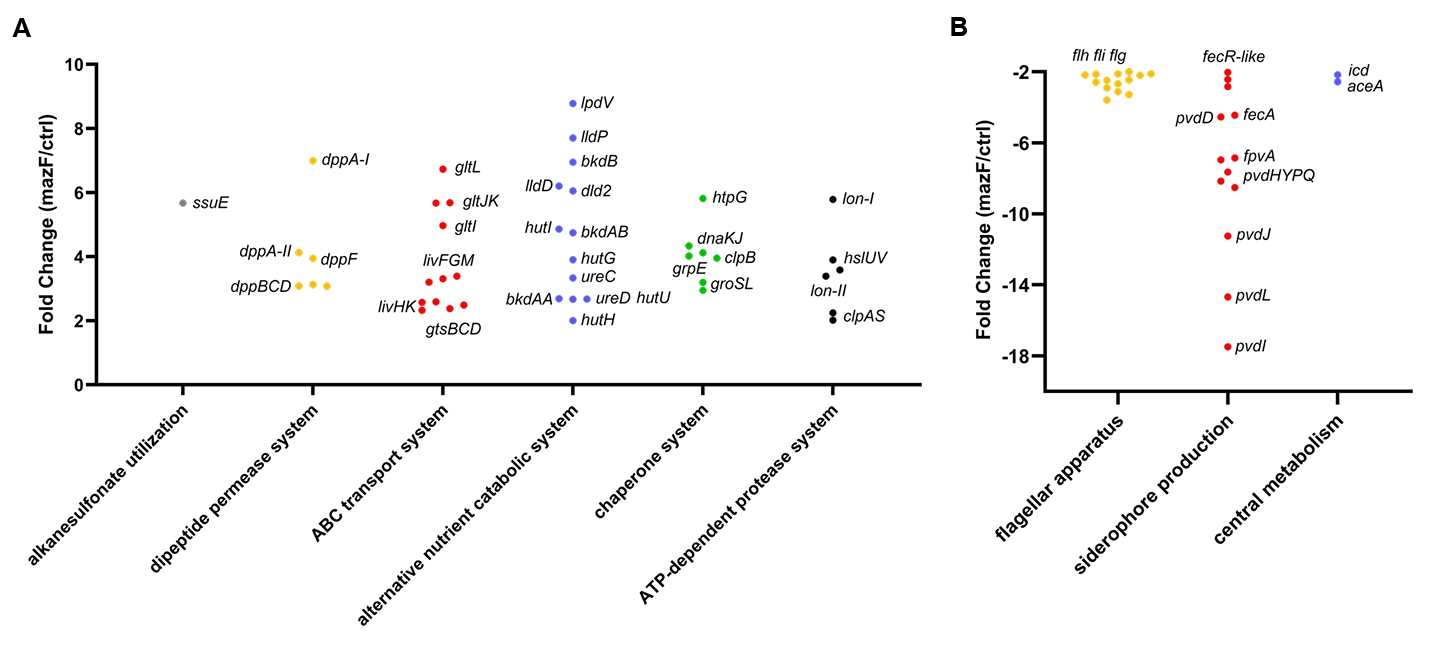
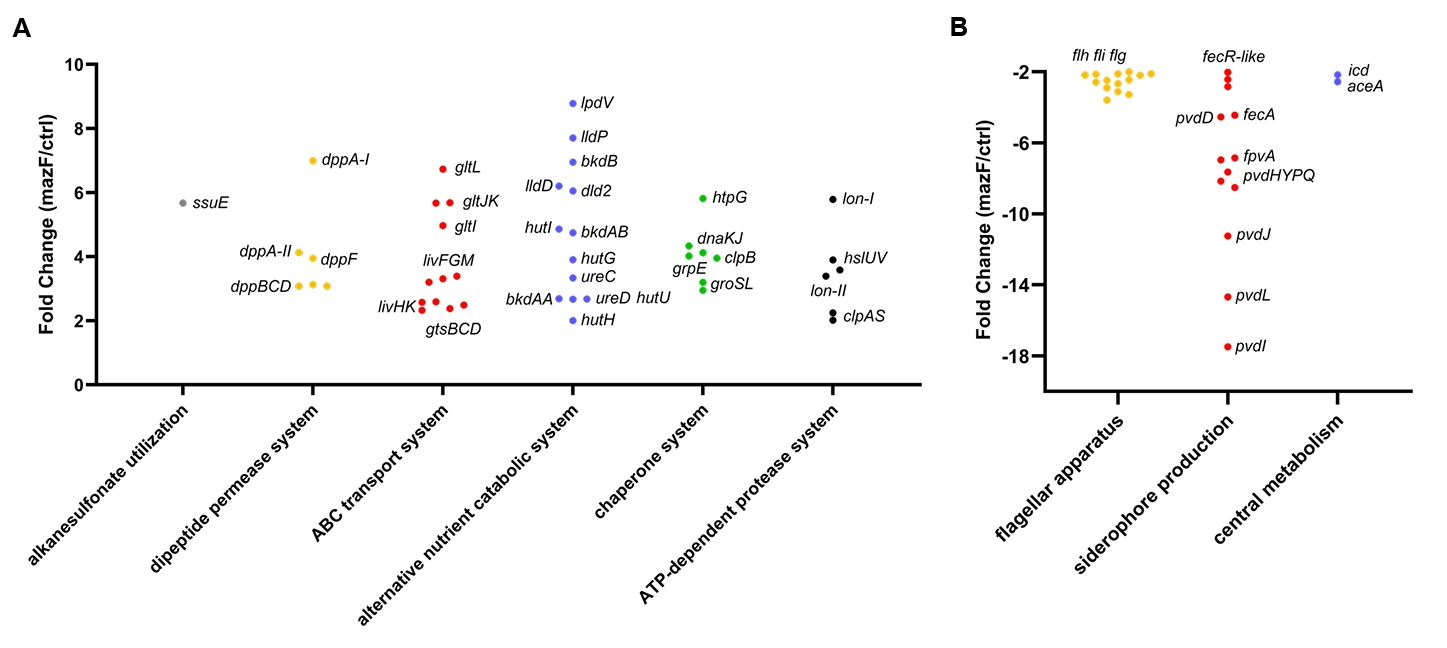
In addition to the conserved response, MazF induction elicited distinct transcriptional changes in LB and M9 minimal medium. These medium-specific responses involved nutrient-dependent transcriptional response of energy metabolism and related cellular functions. In LB, MazF induction specifically increased the expression of multiple nutrient-uptake and catabolic modules. These included the alkanesulfonate-utilization gene ssuE (van der Ploeg et al., 1999), the dipeptide-uptake dpp genes (dppABCDF) (Létoffé et al., 2006), and transport systems for glucose and mannose (gtsBCD) (Liu et al., 2020), glutamate and aspartate (gltIJKL) (Miyakoshi et al., 2015), and branched-chain amino acids (livFGMHK) (Bhaya et al., 2007) (Fig. 4A). Catabolic genes for urea (ureCD), branched-chain α-keto acids (bkdAA, bkdAB, bkdB, and lpdV), lactate (lldP, lldD, and dld2), and histidine (hutG, hutI, hutH, and hutU) were also increased (Fig. 4A). Thus, MazF-expressing cells in LB increased the expression of diverse nutrient-scavenging and catabolic functions. Also, genes involved in protein folding and degradation were upregulated. These included the chaperone systems encoded by groSL, dnaKJ-grpE, clpB, and htpG (Jiao et al., 2024), together with the ATP-dependent protease systems encoded by clpAS, hslUV, and lon (Zhu et al., 1996) (Fig. 4A). Their coordinated induction suggests reinforcement of cellular proteostasis in response to MazF-mediated RNA cleavage and the resulting disturbance of protein synthesis. This response is consistent with the known mechanism of MazF-family toxins, which cleave mRNA at specific sequences and thereby generate truncated transcripts that stall translating ribosomes (Fraikin et al., 2020; Zhang et al., 2003, 2005). The resulting accumulation of incomplete or misfolded polypeptides could potentially contribute to induction of these chaperone and protease systems (Schramm et al., 2020).
In contrast, the genes specifically decreased in LB included extensive flagellar assembly and motility modules. These comprised multiple flh, fli, and flg genes (Fig. 4B) encoding the flagellar export apparatus, basal body, hook, and motor machinery (Berg, 2003). Pyoverdine biosynthesis, export, and uptake functions were also reduced, including multiple pvd genes and the ferripyoverdine receptor gene fpvA (Folschweiller et al., 2000) (Fig. 4B). Similarly, the ferric-citrate uptake and signaling system, including fecA and its associated fecR-like genes (PP_0700, PP_0351, and PP_4607), was downregulated (Enz et al., 2000) (Fig. 4B). Central metabolic genes such as aceA and icd were also decreased (Manuse et al., 2021; Nicolau and Lewis, 2022; Waegeman et al., 2011) (Fig. 4B). These changes indicate that the LB-specific response involved reduced investment in energetically demanding processes, particularly motility (Schavemaker and Lynch, 2022) and siderophore production (Soares, 2022). The simultaneous induction of nutrient-scavenging and proteostasis genes suggests that MazF-expressing cells in LB do not undergo a uniform metabolic shutdown.
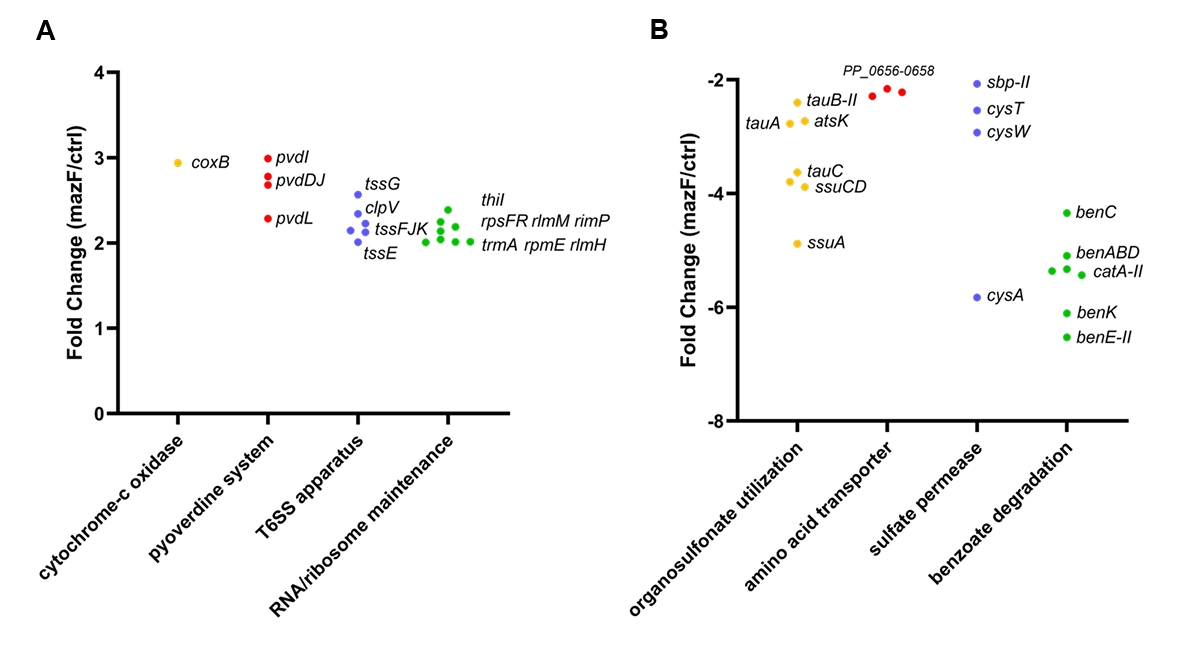
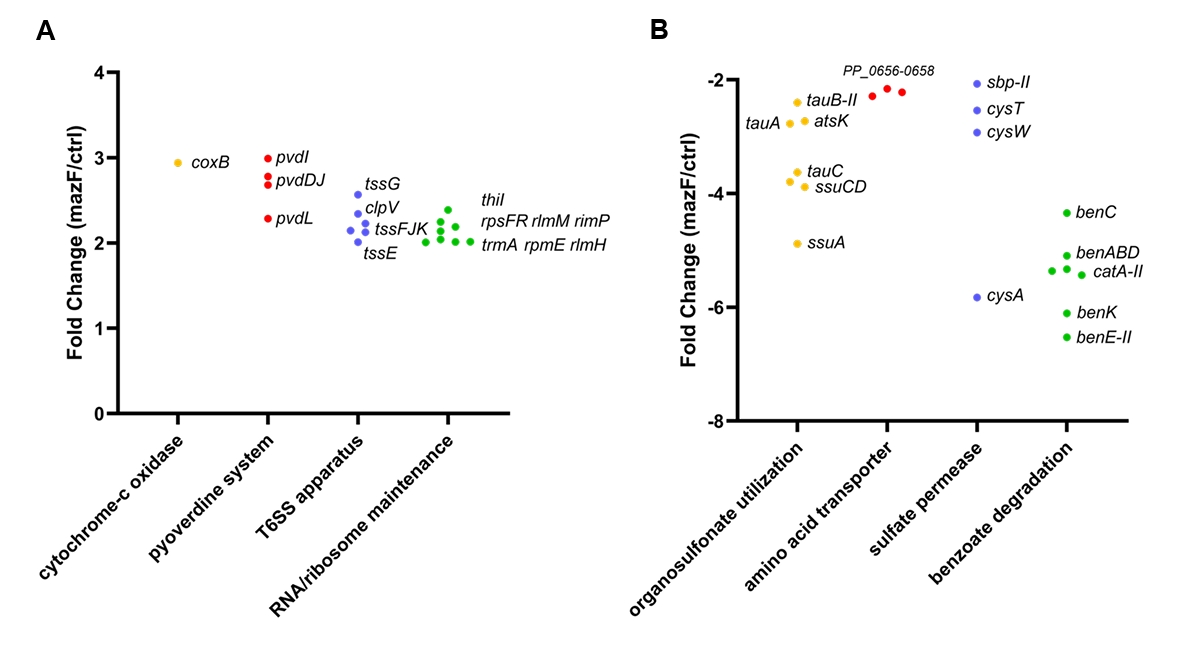
A distinct response was observed in M9 minimal medium. Among the genes upregulated following MazF induction, coxB, encoding a component of the aa3-type cytochrome c oxidase, showed a significant increase in expression (Appia-Ayme et al., 1999) (Fig. 5A). More notably, genes associated with iron acquisition and siderophore production were upregulated under this condition (Fig. 5A). This response contrasted with that observed in LB medium, where siderophore-related functions were downregulated following MazF activation (Fig. 4B). These opposing responses indicate that the physiological adaptation to MazF-mediated RNA cleavage is strongly influenced by nutrient availability. In M9 minimal medium, the increased expression of siderophore biosynthesis and iron-acquisition genes suggests that iron-scavenging functions become more prominently engaged during MazF activation. Given the essential roles of iron as a cofactor in diverse metabolic processes (Andrews et al., 2013; Frawley and Fang, 2014), this response may help sustain cellular functions under nutrient-limited conditions. Thus, the opposite regulation of siderophore-associated genes in LB and M9 highlights a condition-dependent adjustment of cellular priorities during MazF-induced stress. Interestingly, T6SS machinery coding genes, including tssK, tssJ, clpV, tssG, tssF, and tssE within the K1-T6SS locus, were upregulated (Allsopp and Bernal, 2023; Bernal et al., 2017), when the cells were cultured in minimal medium upon MazF expression (Fig. 5A). The T6SS is well known as a mechanism of interbacterial competition, through which cells attack neighboring competitor microbes to secure resources under nutrient-limited conditions (Ho et al., 2014). The specific induction of this gene cluster suggests that cells may respond to the combined pressures of nutrient limitation and MazF stress by preparing competitive strategies to secure resources. This appears to occur in addition to the direct iron scavenging mediated by pyoverdine. Taken together, the concurrent induction of pyoverdine-mediated iron acquisition and T6SS-mediated interbacterial competition suggests that these two systems jointly constitute a broader resource-acquisition strategy adopted by MazF-expressing cells, especially under the nutrient-limited condition. We also observed that M9-specific response included a larger group of genes associated with RNA and ribosome maintenance. These comprised the tRNA-modification genes thiI and trmA (Kimura and Waldor, 2019); the ribosomal protein genes rpsR, rpsF, and rpmE (Henkin, 2001); the ribosome-maturation gene rimP (Nord et al., 2009); and the rRNA-modification genes rlmM and rlmH (Siibak and Remme, 2010) (Fig. 5A). These changes suggest that MazF-expressing cells under nutrient limitation reinforce selected functions involved in translation and RNA maintenance, which may help preserve protein synthesis despite MazF-mediated RNA cleavage.
In contrast, genes specifically decreased in M9 included several pathways for alternative nutrient acquisition and catabolism. These comprised the taurine- and sulfonate-utilization genes atsK, tauABC (van der Ploeg et al., 2001), and ssuADC (Thiel et al., 2012; Tófoli de Araújo et al., 2013) amino acid transporter genes located at PP_0656–PP_0658; and the sulfate-uptake genes cysAWU (Li et al., 2021; Sirko et al., 1990) and sbp-II. The benzoate and catechol degradation module, represented by the ben genes (benABCD, benK, and benE-II) (Wirth and Nikel, 2021) and catA-II (Incha et al., 2020), was also downregulated (Fig. 5B). Thus, the metabolic response in M9 appears to have involved selective reinforcement of particular cellular functions rather than broad transcriptional activation.
Together, these findings indicate that MazF does not impose a uniform transcriptional or metabolic response on P. putida. In LB, reduced investment in motility, siderophore production, and selected metabolic functions was observed. By contrast, M9 was associated with remodeling of the terminal respiratory chain and reinforcement of RNA- and ribosome-maintenance functions. One possible interpretation is that these nutrient-dependent transcriptional changes reflect a shift in how cellular resources are allocated, which could help maintain growth and a certain level of reporter expression during MazF induction. The transcriptomic data alone do not establish changes in resource allocation; further studies that directly assess resource allocation are needed to explore this interpretation.
MazF-mediated transcript protection favors heterologous gene expression in a condition-dependent manner
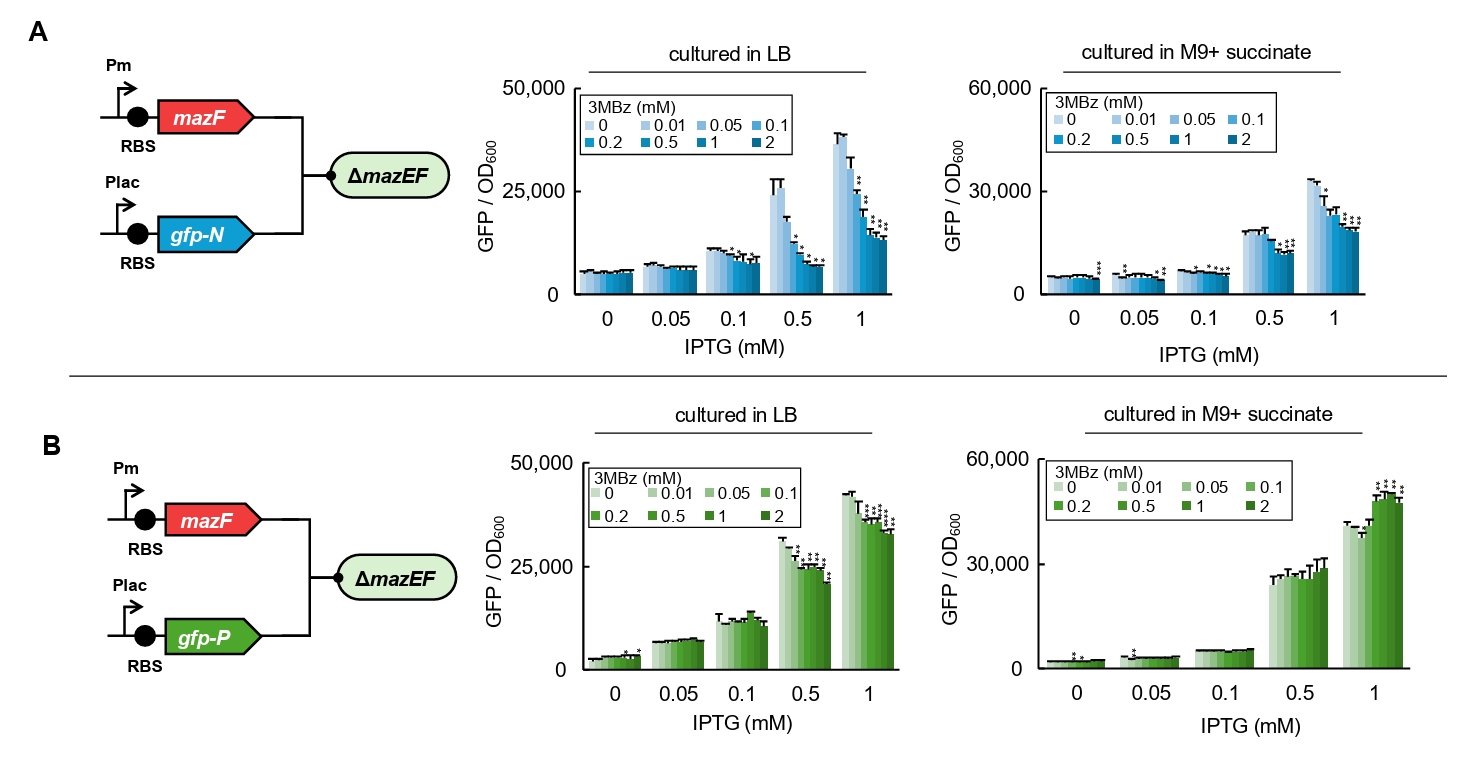
Given the broad and condition-dependent physiological responses observed upon MazF activation, we next asked whether sequence-specific RNA cleavage could be exploited to differentially control heterologous gene expression. In particular, we examined whether a target transcript lacking MazF recognition sites could be selectively protected from MazF-mediated repression and thereby maintain or enhance its expression relative to a MazF-sensitive transcript. We constructed MazF-sensitive and MazF-resistant variants of the reporter gene gfp and compared their expression under different levels of MazF induction and nutrient availability. To this end, two versions of the gene were constructed. The non-protected variant (GFP-N) retained the native coding sequence containing eight 5′-TAC-3′ codons (5′-UAC-3′ in the corresponding transcript, the MazF cleavage site). The protected variant (GFP-P) was also constructed, in which all eight TAC codons were synonymously recoded to TAT without altering the amino acid sequence (Table S4). Notably, every TAC triplet within the GFP coding sequence occurred exclusively as an in-frame codon, with no TAC generated across codon boundaries. Synonymous TAC→TAT recoding therefore abolished all MazF recognition sites within the coding sequence. Both constructs were cloned into pSEVA234 under the control of an IPTG-inducible promoter. These resulting plasmids were introduced into the P. putida KT2440 ΔmazEF harboring pSEVA658-MazF, hereafter referred to as the GFP-N and GFP-P strains, respectively. These strains were cultured in LB and M9 minimal medium (supplemented with 15 mM succinate) under various inducer concentrations, and GFP expression level was measured as described in the 'Materials and Methods' section.
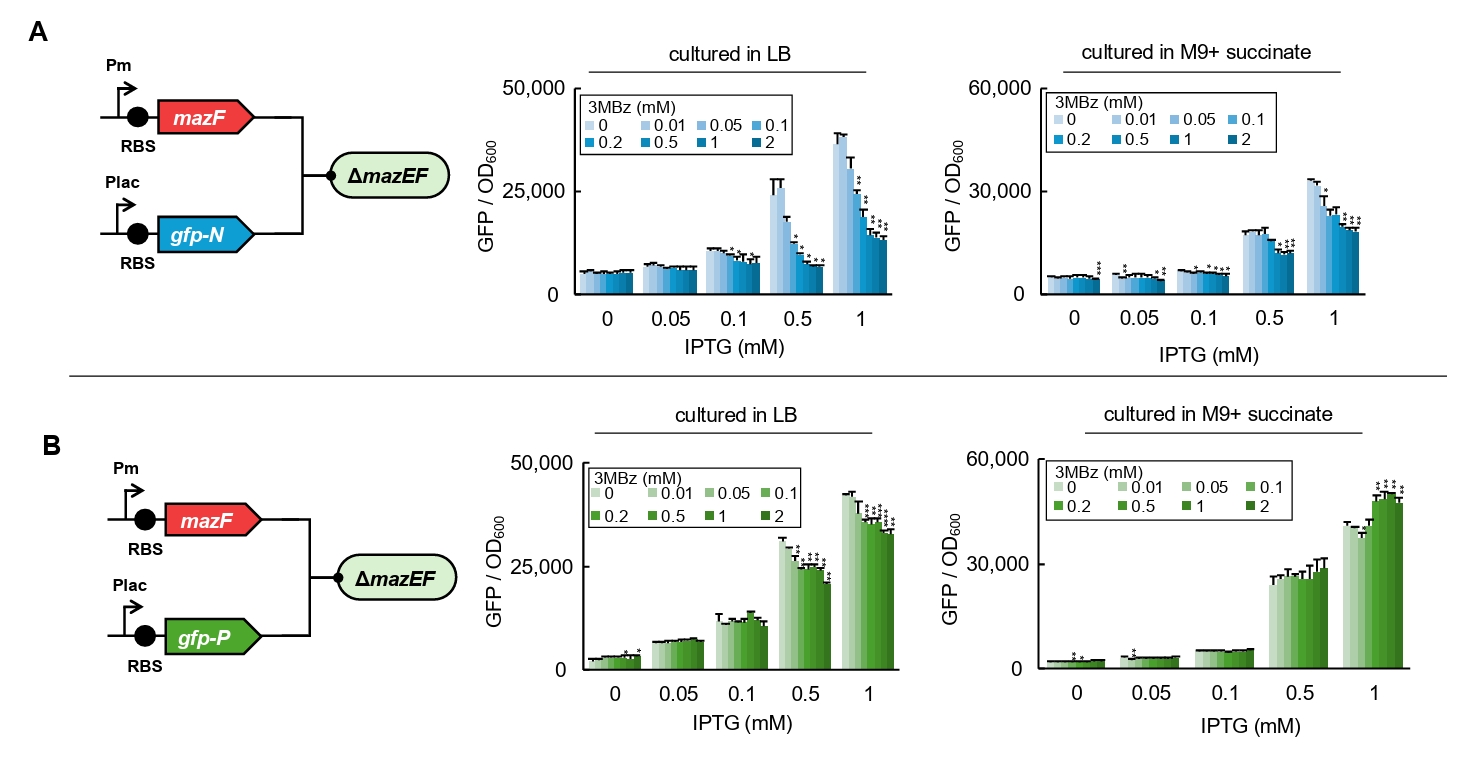
Using this reporter system, we first evaluated GFP expression by growing the reporter strains in LB. Both strains exhibited a decrease in fluorescence intensity with increasing concentrations of 3MBz (Fig. 6A and 6B). Under 1 mM IPTG induction, the GFP-N strain showed a 63.4% reduction in fluorescence at 2 mM 3MBz compared to the uninduced condition (0 mM 3MBz) (Fig. 6A). In contrast, the GFP-P strain displayed only a 21.9% decrease under the same conditions (Fig. 6B). Of note, in a separate control experiment, 3MBz did not appreciably affect IPTG-induced GFP reporter activity in LB within the tested concentration range (unpublished data). These results suggest that MazF activity preferentially degrades non-protected transcripts, while recoded transcripts lacking MazF cleavage sites are relatively spared. We further replaced the direct GFP expression system with a LuxR-regulated GFP reporter circuit and observed a similar trend in LB medium. When both the LuxR regulator and GFP reporter were protected from MazF cleavage, the reduction in GFP expression upon MazF induction was markedly attenuated compared with the non-protected circuit (Fig. S2). It is worth noting that this experiment was designed to assess whether removal of MazF recognition sites reduces sensitivity to MazF at the circuit level. Because these sites were removed from both LuxR and GFP coding sequences, the individual contribution of LuxR protection could not be determined. Measurements of reporter transcript abundance would help assess potential indirect effects on the fluorescence readout and could be addressed in future work.
When the reporter strains were cultured in M9 minimal medium, the GFP-N strain continued to exhibit a 3MBz-dependent decrease in fluorescence, similar to that observed in LB medium (Fig. 6A). In contrast, GFP-P fluorescence increased by 16% at 2 mM 3MBz relative to the uninduced control under 1 mM IPTG induction (Fig. 6B), indicating a distinct response of the protected reporter under nutrient-limited conditions. This enhancement points to MazF activation under nutrient limitation creates a physiological state that is more favorable for the expression of MazF-resistant transcripts. One possible explanation is that degradation of MazF-sensitive transcripts reduces competing translational demand, thereby increasing the relative availability of translational resources for protected transcripts. This interpretation is consistent with previous studies showing that programmed RNA degradation can alter competition for cellular translational resources and mitigate heterologous expression burden (Ceroni et al., 2015; Venturelli et al., 2017). However, direct measurements of transcript stability and translational resource utilization will be required to establish the underlying mechanism.
Together, these results suggest that protection from MazF-mediated RNA cleavage can substantially preserve heterologous gene expression and, under nutrient-limited conditions, can even enhance the expression of a protected reporter. The distinct outcomes observed in LB and M9 further indicate that the effect of selective transcript protection is strongly influenced by the physiological state of the host.
In this study, we characterized the physiological response of P. putida to MazF-mediated RNA cleavage and explored its potential for controlling heterologous gene expression. Unlike E. coli, P. putida exhibited substantial tolerance to MazF activation, even in the absence of the endogenous mazEF module, indicating that its tolerance extends beyond direct neutralization by MazE. Transcriptomic analysis revealed a conserved translation-associated transcriptional response involving reinforcement of ribosome maturation, RNA modification, and protein quality control, together with nutrient-dependent adjustments in cellular functions. These responses suggest that P. putida actively remodels its physiology to accommodate extensive RNA cleavage rather than simply undergoing global translational arrest. Importantly, synonymous removal of MazF recognition sites substantially protected heterologous gene expression from MazF-mediated repression and even enhanced expression under nutrient-limited conditions. Together, these findings indicate that the outcome of MazF-mediated RNA cleavage is determined not only by transcript susceptibility but also by the physiological state of the host. Thus, sequence-specific RNA degradation provides a promising basis for selectively favoring engineered gene expression in P. putida. Further investigation of RNA stability, translational activity, and resource utilization will be required to establish the underlying mechanisms.
The online version contains supplementary material available at https://doi.org/10.71150/jm.2609013
Table S1.
Gene Ontology (GO) enrichment analysis of differentially expressed genes in LB and M9 media
jm-2609013-Supplementary-Table-S1.pdf
Table S2.
Bacterial strains and plasmids used for this study
jm-2609013-Supplementary-Table-S2.pdf
Table S3.
Primers used in this study
jm-2609013-Supplementary-Table-S3.pdf
Table S4.
The sequence of protected gene
jm-2609013-Supplementary-Table-S4.pdf
Fig. S1.
Process for markerless deletion of the mazEF gene from the chromosome of P. putida. Schematic representation of the markerless mazEF gene deletion procedure in P. putida using homologous recombination, following the method described by Martínez-García and de Lorenzo (2011). The diagram illustrates the two-step homologous recombination mediated by plasmids pEMG and pSW-I containing the I-SceI restriction enzyme system. Plasmid pEMG facilitates initial recombination events, whereas plasmid pSW-I introduces the I-SceI endonuclease to induce double-strand breaks, promoting markerless gene deletion (upper panel). PCR confirmation of the mazEF gene deletion mutant. PCR was performed using the forward primer Ts1 and reverse primer Ts2. The mutant strain produces an amplified DNA fragment of 1,200 bp, whereas the wild-type (WT) strain produces a fragment of 1,548 bp (lower panel).
jm-2609013-Supplementary-Fig-S1.pdf
Fig. S2.
Protection of a LuxR-regulated GFP circuit from MazF-mediated cleavage. In the presence of the MazF expression system, AHL-activated GFP expression circuit was introduced into the P. putida ΔmazEF host. The native circuit contained MazF-sensitive LuxR and GFP sequences [LuxR-N/GFP-N], whereas the protected circuit contained synonymously recoded LuxR and GFP sequences lacking MazF recognition sites [LuxR-P/GFP-P]. (A) GFP fluorescence normalized to cell density (GFP/OD600) in P. putida ΔmazEF harboring pSEVA658-MazF and pSEVA231-Plux-GFP-N, cultured in LB medium with the indicated concentrations of AHL (0 or 5 nM) and 3MBz (0, 0.05, 0.1, or 0.2 mM). (B) GFP/OD600 measured under the same conditions as in (A), using pSEVA231-Plux-GFP-P. Data represent the Mean ± standard deviation of three independent biological replicates (n = 3). At each AHL concentration, statistical significance was determined by comparing each 3MBz-treated condition with the corresponding condition without 3MBz using a two-tailed Welch’s t-test (*p < 0.05, **p < 0.01, and ***p < 0.001).
jm-2609013-Supplementary-Fig-S2.pdf
Fig. 1.
Effects of inducible MazF expression on bacterial growth. Growth responses to MazF induction were evaluated in (A) E. coli MG1655, (B) P. putida KT2440 (WT), and (C) P. putida ΔmazEF. Each panel shows the MazF expression construct (top), growth curves in LB medium at different concentrations of the inducer 3-methylbenzoate (3MBz) (middle), and the corresponding specific growth rates (bottom). Growth was monitored by measuring the optical density at 600 nm (OD600) hourly for 18 h. MazF expression was induced with 0, 0.05, 0.5, 1, and 2 mM 3MBz for E. coli MG1655 and with 0, 0.01, 0.05, 0.1, 0.2, 0.5, 1, and 2 mM 3MBz for P. putida KT2440 and ΔmazEF. Data are presented as the Mean ± standard deviation of three independent biological replicates (n = 3). Statistical significance relative to the uninduced control (0 mM 3MBz) was determined using a two-tailed Welch’s t-test (*p < 0.05, **p < 0.01, ***p < 0.001, ****p < 0.0001).
jm-2609013f1.jpg
Fig. 2.
Effects of inducible MazF expression on the growth of P. putida under nutrient-limited conditions. Growth responses to MazF induction were evaluated in (A) P. putida KT2440 (WT) and (B) P. putida ΔmazEF. Each panel shows growth curves in M9 minimal medium supplemented with 15 mM succinate at different concentrations of the inducer 3-methylbenzoate (3MBz) (top) and the corresponding specific growth rates (bottom). Growth was monitored by measuring the optical density at 600 nm (OD600) hourly for 18 h. MazF expression was induced with 0, 0.01, 0.05, 0.1, 0.2, 0.5, 1, and 2 mM 3MBz. Data are presented as the Mean ± standard deviation of three independent biological replicates (n = 3). Statistical significance relative to the uninduced control (0 mM 3MBz) was determined using a two-tailed Welch’s t-test (*p < 0.05).
jm-2609013f2.jpg
Fig. 3.
Conserved and growth condition-dependent transcriptional responses to MazF induction. RNA-seq analysis was performed using two biological replicates of P. putida ΔmazEF cells grown in LB or M9 minimal medium supplemented with 15 mM succinate, with or without MazF induction. (A) Differentially expressed genes (DEGs) upon MazF induction are shown as volcano plots for each growth medium. Genes with counts per million (CPM) < 5 are shown in gray (not significant). Among genes with CPM ≥ 5, those with |fold change (FC)| ≥ 2 (vertical dashed lines) and a Benjamini–Hochberg-adjusted p-value (padj) < 0.05 (horizontal dashed line) are shown in blue (downregulated) or red (upregulated). Venn diagrams show the overlap of (B) upregulated and (C) downregulated DEGs between LB and M9 conditions following MazF induction. The numbers indicate genes uniquely or commonly differentially expressed under the two growth conditions. Heatmaps show fold changes (MazF-induced/uninduced control) for selected genes with well-characterized functions among the 36 commonly upregulated and 71 commonly downregulated DEGs.
jm-2609013f3.jpg
Fig. 4.
LB-specific transcriptional responses to MazF induction. RNA-seq analysis and differential expression criteria were applied as described in Fig. 3. DEGs were defined as genes showing at least a twofold change in transcript abundance (|log₂FC| ≥ 1, padj < 0.05). Genes shown here were selected from DEGs identified exclusively in LB medium (i.e., excluding DEGs shared between LB and M9 conditions in Fig. 3) based on their well-characterized functions and were grouped into functional categories according to genome annotation and known gene function. (A) Upregulated and (B) downregulated genes following MazF induction are shown. Each point represents the linear fold change (FC; MazF-induced/uninduced control) of an individual gene. For downregulated genes, fold decreases are presented as negative reciprocal values [−1/(MazF-induced/uninduced control)] to indicate the magnitude and direction of expression changes.
jm-2609013f4.jpg
Fig. 5.
M9-specific transcriptional responses to MazF induction. RNA-seq analysis and differential expression criteria were applied as described in Fig. 3. DEGs were defined as genes showing at least a twofold change in transcript abundance (|log₂FC| ≥ 1, padj < 0.05). Genes shown here were selected from DEGs identified exclusively in M9 minimal medium (i.e., excluding DEGs shared between LB and M9 conditions in Fig. 3) based on their well-characterized functions and were grouped into functional categories according to genome annotation and known gene function. (A) Upregulated and (B) downregulated genes following MazF induction are shown. Each point represents the linear fold change (FC; MazF-induced/uninduced control) of an individual gene. For downregulated genes, fold decreases are presented as negative reciprocal values [−1/(MazF-induced/uninduced control)] to indicate the magnitude and direction of expression changes.
jm-2609013f5.jpg
Fig. 6.
Effects of MazF overexpression on native and MazF-resistant GFP expression. The schematics show the genetic circuits introduced into the P. putida ΔmazEF host. mazF expression was driven by the 3MBz-inducible Pm promoter, whereas GFP expression was driven by the IPTG-inducible Plac promoter. The reporter constructs encoded either the native, MazF-sensitive GFP sequence (GFP-N) or a synonymously recoded GFP variant lacking all MazF recognition sites in the coding sequence (GFP-P). (A) GFP fluorescence normalized to cell density (GFP/OD600) in P. putida ΔmazEF harboring pSEVA658-mazF and pSEVA234-GFP-N. Cells were cultured in either LB medium or M9 minimal medium supplemented with 15 mM succinate and induced with the indicated concentrations of IPTG and 3MBz. (B) GFP/OD600 measured under the same conditions as in (A), using the MazF-resistant GFP-P reporter. Data represent the Mean ± standard deviation of three independent biological replicates (n = 3). At each IPTG concentration, statistical significance was determined by comparing each 3MBz-treated condition with the corresponding condition without 3MBz using a two-tailed Welch’s t-test (*p < 0.05, **p < 0.01, ***p < 0.001, and ****p < 0.0001).
jm-2609013f6.jpg
  • Abidi W, Torres-Sánchez L, Siroy A, Krasteva PV. 2022. Weaving of bacterial cellulose by the Bcs secretion systems. FEMS Microbiol Rev. 46: fuab051.ArticlePubMedPMCPDF
  • Agafonov DE, Kolb VA, Nazimov IV, Spirin AS. 1999. A protein residing at the subunit interface of the bacterial ribosome. Proc Natl Acad Sci USA. 96: 12345–12349. ArticlePubMedPMC
  • Agafonov DE, Kolb VA, Spirin AS. 2001. Ribosome‐associated protein that inhibits translation at the aminoacyl‐tRNA binding stage. EMBO Rep. 2: 13.ArticlePDF
  • Allsopp LP, Bernal P. 2023. Killing in the name of: T6SS structure and effector diversity. Microbiology. 169: 001367.ArticlePubMedPMC
  • Anders S, Pyl PT, Huber W. 2015. HTSeq—a Python framework to work with high-throughput sequencing data. Bioinformatics. 31: 166–169. ArticlePubMedPDF
  • Andrews S, Norton I, Salunkhe AS, Goodluck H, Aly WSM, et al. 2013. Control of iron metabolism in bacteria. In Banci L. (ed.), Metallomics and the cell, pp. 203–239. Springer. Article
  • Anton BP, Saleh L, Benner JS, Raleigh EA, Kasif S, et al. 2008. RimO, a MiaB-like enzyme, methylthiolates the universally conserved Asp88 residue of ribosomal protein S12 in Escherichia coli. Proc Natl Acad Sci USA. 105: 1826–1831. ArticlePubMedPMC
  • Appia-Ayme C, Guiliani N, Ratouchniak J, Bonnefoy V. 1999. Characterization of an operon encoding two c-type cytochromes, an aa3-type cytochrome oxidase, and rusticyanin in Thiobacillus ferrooxidans ATCC 33020. Appl Environ Microbiol. 65: 4781–4787. ArticlePubMedPMCLink
  • Belda E, van Heck RG, Jose Lopez-Sanchez M, Cruveiller S, Barbe V, et al. 2016. The revisited genome of Pseudomonas putida KT2440 enlightens its value as a robust metabolic chassis. Environ Microbiol. 18: 3403–3424. ArticlePubMedLink
  • Berg HC. 2003. The rotary motor of bacterial flagella. Annu Rev Biochem. 72: 19–54. ArticlePubMed
  • Bernal P, Allsopp LP, Filloux A, Llamas MA. 2017. The Pseudomonas putida T6SS is a plant warden against phytopathogens. ISME J. 11: 972–987. ArticlePubMedPMCPDF
  • Bhaya D, Grossman AR, Steunou AS, Khuri N, Cohan FM, et al. 2007. Population level functional diversity in a microbial community revealed by comparative genomic and metagenomic analyses. ISME J. 1: 703–713. ArticlePubMedPDF
  • Bolger AM, Lohse M, Usadel B. 2014. Trimmomatic: A flexible trimmer for Illumina sequence data. Bioinformatics. 30: 2114–2120. ArticlePubMedPMCPDF
  • Ceroni F, Algar R, Stan GB, Ellis T. 2015. Quantifying cellular capacity identifies gene expression designs with reduced burden. Nat Methods. 12: 415–418. ArticlePubMedPDF
  • Culviner PH, Laub MT. 2018. Global analysis of the E. coli toxin MazF reveals widespread cleavage of mRNA and the inhibition of rRNA maturation and ribosome biogenesis. Mol Cell. 70: 868–880.e10. ArticlePubMedPMC
  • Czyż A, Węgrzyn G. 2005. The Obg subfamily of bacterial GTP-binding proteins: Essential proteins of largely unknown functions that are evolutionarily conserved from bacteria to humans. Acta Biochim Pol. 52: 35–43. ArticlePubMedLink
  • Deutsch C, El Yacoubi B, de Crécy-Lagard V, Iwata-Reuyl D. 2012. Biosynthesis of threonylcarbamoyl adenosine (t6A), a universal tRNA nucleoside. J Biol Chem. 287: 13666–13673. ArticlePubMedPMC
  • Enz S, Mahren S, Stroeher UH, Braun V. 2000. Surface signaling in ferric citrate transport gene induction: Interaction of the FecA, FecR, and FecI regulatory proteins. J Bacteriol. 182: 637–646. ArticlePubMedPMCLink
  • Folschweiller N, Schalk IJ, Celia H, Abdallah MA, Pattus F, et al. 2000. The pyoverdin receptor FpvA, a TonB-dependent receptor involved in iron uptake by Pseudomonas aeruginosa. Mol Membr Biol. 17: 123–133. ArticlePubMed
  • Fraikin N, Goormaghtigh F, Van Melderen L. 2020. Type II toxin-antitoxin systems: Evolution and revolutions. J Bacteriol. 202: e00763-19.ArticlePubMedPMCLink
  • Frawley ER, Fang FC. 2014. The ins and outs of bacterial iron metabolism. Mol Microbiol. 93: 609–616. ArticlePubMedPMC
  • Gyorgy A, Jimenez JI, Yazbek J, Huang HH, Chung H, et al. 2015. Isocost lines describe the cellular economy of genetic circuits. Biophys J. 109: 639–646. ArticlePubMedPMC
  • Henkin TM. 2001. Ribosomes, protein synthesis factors, and tRNA synthetases. In Sonenshein AL, Hoch JA, Losick R. (eds.), Bacillus subtilis and its closest relatives: From genes to cells, pp. 313–322. ASM Press. Link
  • Ho BT, Dong TG, Mekalanos JJ. 2014. A view to a kill: The bacterial type VI secretion system. Cell Host Microbe. 15: 9–21. ArticlePubMed
  • Incha MR, Thompson MG, Blake-Hedges JM, Liu Y, Pearson AN, et al. 2020. Leveraging host metabolism for bisdemethoxycurcumin production in Pseudomonas putida. Metab Eng Commun. 10: e00119. ArticlePubMed
  • Ippoliti PJ, DeLateur NA, Jones KM, Beuning PJ. 2012. Multiple strategies for translesion synthesis in bacteria. Cells. 1: 799–831. ArticlePubMedPMC
  • Jiao J, Lv X, Shen C, Morigen M. 2024. Genome and transcriptomic analysis of the adaptation of Escherichia coli to environmental stresses. Comput Struct Biotechnol J. 23: 2132–2140. ArticlePubMedPMC
  • Kim J, Lee S, Darlington APS, Kim J. 2024. Impact of fleQ deficiency on resource allocation and heterologous gene expression in Pseudomonas putida across various growth media. Microb Biotechnol. 17: e70054. ArticlePubMedPMC
  • Kimura S, Waldor MK. 2019. The RNA degradosome promotes tRNA quality control through clearance of hypomodified tRNA. Proc Natl Acad Sci USA. 116: 1394–1403. ArticlePubMedPMC
  • Kint C, Verstraeten N, Hofkens J, Fauvart M, Michiels J. 2014. Bacterial Obg proteins: GTPases at the nexus of protein and DNA synthesis. Crit Rev Microbiol. 40: 207–224. ArticlePubMed
  • Knöppel A, Andersson DI, Näsvall J. 2020. Synonymous mutations in rpsT lead to ribosomal assembly defects that can be compensated by mutations in fis and rpoA. Front Microbiol. 11: 340.ArticlePubMedPMC
  • Kuczynska-Wisnik D, Kędzierska S, Matuszewska E, Lund P, Taylor A, et al. 2002. The Escherichia coli small heat-shock proteins IbpA and IbpB prevent the aggregation of endogenous proteins denatured in vivo during extreme heat shock. Microbiology. 148: 1757–1765. ArticlePubMed
  • Langmead B, Trapnell C, Pop M, Salzberg SL. 2009. Ultrafast and memory-efficient alignment of short DNA sequences to the human genome. Genome Biol. 10: R25.ArticlePubMedPMCPDF
  • Lauhon CT. 2012. Mechanism of N6-threonylcarbamoyladenonsine (t6A) biosynthesis: Isolation and characterization of the intermediate threonylcarbamoyl-AMP. Biochemistry. 51: 8950–8963. ArticlePubMed
  • Lee KH, Saleh L, Anton BP, Madinger CL, Benner JS, et al. 2009. Characterization of RimO, a new member of the methylthiotransferase subclass of the radical SAM superfamily. Biochemistry. 48: 10162–10174. ArticlePubMedPMC
  • Létoffé S, Delepelaire P, Wandersman C. 2006. The housekeeping dipeptide permease is the Escherichia coli heme transporter and functions with two optional peptide binding proteins. Proc Natl Acad Sci USA. 103: 12891–12896. ArticlePubMedPMC
  • Li X, Yin Q, Gu R, Li M, Yan J, et al. 2021. Effects of exogenous sulfate on the chromium (VI) metabolism of chromium (VI)-resistant engineered strains. Ecotoxicol Environ Saf. 228: 112984.ArticlePubMed
  • Liu Y, Shang L, Zhan Y, Lin M, Liu Z, et al. 2020. Genome-wide analysis of sugar transporters identifies the gtsA gene for glucose transportation in Pseudomonas stutzeri A1501. Microorganisms. 8: 592.ArticlePubMedPMC
  • Maki Y, Yoshida H. 2021. Ribosomal hibernation-associated factors in Escherichia coli. Microorganisms. 10: 33.ArticlePubMedPMC
  • Manuse S, Shan Y, Canas-Duarte SJ, Bakshi S, Sun WS, et al. 2021. Bacterial persisters are a stochastically formed subpopulation of low-energy cells. PLoS Biol. 19: e3001194. ArticlePubMedPMC
  • Marchetti M, Capela D, Poincloux R, Benmeradi N, Auriac MC, et al. 2013. Queuosine biosynthesis is required for Sinorhizobium meliloti-induced cytoskeletal modifications on HeLa cells and symbiosis with Medicago truncatula. PLoS One. 8: e56043. ArticlePubMedPMC
  • Martínez‐García E, de Lorenzo V. 2011. Engineering multiple genomic deletions in Gram‐negative bacteria: Analysis of the multi‐resistant antibiotic profile of Pseudomonas putida KT2440. Environ Microbiol. 13: 2702–2716. ArticlePubMed
  • McHenry CS. 2011. Bacterial replicases and related polymerases. Curr Opin Chem Biol. 15: 587–594. ArticlePubMedPMC
  • Miyakoshi M, Chao Y, Vogel J. 2015. Cross talk between ABC transporter mRNAs via a target mRNA‐derived sponge of the GcvB small RNA. EMBO J. 34: 1478–1492. ArticlePubMedPMCPDF
  • Miyamoto T, Kato Y, Sekiguchi Y, Tsuneda S, Noda N. 2016. Characterization of MazF-mediated sequence-specific RNA cleavage in Pseudomonas putida using massive parallel sequencing. PLoS One. 11: e0149494. ArticlePubMedPMC
  • Morris C, Cluet D, Ricci EP. 2021. Ribosome dynamics and mRNA turnover, a complex relationship under constant cellular scrutiny. Wiley Interdiscip Rev RNA. 12: e1658. ArticlePubMedPMC
  • Nelson KE, Weinel C, Paulsen IT, Dodson RJ, Hilbert H, et al. 2002. Complete genome sequence and comparative analysis of the metabolically versatile Pseudomonas putida KT2440. Environ Microbiol. 4: 799–808. ArticlePubMed
  • Nicolau SE, Lewis K. 2022. The role of integration host factor in Escherichia coli persister formation. mBio. 13: e03420-21.ArticlePubMedPMCLink
  • Nikel PI, Chavarria M, Fuhrer T, Sauer U, de Lorenzo V. 2015. Pseudomonas putida KT2440 strain metabolizes glucose through a cycle formed by enzymes of the Entner-Doudoroff, Embden-Meyerhof-Parnas, and pentose phosphate pathways. J Biol Chem. 290: 25920–25932. ArticlePubMedPMC
  • Nord S, Bylund GO, Lövgren JM, Wikström PM. 2009. The RimP protein is important for maturation of the 30S ribosomal subunit. J Mol Biol. 386: 742–753. ArticlePubMed
  • Ofengand J, Del Campo M. 2004. Modified nucleosides of Escherichia coli ribosomal RNA. EcoSal Plus. 1: 10.1128/ecosalplus.4.6.1. ArticleLink
  • Parsons GD, Mackie GA. 1983. Expression of the gene for ribosomal protein S20: Effects of gene dosage. J Bacteriol. 154: 152–160. ArticlePubMedPMCLink
  • Polikanov YS, Melnikov SV, Söll D, Steitz TA. 2015. Structural insights into the role of rRNA modifications in protein synthesis and ribosome assembly. Nat Struct Mol Biol. 22: 342–344. ArticlePubMedPMCPDF
  • Qian Y, Huang HH, Jimenez JI, Del Vecchio D. 2017. Resource competition shapes the response of genetic circuits. ACS Synth Biol. 6: 1263–1272. ArticlePubMed
  • Robinson MD, McCarthy DJ, Smyth GK. 2010. edgeR: A Bioconductor package for differential expression analysis of digital gene expression data. Bioinformatics. 26: 139–140. ArticlePubMed
  • Römling U, Galperin MY. 2015. Bacterial cellulose biosynthesis: Diversity of operons, subunits, products, and functions. Trends Microbiol. 23: 545–557. ArticlePubMedPMC
  • Sambrook J, Russell DW. 2001. Chapter 15. Expression of cloned genes in Escherichia coli. Molecular cloning: A laboratory manual, 3ʳᵈ edn, vol. 3. Cold Spring Harbor Laboratory Press. Link
  • Schavemaker PE, Lynch M. 2022. Flagellar energy costs across the tree of life. eLife. 11: e77266. ArticlePubMedPMCPDF
  • Schramm FD, Schroeder K, Jonas K. 2020. Protein aggregation in bacteria. FEMS Microbiol Rev. 44: 54–72. ArticlePubMedPMCPDF
  • Schurch NJ, Schofield P, Gierliński M, Cole C, Sherstnev A, et al. 2016. How many biological replicates are needed in an RNA-seq experiment and which differential expression tool should you use? RNA. 22: 839–851. ArticlePubMedPMC
  • Siibak T, Remme J. 2010. Subribosomal particle analysis reveals the stages of bacterial ribosome assembly at which rRNA nucleotides are modified. RNA. 16: 2023–2032. ArticlePubMedPMC
  • Sirko A, Hryniewicz M, Hulanicka D, Böck A. 1990. Sulfate and thiosulfate transport in Escherichia coli K-12: Nucleotide sequence and expression of the cysTWAM gene cluster. J Bacteriol. 172: 3351–3357. ArticlePubMedPMCLink
  • Soares EV. 2022. Perspective on the biotechnological production of bacterial siderophores and their use. Appl Microbiol Biotechnol. 106: 3985–4004. ArticlePubMedPDF
  • Teixeira C, Vandenesch F, Moreau K. 2025. tRNA modifications as regulators of bacterial virulence and stress responses. PLoS Pathog. 21: e1013600. ArticlePubMedPMC
  • Thiel A, Valens M, Vallet-Gely I, Espéli O, Boccard F. 2012. Long-range chromosome organization in E. coli: A site-specific system isolates the Ter macrodomain. PLoS Genet. 8: e1002672. ArticlePubMedPMC
  • Tófoli de Araújo F, Bolanos-Garcia VM, Pereira CT, Sanches M, Oshiro EE, et al. 2013. Structural and physiological analyses of the alkanesulphonate-binding protein (SsuA) of the citrus pathogen Xanthomonas citri. PLoS Genet. 8: e80083. Article
  • van der Ploeg JR, Eichhorn E, Leisinger T. 2001. Sulfonate-sulfur metabolism and its regulation in Escherichia coli. Arch Microbiol. 176: 1–8. ArticlePubMedPDF
  • van der Ploeg JR, Iwanicka-Nowicka R, Bykowski T, Hryniewicz MM, Leisinger T. 1999. The Escherichia coli ssuEADCB gene cluster is required for the utilization of sulfur from aliphatic sulfonates and is regulated by the transcriptional activator Cbl. J Biol Chem. 274: 29358–29365. ArticlePubMed
  • Venturelli OS, Tei M, Bauer S, Chan LJG, Petzold CJ, et al. 2017. Programming mRNA decay to modulate synthetic circuit resource allocation. Nat Commun. 8: 15128.ArticlePubMedPMCPDF
  • Verstraeten N, Fauvart M, Versées W, Michiels J. 2011. The universally conserved prokaryotic GTPases. Microbiol Mol Biol Rev. 75: 507–542. ArticlePubMedPMCLink
  • Vogeleer P, Millard P, Arbulu AO, Pfluger-Grau K, Kremling A, et al. 2024. Metabolic impact of heterologous protein production in Pseudomonas putida: Insights into carbon and energy flux control. Metab Eng. 81: 26–37. ArticlePubMed
  • Waegeman H, Beauprez J, Moens H, Maertens J, De Mey M, et al. 2011. Effect of iclR and arcA knockouts on biomass formation and metabolic fluxes in Escherichia coli K12 and its implications on understanding the metabolism of Escherichia coli BL21 (DE3). BMC Microbiol. 11: 70.ArticlePubMedPMC
  • Wang Z, Song L, Liu X, Shen X, Li X. 2023. Bacterial second messenger c-di-GMP: Emerging functions in stress resistance. Microbiol Res. 268: 127302.ArticlePubMed
  • Weisse AY, Oyarzun DA, Danos V, Swain PS. 2015. Mechanistic links between cellular trade-offs, gene expression, and growth. Proc Natl Acad Sci USA. 112: E1038–E1047. ArticlePubMedPMC
  • Wirth NT, Nikel PI. 2021. Combinatorial pathway balancing provides biosynthetic access to 2-fluoro-cis, cis-muconate in engineered Pseudomonas putida. Chem Catal. 1: 1234–1259. ArticlePubMedPMC
  • Wong HC, Fear AL, Calhoon RD, Eichinger GH, Mayer R, et al. 1990. Genetic organization of the cellulose synthase operon in Acetobacter xylinum. Proc Natl Acad Sci USA. 87: 8130–8134. ArticlePubMedPMC
  • Yamaguchi Y, Inouye M. 2011. Regulation of growth and death in Escherichia coli by toxin-antitoxin systems. Nat Rev Microbiol. 9: 779–790. ArticlePubMedPDF
  • Zhang Y, Zhang J, Hara H, Kato I, Inouye M. 2005. Insights into the mRNA cleavage mechanism by MazF, an mRNA interferase. J Biol Chem. 280: 3143–3150. ArticlePubMed
  • Zhang Y, Zhang J, Hoeflich KP, Ikura M, Qing G, et al. 2003. MazF cleaves cellular mRNAs specifically at ACA to block protein synthesis in Escherichia coli. Mol Cell. 12: 913–923. ArticlePubMed
  • Zhu X, Zhao X, Burkholder WF, Gragerov A, Ogata CM, et al. 1996. Structural analysis of substrate binding by the molecular chaperone DnaK. Science. 272: 1606–1614. ArticlePubMedPMC

Supplementary Information

References

    Citations

    Citations to this article as recorded by  

      • ePub LinkePub Link
      • Cite this Article
        Cite this Article
        export Copy Download
        Close
        Download Citation
        Download a citation file in RIS format that can be imported by all major citation management software, including EndNote, ProCite, RefWorks, and Reference Manager.

        Format:
        • RIS — For EndNote, ProCite, RefWorks, and most other reference management software
        • BibTeX — For JabRef, BibDesk, and other BibTeX-specific software
        Include:
        • Citation for the content below
        Activation of the MazF toxin induces a translation-associated transcriptional response in Pseudomonas putida
        J. Microbiol. 2026;64(11):e2609013  Published online November 30, 2026
        Close
      • XML DownloadXML Download
      Figure
      Activation of the MazF toxin induces a translation-associated transcriptional response in Pseudomonas putida
      Image Image Image Image Image Image
      Fig. 1. Effects of inducible MazF expression on bacterial growth. Growth responses to MazF induction were evaluated in (A) E. coli MG1655, (B) P. putida KT2440 (WT), and (C) P. putida ΔmazEF. Each panel shows the MazF expression construct (top), growth curves in LB medium at different concentrations of the inducer 3-methylbenzoate (3MBz) (middle), and the corresponding specific growth rates (bottom). Growth was monitored by measuring the optical density at 600 nm (OD600) hourly for 18 h. MazF expression was induced with 0, 0.05, 0.5, 1, and 2 mM 3MBz for E. coli MG1655 and with 0, 0.01, 0.05, 0.1, 0.2, 0.5, 1, and 2 mM 3MBz for P. putida KT2440 and ΔmazEF. Data are presented as the Mean ± standard deviation of three independent biological replicates (n = 3). Statistical significance relative to the uninduced control (0 mM 3MBz) was determined using a two-tailed Welch’s t-test (*p < 0.05, **p < 0.01, ***p < 0.001, ****p < 0.0001).
      Fig. 2. Effects of inducible MazF expression on the growth of P. putida under nutrient-limited conditions. Growth responses to MazF induction were evaluated in (A) P. putida KT2440 (WT) and (B) P. putida ΔmazEF. Each panel shows growth curves in M9 minimal medium supplemented with 15 mM succinate at different concentrations of the inducer 3-methylbenzoate (3MBz) (top) and the corresponding specific growth rates (bottom). Growth was monitored by measuring the optical density at 600 nm (OD600) hourly for 18 h. MazF expression was induced with 0, 0.01, 0.05, 0.1, 0.2, 0.5, 1, and 2 mM 3MBz. Data are presented as the Mean ± standard deviation of three independent biological replicates (n = 3). Statistical significance relative to the uninduced control (0 mM 3MBz) was determined using a two-tailed Welch’s t-test (*p < 0.05).
      Fig. 3. Conserved and growth condition-dependent transcriptional responses to MazF induction. RNA-seq analysis was performed using two biological replicates of P. putida ΔmazEF cells grown in LB or M9 minimal medium supplemented with 15 mM succinate, with or without MazF induction. (A) Differentially expressed genes (DEGs) upon MazF induction are shown as volcano plots for each growth medium. Genes with counts per million (CPM) < 5 are shown in gray (not significant). Among genes with CPM ≥ 5, those with |fold change (FC)| ≥ 2 (vertical dashed lines) and a Benjamini–Hochberg-adjusted p-value (padj) < 0.05 (horizontal dashed line) are shown in blue (downregulated) or red (upregulated). Venn diagrams show the overlap of (B) upregulated and (C) downregulated DEGs between LB and M9 conditions following MazF induction. The numbers indicate genes uniquely or commonly differentially expressed under the two growth conditions. Heatmaps show fold changes (MazF-induced/uninduced control) for selected genes with well-characterized functions among the 36 commonly upregulated and 71 commonly downregulated DEGs.
      Fig. 4. LB-specific transcriptional responses to MazF induction. RNA-seq analysis and differential expression criteria were applied as described in Fig. 3. DEGs were defined as genes showing at least a twofold change in transcript abundance (|log₂FC| ≥ 1, padj < 0.05). Genes shown here were selected from DEGs identified exclusively in LB medium (i.e., excluding DEGs shared between LB and M9 conditions in Fig. 3) based on their well-characterized functions and were grouped into functional categories according to genome annotation and known gene function. (A) Upregulated and (B) downregulated genes following MazF induction are shown. Each point represents the linear fold change (FC; MazF-induced/uninduced control) of an individual gene. For downregulated genes, fold decreases are presented as negative reciprocal values [−1/(MazF-induced/uninduced control)] to indicate the magnitude and direction of expression changes.
      Fig. 5. M9-specific transcriptional responses to MazF induction. RNA-seq analysis and differential expression criteria were applied as described in Fig. 3. DEGs were defined as genes showing at least a twofold change in transcript abundance (|log₂FC| ≥ 1, padj < 0.05). Genes shown here were selected from DEGs identified exclusively in M9 minimal medium (i.e., excluding DEGs shared between LB and M9 conditions in Fig. 3) based on their well-characterized functions and were grouped into functional categories according to genome annotation and known gene function. (A) Upregulated and (B) downregulated genes following MazF induction are shown. Each point represents the linear fold change (FC; MazF-induced/uninduced control) of an individual gene. For downregulated genes, fold decreases are presented as negative reciprocal values [−1/(MazF-induced/uninduced control)] to indicate the magnitude and direction of expression changes.
      Fig. 6. Effects of MazF overexpression on native and MazF-resistant GFP expression. The schematics show the genetic circuits introduced into the P. putida ΔmazEF host. mazF expression was driven by the 3MBz-inducible Pm promoter, whereas GFP expression was driven by the IPTG-inducible Plac promoter. The reporter constructs encoded either the native, MazF-sensitive GFP sequence (GFP-N) or a synonymously recoded GFP variant lacking all MazF recognition sites in the coding sequence (GFP-P). (A) GFP fluorescence normalized to cell density (GFP/OD600) in P. putida ΔmazEF harboring pSEVA658-mazF and pSEVA234-GFP-N. Cells were cultured in either LB medium or M9 minimal medium supplemented with 15 mM succinate and induced with the indicated concentrations of IPTG and 3MBz. (B) GFP/OD600 measured under the same conditions as in (A), using the MazF-resistant GFP-P reporter. Data represent the Mean ± standard deviation of three independent biological replicates (n = 3). At each IPTG concentration, statistical significance was determined by comparing each 3MBz-treated condition with the corresponding condition without 3MBz using a two-tailed Welch’s t-test (*p < 0.05, **p < 0.01, ***p < 0.001, and ****p < 0.0001).
      Activation of the MazF toxin induces a translation-associated transcriptional response in Pseudomonas putida

      Journal of Microbiology : Journal of Microbiology
      TOP