Skip Navigation
Skip to contents

Journal of Microbiology : Journal of Microbiology

OPEN ACCESS
SEARCH
Search

Articles

Page Path
HOME > J. Microbiol > Ahead of print > Article
Review
Proteostasis-targeted antibacterial strategies
Yoon Chae Jeong1,2,†, Seong-Hyeon Kim1,†, Seongjoon Moon1,†, Hyunhee Kim1,3,*, Changhan Lee1,*

DOI: https://doi.org/10.71150/jm.2511007
Published online: February 12, 2026

1Department of Biological Sciences, Ajou University, Suwon 16499, Republic of Korea

2Ajou Energy Science Research Center, Ajou University, Suwon 16499, Republic of Korea

3Research Institute of Basic Sciences, Ajou University, Suwon 16499, Republic of Korea

*Correspondence Hyunhee Kim hyunheek@ajou.ac.kr Changhan Lee leec@ajou.ac.kr
†These authors contributed equally to this work.
• Received: November 6, 2025   • Revised: November 26, 2025   • Accepted: November 26, 2025

© The Microbiological Society of Korea

This is an Open Access article distributed under the terms of the Creative Commons Attribution Non-Commercial License (http://creativecommons.org/licenses/by-nc/4.0) which permits unrestricted non-commercial use, distribution, and reproduction in any medium, provided the original work is properly cited.

  • 13 Views
  • 4 Download
  • Protein quality control systems are increasingly recognized as a critical determinant of bacterial survival and antibiotic tolerance. Conventional antibiotics predominantly target nucleic acids, protein synthesis, or cell wall synthesis, yet bacterial adaptation and resistance emergence remain major challenges. Targeting the bacterial protein quality control machineries including molecular chaperones and proteases offers a promising strategy to overcome these limitations. Recent advances include small molecules and adaptor/degron mimetics that modulate the activities of chaperones and proteases, aggregation-prone peptides (APPs) that induce proteotoxic stress, and bacterial PROTAC (BacPROTAC) strategies that redirect endogenous proteases. Notably, persister and viable-but-non-culturable (VBNC) cells, which tolerate conventional antibiotics, remain susceptible to proteostasis-targeted approaches, thereby enabling killing in both actively dividing and dormant populations. Furthermore, synergistic strategies combining chaperone inhibition or protease activation with conventional antibiotics enhance bactericidal efficacy, suggesting a potential avenue to mitigate antimicrobial resistance. This review summarizes the mechanistic basis, recent developments, and translational potential of proteostasis-centered antibacterial strategies.
Antibiotic resistance represents a critical global health threat that undermines decades of success in controlling infectious diseases (Chinemerem Nwobodo et al., 2022; Edgar et al., 2008; Klein et al., 2024). Classical antibacterial agents have been developed to exploit bacterial-specific macromolecular processes, including nucleic acid synthesis, cell wall biosynthesis, membrane integrity, and protein synthesis (Baran et al., 2023; Butler et al., 2024; Halawa et al., 2024; Kohanski et al., 2010; O’Rourke et al., 2020). Despite their success, these single-target and site-specific mechanisms provide short evolutionary routes to resistance. Examples include rpoB point mutations conferring rifampicin resistance, gyrA/parC substitutions or qnr-mediated protection against fluoroquinolones, penicillin-binding protein remodeling and β-lactamase activity defeating β-lactams, and rRNA methyltransferases or aminoglycoside-modifying enzymes inactivating aminoglycosides (Belay et al., 2024; Goldstein, 2014; Hooper, 2001; Serio et al., 2018; Teichmann et al., 2025; Zapun et al., 2008). As a result, multidrug-resistant (MDR), extensively drug-resistant (XDR), and tolerant bacterial phenotypes—including persisters and viable-but-non-culturable (VBNC) states—have become increasingly prevalent (Almutairy, 2024; Bharadwaj et al., 2022; Michiels et al., 2016; Niu et al., 2024).
Proteins are the main functional components of the bacterial cell, and their synthesis, folding, and degradation are governed by a conserved proteostasis network (Koga et al., 2011). This network heavily relies on ATP-dependent chaperones such as DnaK/Hsp70, GroEL/ES, and ClpB to assist folding and prevent aggregation (Balchin et al., 2016), as well as AAA+ (ATPases associated with diverse cellular activities) proteases such as Lon, FtsH, and ClpXP/ClpAP to remove misfolded or regulatory proteins through adaptor-mediated recognition (Dalbey et al., 2012; Gottesman et al., 1998; Gur et al., 2012; Sauer and Baker, 2011). Conventional translation inhibitors paradoxically increase the cellular burden of defective polypeptides, straining this proteostasis network. When chaperone buffering or proteolytic clearance fails, misfolded proteins accumulate, leading to toxic aggregation and proteome collapse (Khodaparast et al., 2021; Pytel and Fromm Longo, 2025). This systems-level fragility highlights proteostasis as a potential vulnerability that can be pharmacologically exploited.
Recently, antimicrobial strategies that directly perturb bacterial proteostasis have gained attention. These include small molecules targeting chaperones or proteases to compromise quality control capacity, and aggregation-prone antimicrobial peptides that disrupt protein homeostasis (Khodaparast et al., 2018, 2021). Notably, proteostasis-targeted strategies have shown efficacy against phenotypically tolerant populations such as persisters and VBNC cells—populations often refractory to conventional antibiotics targeting DNA, the cell wall, or ribosomes. In this review, we summarize the architecture and stress-responsive dynamics of bacterial proteostasis, discuss recent advances in chemical and genetic modulation of chaperones and proteases, and explore the potential of proteostasis-targeted therapeutics as a next-generation strategy to overcome bacterial tolerance and resistance to antibiotics.
This section focuses on how proteostasis governs the bacterial protein life cycle and its relevance to antibiotic action. Proteostasis, or protein homeostasis, is a central principle of cellular physiology that ensures proteins maintain their correct structure and function. It encompasses all stages of the protein life cycle—from synthesis and folding to degradation—coordinated by chaperones, proteases, and regulatory cofactors to prevent the accumulation of misfolded or aggregated proteins.
Proteins synthesized by ribosomes must fold correctly to function. Small proteins often fold spontaneously, but most bacterial proteins require assistance due to their complex structures and aggregation tendency (Balchin et al., 2016; Khodaparast et al., 2021). In vivo, this process is challenged by macromolecular crowding, folding intermediates, and environmental stress. Bacteria, lacking compartmentalized quality control systems, rely heavily on molecular chaperones and proteases to maintain proteostasis and regulate protein abundance and folding efficiency. The bacterial 70S ribosome orchestrates translation through initiation, elongation, and termination, assisted by elongation factors and ribosome-associated chaperones (Balchin et al., 2016; Deuerling et al., 2019; Wilson, 2014). Nascent chains exit through the 50S tunnel, where limited space restricts folding (Wilson and Beckmann, 2011). Translational pauses and co-translational interactions with trigger factor and other chaperones facilitate proper domain formation and prevent premature aggregation (Cassaignau et al., 2020; Samatova et al., 2021).
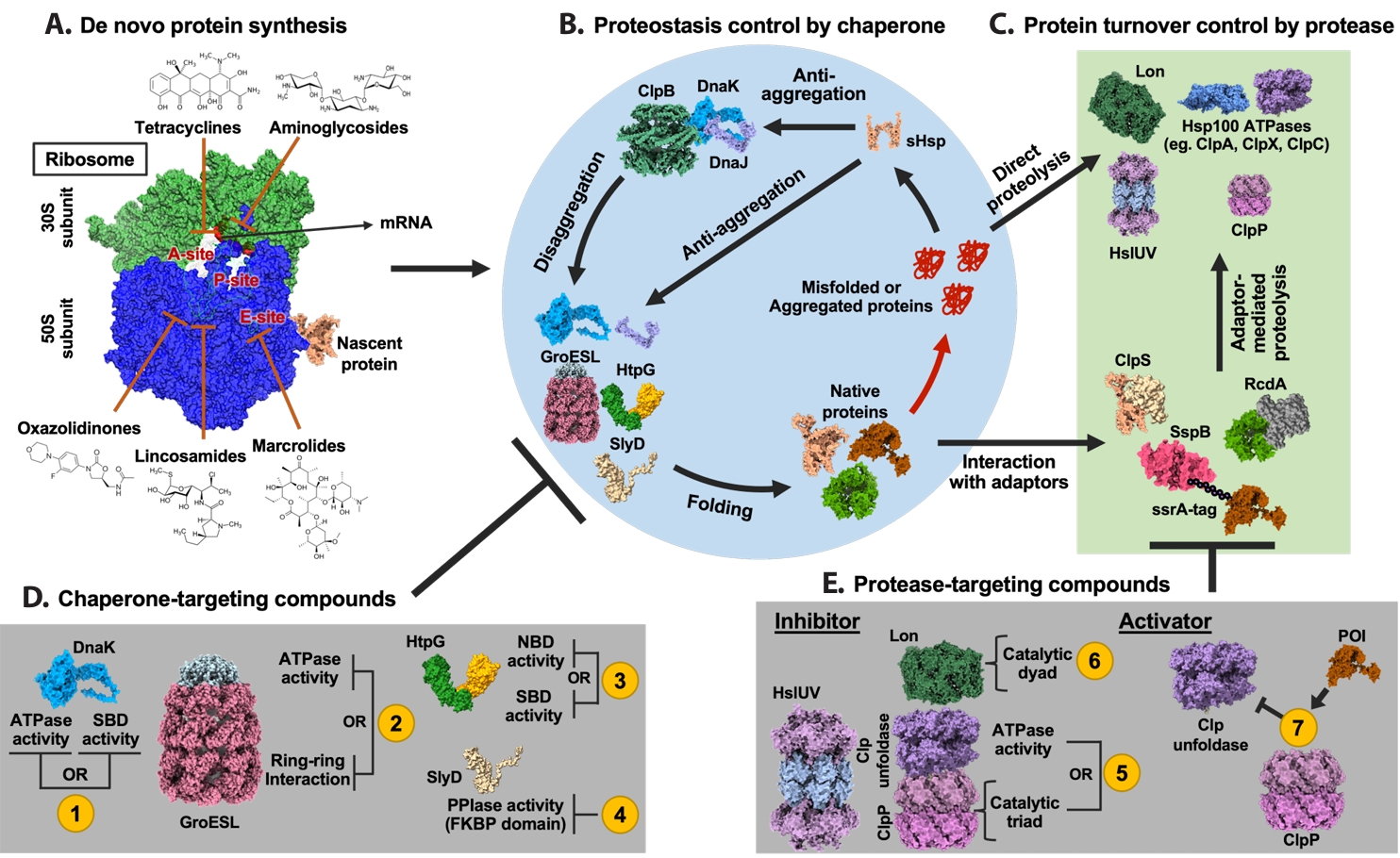
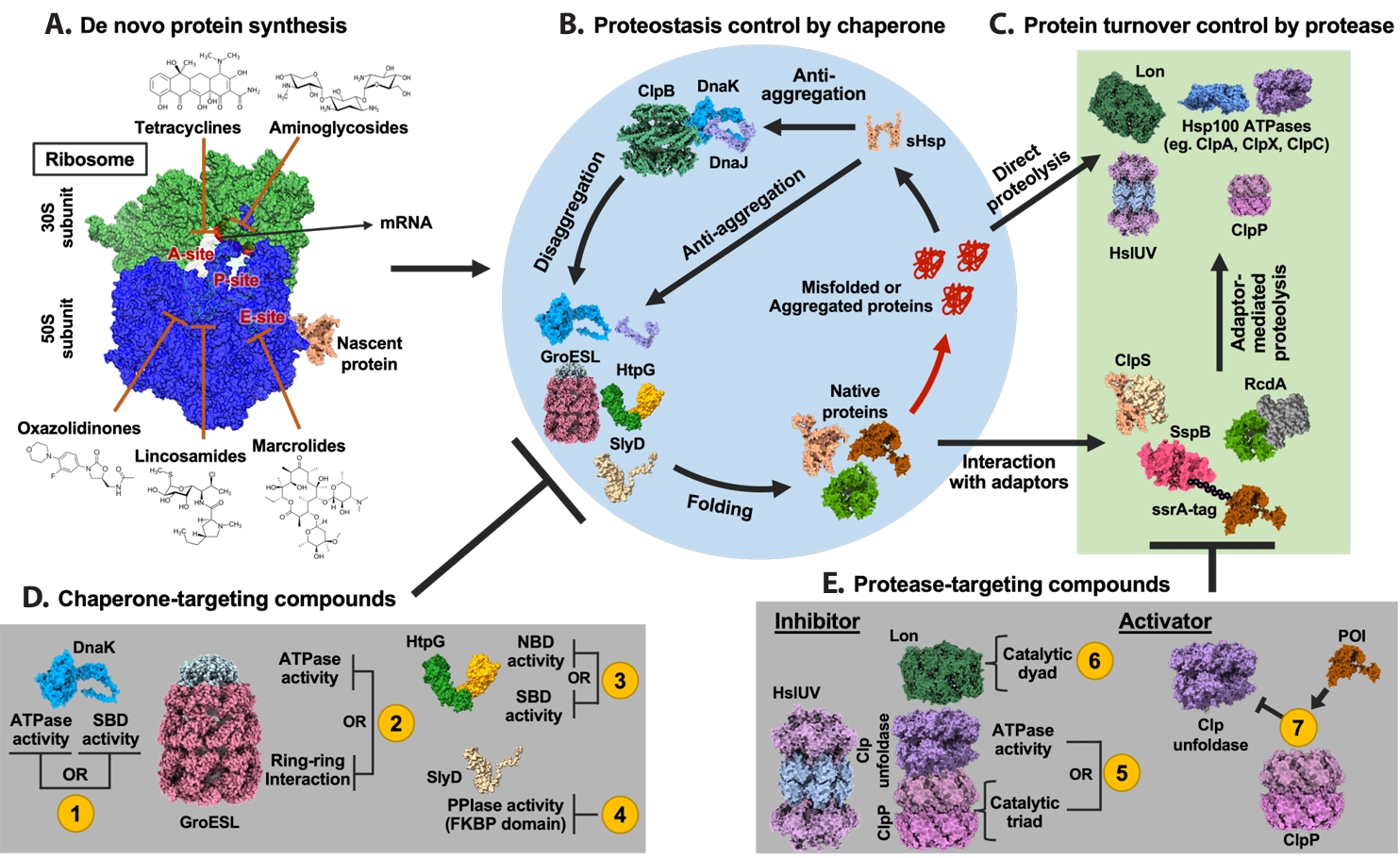
After release from the ribosome, molecular chaperones—such as DnaK/DnaJ/GrpE, GroEL/ES, and trigger factor—assist nascent polypeptides in achieving their native conformations (Fig. 1) (Mogk et al., 2011). When folding is perturbed, holdases like small heat shock proteins transiently stabilize misfolded intermediates, whereas disaggregases such as ClpB cooperate with DnaK to resolubilize protein aggregates (Bohl and Mogk, 2024; Obuchowski et al., 2021). Together, these ATP-dependent and ATP-independent machineries form a dynamic proteostasis network that safeguards the bacterial proteome under stress. When refolding fails, damaged or terminally misfolded proteins are eliminated by proteolysis. AAA+ proteases, including ClpAP, ClpXP, and Lon, recognize and degrade aberrant substrates through ATP-driven unfolding and proteolysis, while adaptor proteins such as ClpS and RcdA refine substrate specificity and couple degradation to stress adaptation (Kuhlmann and Chien, 2017; Mahmoud and Chien, 2018). The coordinated interplay between chaperones and proteases thus maintains a delicate balance between folding, refolding, and degradation to sustain bacterial proteostasis.
Ribosome-targeting antibiotics directly interfere with translation, inducing translational errors, misfolded proteins, and aggregation, which challenge bacterial proteostasis networks (Fig. 1A) (Kohanski et al., 2010; Thompson et al., 2002; Wilson, 2014). Tetracyclines bind to the ribosomal A site, blocking tRNA binding and initiating stress responses that elevate chaperone expression including DnaK, GroEL, and ClpB (Møller et al., 2020). Aminoglycosides, by inducing mistranslation and aggregation, directly trigger proteotoxic stress, which is mitigated by chaperone systems (Goltermann et al., 2013; Thompson et al., 2002). Similarly, oxazolidinones and lincosamides inhibit peptide bond formation at the peptidyl transferase center, while macrolides stall translation within the exit tunnel (Kapoor et al., 2017; Liang et al., 2012; Thompson et al., 2002). Although their mechanisms differ, these antibiotics converge in eliciting a chaperone-mediated stress response to restore protein homeostasis.
In addition, other antibiotic classes indirectly disrupt proteostasis by modifying the cytoplasmic environment. β-Lactams disrupt peptidoglycan crosslinking, alter osmotic balance, and impair energy metabolism (Lobritz et al., 2022; Wong et al., 2021), while fluoroquinolones and aminoglycosides promote reactive oxygen species accumulation (Guillouzo and Guguen-Guillouzo, 2020; Kohanski et al., 2008), thereby exacerbating proteotoxic stress. With accordance, various molecular chaperones are induced upon various stresses including osmotic shock, membrane damage and oxidative stresses (Bojanovič et al., 2017; Dawan and Ahn, 2022; Storey and Storey, 2023). These results suggest that protein quality control system is involved as a universal bacterial defense mechanism regardless of antibiotic class.
Given the universal involvement of response to antibiotic treatments, targeting bacterial proteostasis itself offers a promising therapeutic direction and several molecules has been developed (Fig. 1B1E, Table 1). Among, various chaperones, DnaK, GroEL/ES, HtpG, and SlyD have emerged as attractive targets due to their essential roles in folding and aggregation control (Abdeen et al., 2016; Carlson et al., 2024; Chiappori et al., 2015; Kumar and Balbach, 2017). Small-molecule inhibitors—including Telaprevir, PET-16, and BI88E3—disrupt DnaK activity by interfering with nucleotide or substrate binding (Cellitti et al., 2009; Hosfelt et al., 2022; Leu et al., 2014). Similarly, GroEL/ES and HtpG inhibitors block ATPase cycling and substrate folding, while metal complexes targeting SlyD inhibit both PPIase and chaperone function, leading to growth inhibition in diverse pathogens (Carlson et al., 2024; Kumar and Balbach, 2017; Wang et al., 2025). Collectively, inhibitors that collapse bacterial proteostasis represent a mechanistically distinct and potentially resistance-resilient approach to antibiotic development. We will first discuss the role of molecular chaperones in antibiotic responses and strategies for targeting chaperones, and then move on to targeting proteases.
Disruption of chaperone function has been shown to increase antibiotic sensitivity and reduce bacterial resistance (Hosfelt et al., 2022; Lukačišinová et al., 2020; Richards and Lupoli, 2023). This section primarily discusses antibiotics that interfere with protein synthesis and how bacterial chaperone systems counteract their effects. Notably, several key chaperone networks—including the DnaK/DnaJ/GrpE system, GroEL/ES chaperonins, and the ClpB disaggregase—play pivotal roles in mitigating antibiotic-induced proteotoxicity.
DnaK/DnaJ/GrpE system
The DnaK/DnaJ/GrpE chaperone system constitutes the central hub of bacterial proteostasis, functioning as the bacterial equivalent of the Hsp70 machinery in eukaryotes. It cooperates with GroEL/ES chaperonins, ClpB disaggregase, small heat shock proteins, and proteolytic complexes to manage misfolded proteins and maintain protein homeostasis under stress (Cho et al., 2024; Rosenzweig et al., 2013). Among these, DnaK plays a particularly critical role during antibiotic exposure, where proteotoxicity is induced by drug-driven mistranslation and misfolding (Fay et al., 2021; Goltermann et al., 2013; Ling et al., 2012; Richards and Lupoli, 2023).
Mutational disruption of dnaK markedly affects bacterial fitness and antibiotic resistance. Aminoglycosides such as streptomycin, kanamycin, and gentamicin exemplify induce accumulation of misfolded proteins, resulting in upregulation of chaperone genes, including dnaK, dnaJ, grpE, and groEL/ES (Goltermann et al., 2013; Ling et al., 2012). Overexpression of the dnaK/dnaJ/grpE system in E. coli improves bacterial survival in the presence of aminoglycosides, while dnaK mutants show impaired growth and heightened cell death due to proteotoxic aggregation (Fay et al., 2021; Goltermann et al., 2013; Hosfelt et al., 2022; Richards and Lupoli, 2023).
The DnaK system also modulates resistance to rifampicin, an RNA polymerase inhibitor widely used in tuberculosis treatment (Stefan et al., 2018; Telenti et al., 1993). In mycobacteria, mutations in rpoB, encoding the β-subunit of RNA polymerase, confer rifampicin resistance but simultaneously destabilize the enzyme (Fay et al., 2021). The DnaK/DnaJ machinery mitigates this instability by stabilizing mutant RpoB proteins. Mycobacterium strains lacking DnaK or DnaJ2 exhibit severe fitness defects and loss of viability in the presence of rifampicin (Fay et al., 2021). Furthermore, DnaK levels influence the frequency of resistance development—higher DnaK expression promotes resistance acquisition, whereas lower expression reduces resistance frequency up to sixfold, likely by increasing proteotoxic stress (Fay et al., 2021).
Similar findings have been reported in Campylobacter jejuni, where ΔdnaK mutants exhibit reduced viability and compromised antibiotic resistance following exposure to tetracycline and ciprofloxacin which targets protein synthesis and DNA synthesis, respectively (Cho et al., 2024). Transmission electron microscopy confirmed the accumulation of protein aggregates in dnaK mutants under antibiotic stress (Cho et al., 2024). Collectively, these findings underscore that the DnaK/DnaJ/GrpE system not only preserves bacterial proteostasis but also shapes antibiotic sensitivity and the evolution of resistance.
GroEL/ES chaperonins
The GroEL/ES chaperonin complex functions in conjunction with DnaK/DnaJ/GrpE to ensure correct protein folding and prevent aggregation, especially during antibiotic stress (Goltermann et al., 2013, 2016). Inhibition or deletion of groEL/ES markedly increases bacterial sensitivity to antibiotics, impairs cytosolic protein folding, and causes severe growth defects in the presence of aminoglycosides such as streptomycin and gentamicin, likely due to disruption of membrane potential (Goltermann et al., 2013). Conversely, GroEL/ES overexpression enhances survival by restoring membrane integrity, reducing protein misfolding, and improving growth even more effectively than DnaK overexpression (Goltermann et al., 2013, 2016). In C. jejuni, ΔgroEL/ES strains show increased sensitivity to tetracycline and ciprofloxacin, exhibiting extensive cell death under tetracycline treatment (Cho et al., 2024). These findings suggest that the GroEL/ES system acts as a secondary defense line against antibiotic-induced cytotoxicity, facilitating bacterial adaptation and tolerance (Cho et al., 2024; Godek et al., 2024; Wang et al., 2025).
Given its central role in maintaining proteome integrity, the GroEL/ES system has gained attention as a potential drug target. Several studies have demonstrated that its inhibition disrupts essential folding processes, leading to bacterial death in various pathogens (Cho et al., 2024; Goltermann et al., 2013, 2016). Furthermore, small molecules targeting GroEL/ES have shown potent antimicrobial activity, highlighting its potential as a target for combating multidrug-resistant bacteria (Abdeen et al., 2018; Godek et al., 2024; Wang et al., 2025). Thus, GroEL/ES not only supports bacterial survival under proteotoxic stress but also contributes to the persistence and evolution of antibiotic tolerance.
ClpB disaggregase
Under antibiotic stress, bacterial proteins often misfold and aggregate into inclusion bodies. The ClpB disaggregase, a member of the Hsp100 family, cooperates with DnaK to resolubilize and refold these aggregated proteins, forming a bichaperone complex critical for stress recovery (Calloni et al., 2012; Mogk, 1999). Several studies have linked ClpB function to antibiotic resistance. ΔclpB mutants are highly sensitive to multiple antibiotics and exhibit reduced capacity to recover from proteotoxic conditions (Calloni et al., 2012; Cho et al., 2024; Harnagel et al., 2021). In E. coli, exposure to kanamycin upregulates clpB expression alongside other chaperones involved in protein refolding (Calloni et al., 2012). In C. jejuni, ΔclpB mutants accumulate aggregated proteins and show severe growth inhibition under tetracycline treatment (Cho et al., 2024). Similarly, in Mycobacterium tuberculosis, ClpB facilitates survival during antibiotic stress by sequestering toxic aggregates asymmetrically, thereby protecting daughter cells from proteotoxic overload (Vaubourgeix et al., 2015). Loss of ClpB increases susceptibility to kanamycin, streptomycin, and geldanamycin (Harnagel et al., 2021; Vaubourgeix et al., 2015). Together, these observations emphasize that ClpB-mediated disaggregation is indispensable for bacterial persistence under antibiotic-induced proteotoxic stress. By coupling with DnaK, ClpB ensures proteome renewal and cellular recovery—functions that make it an appealing target for novel antimicrobial strategies aimed at collapsing bacterial proteostasis networks.
Disrupting chaperone function can sensitize bacteria to conventional antibiotics, offering a rational strategy for combination therapy. Here, we present examples of antibiotic use in combination with chaperone inhibition (Table 2).
Inhibition of DnaK has been shown to sensitize bacteria to proteotoxic antibiotics. For instance, Telaprevir, originally developed as a protease inhibitor, suppresses cofactor-mediated activation of DnaK in Mycobacterium species, leading to enhanced susceptibility to aminoglycosides, such as kanamycin and streptomycin, under heat or proteotoxic stress (Hosfelt et al., 2022). Sublethal Telaprevir does reduce minimal inhibitory concentration and decrease the frequency of rifampicin-resistant mutants, demonstrating the potential of DnaK inhibition to amplify antibiotic efficacy (Goltermann et al., 2013; Hosfelt et al., 2022). Proline-rich antimicrobial peptides (PrAMPs), including pyrrhocoricin and synthetic dimers, also target DnaK. These peptides bind the chaperone, disrupt protein folding, and synergize with β-lactams or quinolones by accumulating misfolded proteins, which enhances proteotoxic stress and potentiates antibiotic killing (Kragol et al., 2001). Collectively, these studies establish DnaK as a viable target for combination therapy to overcome bacterial stress-buffering mechanisms.
Aminoglycosides, such as gentamicin, induce misfolded protein accumulation in the cytoplasm. Normally, GroEL/ES buffers this stress, limiting the bactericidal effect. Hydroxybiphenylamide derivatives and related small-molecule inhibitors reduce GroEL/ES folding capacity and impair biofilm survival in S. aureus (Kunkle et al., 2018). Co-treatment with sublethal doses of these inhibitors enhances aminoglycoside-mediated killing, providing a mechanistic rationale for combination therapy. By limiting chaperone buffering, bacteria are rendered more susceptible to proteotoxic stress, resulting in synergistic bactericidal activity and sensitizing β-lactam-resistant strains. Together, these findings provide a mechanistic rationale for combination strategies targeting bacterial chaperone to potentiate antibiotic action and mitigate resistance.
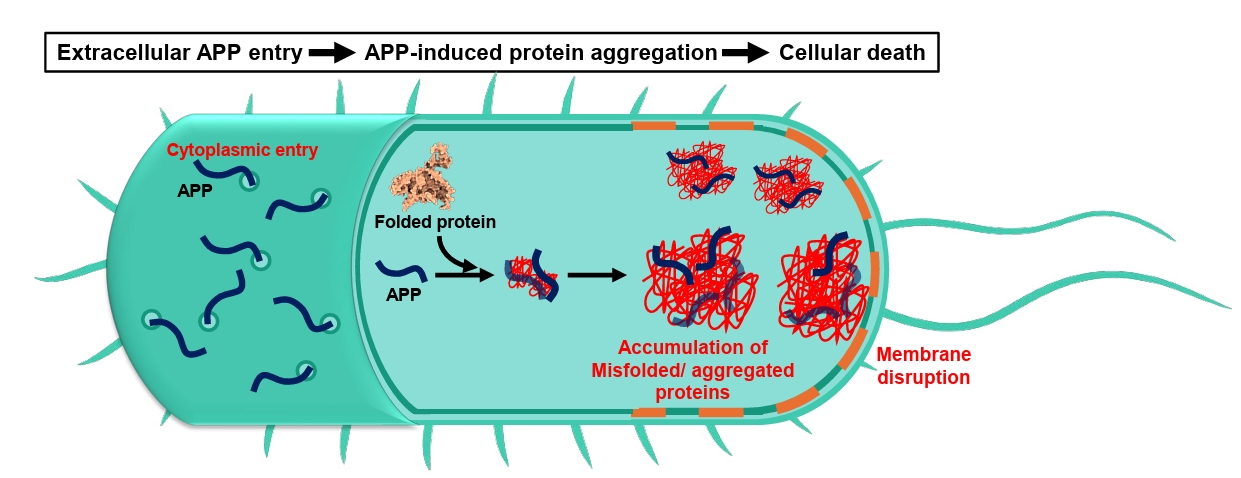
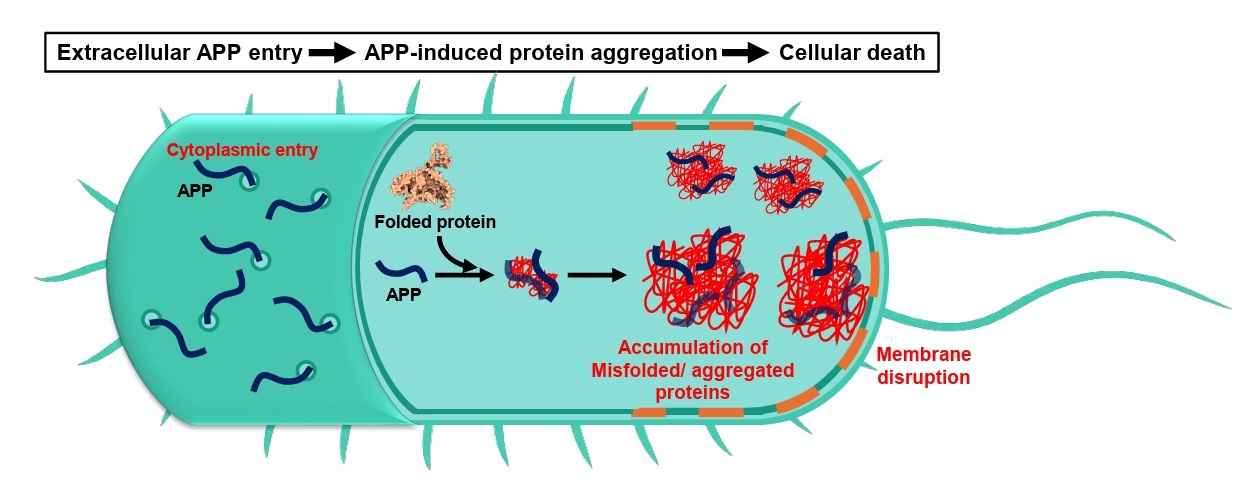
Building upon the proteostasis-centered framework discussed above, recent research has explored a novel antibacterial strategy that actively collapses bacterial protein homeostasis. Among these approaches, APPs have emerged as a powerful means to selectively trigger intracellular proteotoxic stress, leading to rapid bacterial killing (Bednarska et al., 2016; De Baets et al., 2015; Morales et al., 2013; Torrent et al., 2011) (Fig. 2).
Design and mechanistic rationale of APP
APPs are typically designed from 5–7 amino acid-long aggregation-prone regions (APRs) identified through bioinformatic algorithms such as TANGO, which predict aggregation-prone sequences based on physicochemical properties and thermodynamic parameters (Fernandez-Escamilla et al., 2004; Khodaparast et al., 2018). To enhance solubility and prevent premature aggregation during synthesis, the flanking regions are often modified with positively charged residues, such as arginine, which act as aggregation gatekeepers and facilitate bacterial uptake (Hancock and Chapple, 1999; Rousseau et al., 2006). The net positive charge of APPs also promotes interaction with negatively charged bacterial cell envelopes, increasing intracellular delivery efficiency without causing immediate membrane lysis (Bednarska et al., 2016).
Mechanistically, APPs leverage homologous seeding of aggregation in which peptides with sequences identical or highly similar to APRs of essential bacterial proteins efficiently nucleate aggregation, whereas heterologous seeding in mammalian cells is inefficient due to sequence divergence (Ganesan et al., 2015; Khodaparast et al., 2018; Morales et al., 2013). Proteomics analyses of APP-induced inclusion bodies revealed sequestration of hundreds of essential proteins, including metabolic enzymes and chaperones, illustrating a systems-level disruption of proteostasis (Khodaparast et al., 2018). This widespread proteostatic overload results in cellular dysfunction, impaired division, and eventual bacterial death (Bednarska et al., 2016; Lashuel and Lansbury, 2006).
Sequence-defined aggregation toxicity of APPs
Unlike membrane-active antimicrobial peptides, APPs display sequence-dependent intracellular toxicity. Scrambled peptides with similar hydrophobicity can still aggregate but lack bactericidal potency, demonstrating that precise sequence complementarity to bacterial APRs is the critical determinant of activity (Khodaparast et al., 2018). Thus, the bactericidal activity of APPs arises not from general aggregation, but from sequence-specific molecular recognition within the bacterial proteome. This indicates that APPs do not simply induce nonspecific aggregation; rather, they exploit homologous seeding, where sequence-matched segments trigger co-aggregation with essential bacterial proteins, leading to proteostasis collapse.
Comparative studies suggest that Gram-positive bacteria, such as S. aureus and Enterococcus faecalis, are more susceptible than Gram-negative species, likely due to cell wall permeability differences and the accessibility of target APRs (Bednarska et al., 2016). Importantly, APPs spare mammalian cells in vitro and in vivo, despite the presence of homologous sequences in the human proteome. This selectivity may be explained by several factors which are inefficient heterologous seeding, differences in cell size and metabolic rate, limited intracellular peptide uptake, and proteome stability (Aguzzi and Rajendran, 2009; Bednarska et al., 2016). Furthermore, bacterial proteins are often less thermodynamically stable and have higher turnover rates, making them intrinsically more vulnerable to aggregation-mediated perturbation than mammalian proteins (Balch et al., 2008).
APPs in therapeutic applications
The therapeutic feasibility of APPs has been demonstrated in vivo. In a murine methicillin-resistant S. aureus sepsis model, designed APPs successfully rescued infected animals without major host toxicity, validating the potential of proteostasis-targeting antimicrobials in systemic infection (Bednarska et al., 2016). Similarly, APPs based on redundant APRs showed efficacy against multidrug-resistant Gram-negative pathogens (E. coli, Acinetobacter baumannii) in a bladder infection model, underscoring their broad applicability (Khodaparast et al., 2018).
A key advantage of APPs lies in their multi-target mechanism: by inducing aggregation of multiple essential proteins simultaneously, they bypass classical single-target resistance mechanisms and reduce the likelihood of rapid resistance emergence. Moreover, the rapid bactericidal kinetics of APPs often surpass conventional antibiotics, reflecting the catastrophic impact of proteostasis collapse (Khodaparast et al., 2018). While the ability of APPs to trigger protein aggregation raises theoretical concerns about unintended aggregation of host proteins, current in vivo data indicate minimal off-target toxicity, suggesting that rational design and sequence specificity may provide sufficient safety margins in therapeutic contexts (Bednarska et al., 2016; Khodaparast et al., 2018). To summarize key contributions in the field, Table 3 highlights representative APP studies, their design principles, bacterial targets, and therapeutic outcomes. This comparison underscores how APPs, despite differences in origin or structural design, converge on the same mechanistic principle of proteostasis disruption as a bactericidal strategy.
Proteostasis maintenance is indispensable in the cytoplasmic environment, where numerous biological reactions crucial for bacterial survival occur. Within this space, specific ATP-dependent proteases such as Lon, HslUV, and ClpP serve as key components of the bacterial proteolytic machinery, ensuring the timely degradation of misfolded, damaged, or regulatory proteins. Disruption of these proteases offers an opportunity to impair bacterial viability by inducing proteolytic imbalance and proteostasis collapse.
Lon protease
Among these systems, Lon has been the most extensively studied, with several inhibitors identified to date. For example, a rescreening of FDA-approved compounds identified nafcillin and diosmin as strong binders to Salmonella Typhimurium Lon protease, which effectively inhibited bacterial growth when co-administered with ceftazidime or ciprofloxacin (Narimisa et al., 2024). Similarly, MG262, a peptidyl boronate-based Lon inhibitor, reduced the proteolytic activity of S. Typhimurium Lon in an ATP-dependent manner (Frase et al., 2006). Another peptidyl boronate derivative, Molecule 11 (Pyz-hArg-nptGly-Leu-B(OH)₂), directly inhibited E. coli Lon protease, leading to abnormal cell division through SulA accumulation (Babin et al., 2019).
ClpP protease
Among bacterial proteolytic systems, the Clp protease complex (ClpP and its associated unfoldases ClpA/ClpC) has gained particular attention as a tractable antibiotic target due to its substrate specificity and modular regulation. Adaptor proteins that deliver tagged substrates to the Clp complex differentiate it from other proteases, providing a unique therapeutic entry point.
A molecule that mimic adaptor proteins, such as cyclomarin A (CymA), binds to the N-terminus of M. tuberculosis ClpC1 unfoldase, stimulating the degradation of nascent polypeptides and causing cell death (Maurer et al., 2019). Moreover, several molecules trigger abnormal proteolysis by ATPase activity regulation of Clp unfoldases. Cyclic peptides like lassomycin and ecumicin act as ClpC1 activators, overstimulating ATPase activity and leading to proteotoxic collapse (Gao et al., 2015; Gavrish et al., 2014). In contrast, armeniaspirol from a Gram-positive bacterium Streptomyces armeniacus inhibit ATPase activity of Clp unfoldase and dysregulates cell division of bacterial cell. The armeniaspirol also acts on another cytoplasmic AAA+ protease HslUV system (Darnowski et al., 2022; Labana et al., 2021).
In addition to these modulators, several small molecules regulate the oligomerization or proteolytic activity of ClpP itself. For instance, ACPs (Activators of Self-Compartmentalizing Protease) bind the apical pocket of ClpP, enabling proteolysis without unfoldases (Barghash et al., 2025; Leung et al., 2011). Conversely, β-lactones derived from Streptomyces coelicolor irreversibly inhibit M. tuberculosis ClpP1/2 complex formation (Compton et al., 2013), while protocatechuic aldehyde (PCA) and coniferylaldehyde (CA) suppress S. aureus ClpP activity, with CA preventing degradation of ssrA-tagged peptides in an ATP-independent manner (Li et al., 2025a, 2025b).
One of the most intensively studied classes, ADEP (acyldepsipeptide antibiotics), dysregulates ClpP homeostasis through multiple mechanisms. ADEP forces the ClpP gate open, inducing uncontrolled proteolysis without Clp unfoldases, while simultaneously blocking ClpP–unfoldase complex formation (Kirstein et al., 2009; Malik and Brötz-Oesterhelt, 2017). This structural deregulation leads to the indiscriminate degradation of cytoplasmic proteins, driving lethal proteostasis collapse (Silber et al., 2020). Recent work further revealed a secondary ADEP mechanism, in which an ADEP-noninteracting ClpP copy enhances unfoldase-mediated proteolysis (Reinhardt et al., 2022). Natural products produced by ClpP-associated biosynthetic gene clusters (BGCs) in Actinomycetales, such as clipibicyclene, represent additional examples of this emerging antibiotic class (Culp et al., 2022).
From proteolysis disruption to therapeutic innovation
Targeting proteolysis homeostasis offers a versatile strategy for antibacterial development by leveraging the essentiality and conservation of bacterial protease systems. While inhibitors can cause proteostasis collapse by preventing the removal of damaged proteins, activators or mimickers induce lethal over-degradation or dysregulation. Together, these dual approaches highlight how precise manipulation of bacterial proteolysis can be harnessed for therapeutic innovation. However, further research is needed to address off-target effects, species specificity, and potential compensatory mechanisms within the proteostasis network. The emergence of BacPROTAC systems (described in the following section) extends these concepts further—transforming the natural proteolysis machinery into a programmable antibacterial weapon.
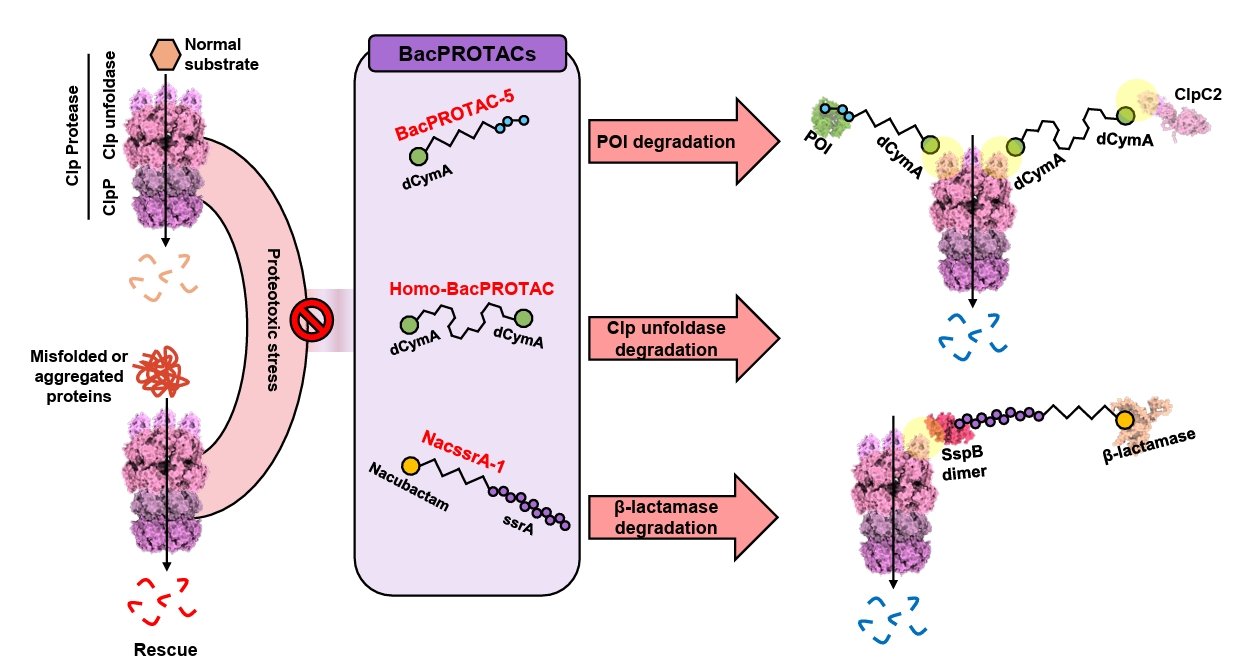
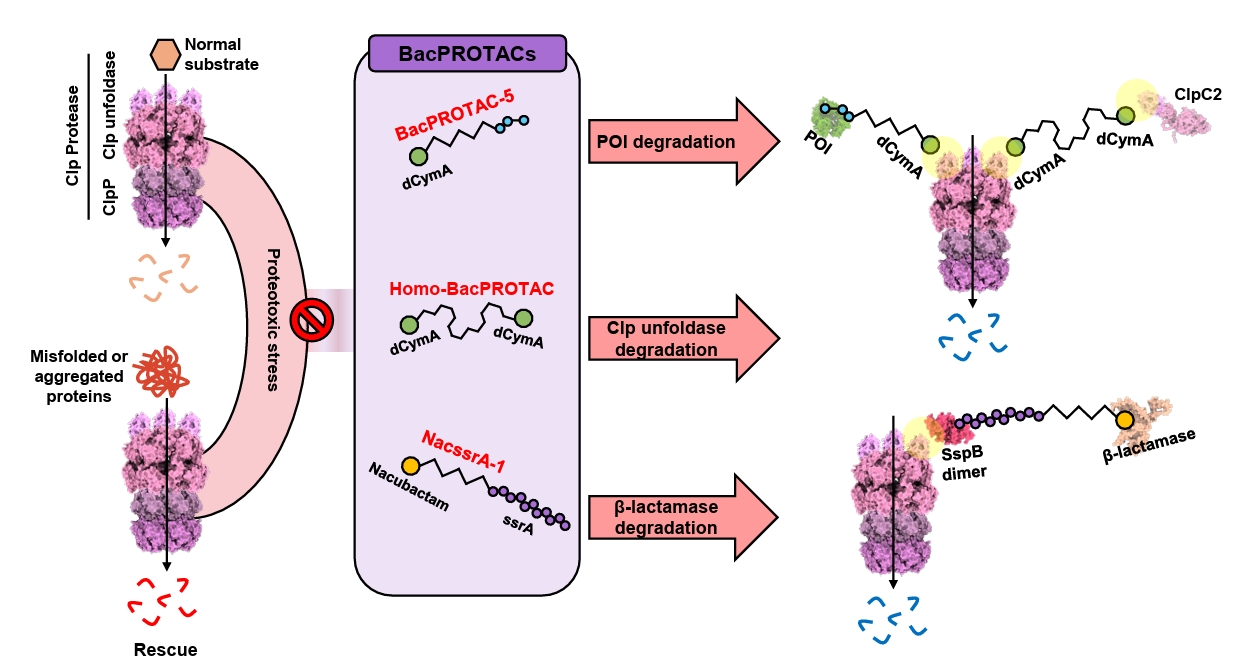
Recent advances in targeted protein degradation have extended beyond eukaryotic systems, paving the way for bacterial applications. Among these, BacPROTAC represents a pioneering approach that harnesses the cell’s own proteolytic machinery to selectively eliminate specific proteins. By enabling controlled degradation of essential or regulatory bacterial proteins, BacPROTAC offers new opportunities to modulate proteostasis, investigate protein function, and potentiate antibiotic efficacy (Fig. 3).
Mechanistic basis of BacPROTAC function
Targeted protein degradation has recently emerged as a powerful antibacterial strategy for next-generation antibiotic development. In eukaryotic systems, PROTACs (PROteolysis Targeting Chimeras) induce selective degradation of target proteins through the ubiquitin–proteasome pathway (Espinoza-Chávez et al., 2023). In contrast, the bacterial version—BacPROTAC—adapts this concept to prokaryotic proteolytic machinery without ubiquitination (Trentini et al., 2016). Structurally, resting ClpC exists as a decamer, which converts into an active tetradecameric complex upon interaction with both substrate and BacPROTAC. This active form engages with the ClpP protease complex to trigger proteolysis.
The first-generation BacPROTAC (BacPROTAC-1) comprises a bifunctional molecule: one terminus carries a ClpC1-interactive moiety such as phosphorylated arginine (pArg), while the opposite end contains a target-binding ligand (Morreale et al., 2022). Due to the instability of pArg and its weak binding affinity toward M. tuberculosis ClpC1, later versions replaced it with cyclomarin A (CymA) derivatives, known adaptor-mimicking molecules of Clp unfoldases (Morreale et al., 2022). Chemical optimization of CymA yielded more stable and potent BacPROTACs—sCymA (BacPROTAC-2/3) and dCymA (BacPROTAC-4/5)—which display enhanced antibacterial activity against M. tuberculosis.
Advances and applications of BacPROTAC in antibacterial design
The practical application of BacPROTACs as antibiotic agents relies on the identification of essential bacterial proteins suitable for degradation. In a Mycobacterium smegmatis model, screening through combined experimental and machine-learning approaches identified endogenous proteins with disordered termini as effective BacPROTAC targets (Won et al., 2024). Targeting these essential proteins not only induced bacterial cell death but also increased susceptibility to conventional antibiotics.
To further enhance BacPROTAC efficacy, researchers designed homo-dimerized BacPROTACs (Homo-BacPROTAC, HBP), in which two dCymA moieties are linked to directly recruit ClpC1 into self-degradative complexes (Junk et al., 2024). This approach allows rapid and efficient depletion of ClpC1 even at low concentrations and in intracellular infection conditions. However, the presence of ClpC2 in M. tuberculosis negatively regulates the ClpC1–ClpP1P2 complex formation, thereby attenuating BacPROTAC activity (Hoi et al., 2023). The HBP design, which targets both ClpC1 and ClpC2 via their Clp-repeat domains (CRDs), successfully reduces the levels of both proteins in M. smegmatis and restores degradation efficiency (Hoi et al., 2023).
As BacPROTAC is a recently developed antibacterial technology, bacterial resistance mechanism or toxicity (off-target effect) against to BacPROTAC treatment is not studied well so on. Although only one study showed natural resistance mechanism of ClpC2 in M. tuberculosis, HBP overcomes the ClpC2 disturbing by dual proteolysis of ClpC1 and ClpC2 (Hoi et al., 2023; Junk et al., 2024). HBP requires simultaneous engagement of its intended targets and exhibits highly low MIC value (Junk et al., 2024). Therefore, it is expected that HBP may impose less toxicity and fewer off-target effect than traditional antibacterial agents.
Expanding BacPROTACs to Gram-negative systems
While initial BacPROTAC development was limited to Gram-positive bacteria, recent innovations have extended its applicability. NacssrA-1, a novel Gram-negative-specific BacPROTAC based on the ssrA-tagging degradation system, has demonstrated targeted proteolysis in these organisms (Nie et al., 2025). Moreover, peptide-based BacPROTACs such as CLIPPER (Clp-Interacting Peptidic Protein Eraser) introduce a modular protein–protein interaction approach. In this system, plasmid-encoded peptides include a substrate-binding anchor and a ClpX-binding bait connected by a flexible linker (Izert-Nowakowska et al., 2025). Notably, CLIPPERs targeting the essential chaperone GroEL in E. coli abolish bacterial growth by causing accumulation of misfolded and aggregated proteins, validating the feasibility of peptide-based BacPROTAC systems.
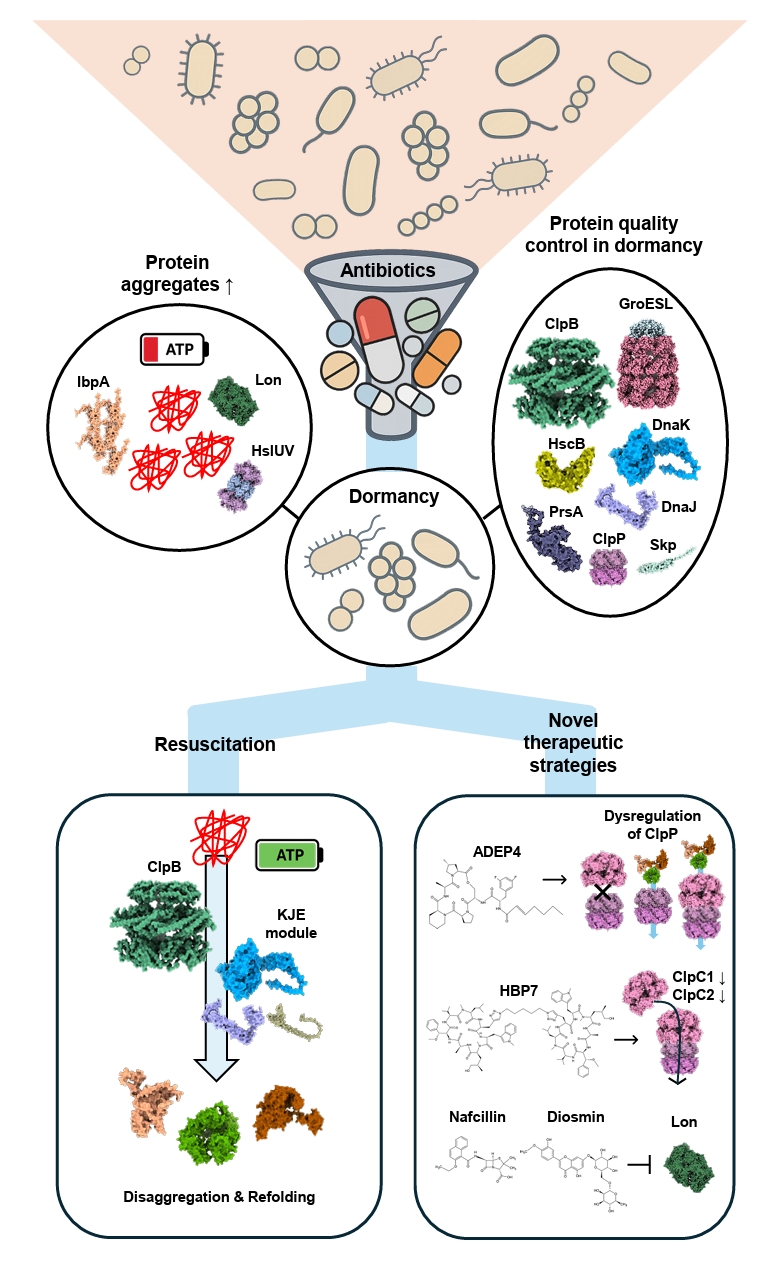
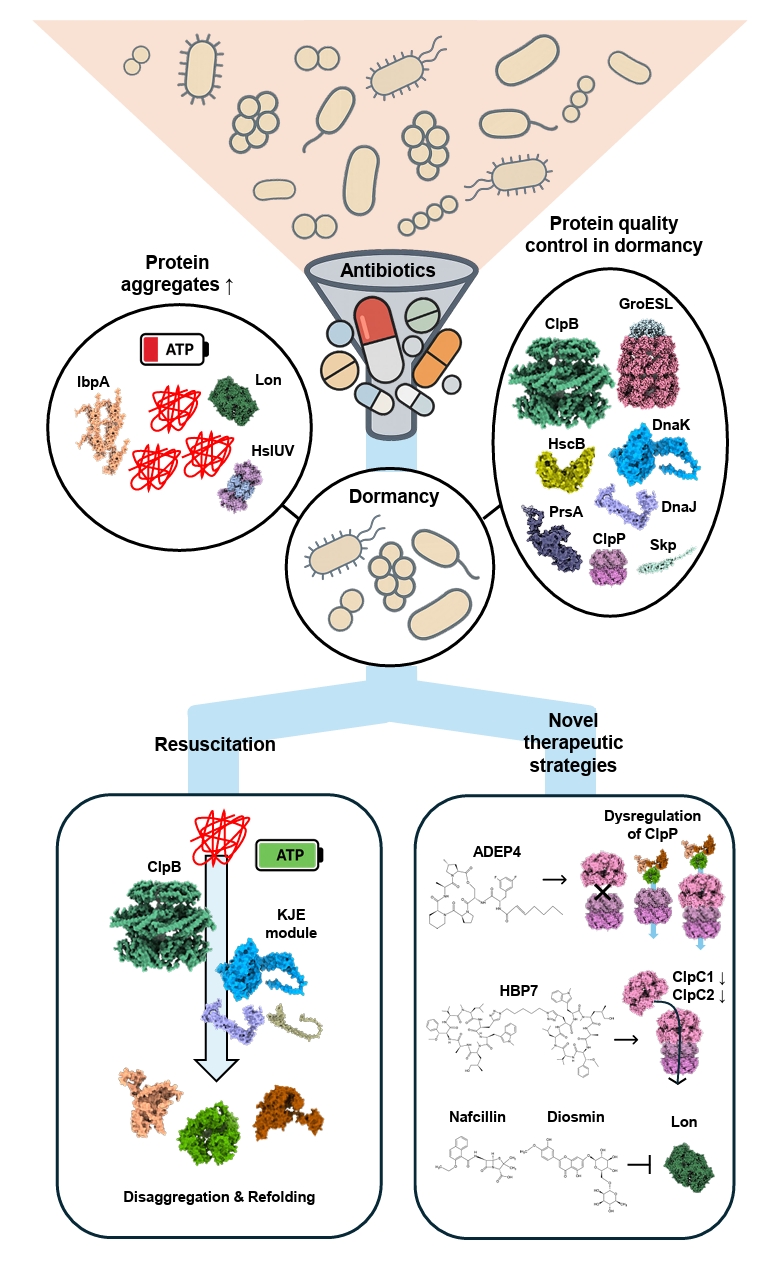
Bacterial dormancy represents a survival strategy that allows cells to withstand environmental and antibiotic stresses by entering a reversible, low-metabolic state. This physiological shift is closely linked to proteostasis, as dormant cells rely on controlled protein quality management to maintain viability under stress. Understanding the interplay between dormancy and proteostasis not only reveals the molecular basis of bacterial persistence but also opens new avenues for therapeutic intervention aimed at reactivating or eradicating tolerant populations (Fig. 4).
Protein aggregation and proteostasis in dormancy
Bacteria can transiently enter a dormant state to evade antibiotic-induced killing, which includes shallow-dormant persister cells and deep-dormant VBNC cells (Dewachter et al., 2021; Salcedo-Sora and Kell, 2020). Dormancy provides a non-energy-consuming resistance mechanism against diverse antibiotics, independent of genetic mutations or resistance pathways (Fang and Allison, 2023). Clinically relevant pathogens, including the ESKAPE group, utilize dormancy as a common survival strategy, and statistical analyses suggest persister emergence spans a broad range of antibiotic types (Salcedo-Sora and Kell, 2020; Van den Bergh et al., 2017). Understanding and therapeutically controlling dormant cells is therefore critical for public health.
Environmental stresses induce intracellular protein aggregation, which, although toxic in actively growing cells, appears to regulate dormancy depth in persister and VBNC cells. During dormancy, endogenous proteins progressively aggregate, forming mature aggresomes that can later be resolved by chaperones and proteases, such as IbpA, Lon, and HslU, to allow regrowth after stress relief (Dewachter et al., 2021; Pu et al., 2019). Conversely, modulation of aggregation—via heat shock, chemical triggers, or inhibition of protein synthesis—can alter persister and VBNC formation. ATP depletion further enhances aggregation by limiting the activity of ATP-dependent disaggregation systems, deepening dormancy (Dewachter et al., 2021). Notably, depletion of disaggregation systems like ClpB and DnaK delays resuscitation, underscoring the dependence of dormancy recovery on proteostasis.
Proteostasis machinery in dormant cells
Proteomic and transcriptomic analyses indicate that proteostasis systems remain active, and in some cases upregulated, in dormant cells. Chaperones (e.g., ClpB, DnaK, DnaJ, and GroEL) and proteases (e.g., Lon, ClpX, and HslU) are maintained in E. coli persisters and Vibrio cholerae VBNC cells, supporting cellular integrity and eventual resuscitation (Debnath and Miyoshi, 2021; Radzikowski et al., 2016; Semanjski et al., 2021). Gram-positive persisters such as S. aureus also show upregulation of chaperones and proteases under antibiotic-induced stress (Liu et al., 2024b, 2024a). Functional proteostasis machinery is crucial not only for survival in dormancy but also for resuscitation after stress relief, as shown by delayed recovery following depletion of Fe-S cluster chaperone HscB or Lon protease (Mohiuddin et al., 2022; Spanka et al., 2019).
Proteostasis-targeted therapeutic strategies
Given the essential role of proteostasis in dormancy, chaperones and proteases are emerging as novel therapeutic targets. ClpP and Lon proteases, key regulators of protein quality control and toxin-antitoxin systems, can be pharmacologically manipulated to disrupt dormancy (Petkov et al., 2023). ADEP4, a semisynthetic ClpP activator, induces uncontrolled proteolysis in S. aureus persisters, degrading hundreds of endogenous proteins even under ATP-limited conditions and enhancing susceptibility to rifampicin in biofilms (Conlon et al., 2013). Similarly, Lon inhibitors such as Pyz-hArg-nptGly-Leu-B(OH)₂, nafcillin, and diosmin reduce persister formation and potentiate antibiotic activity (Babin et al., 2019; Narimisa et al., 2024). Targeted protein degradation strategies, including HBP-mediated BacPROTAC systems, further extend efficacy against ATP-downregulated persister-like cells (Hoi et al., 2023). Together, these findings highlight that modulation of proteostasis machinery offers a promising approach for eliminating dormant bacterial populations.
Bacterial proteostasis, maintained by chaperones and proteases, plays a central role in survival under antibiotic stress and during dormancy. Modulating these systems, through small-molecule inhibitors, BacPROTAC-mediated targeted protein degradation, or synergistic chaperone inhibition, represents a versatile and mechanistically innovative approach to potentiate antibiotic efficacy. Proteostasis-targeted strategies not only disrupt actively growing bacteria but also effectively target dormant persister and VBNC cells, which are refractory to conventional treatments. Future research should focus on developing selective modulators for both Gram-positive and Gram-negative pathogens, integrating multi-omics insights to identify critical targets, and designing combinatorial regimens that maximize bactericidal synergy while minimizing resistance evolution. Collectively, these advances underscore the potential of proteostasis-centered interventions to extend the therapeutic lifespan of existing antibiotics and address the global challenge of antimicrobial resistance.
Fig. 1.
Overview of antibiotics targeting proteostasis in bacterial cells. From a proteostasis-centered perspective on the life cycle of a protein, (A) existing antibiotics disrupt proteostasis in nascent polypeptides emerging from the ribosome by causing protein misfolding and aggregation. (B, C) The chaperone and protease systems, which control protein quality, protect cells from the effects of antibiotics by restoring disturbed proteostasis. (D) Antibiotics targeting chaperones inhibit their functions in maintaining proteostasis. In addition, (E) antibiotics targeting proteases not only inhibit proteolysis but also perturb the regulation of proteolytic activity, leading to indiscriminate protein degradation. The indicated numbers in (D, E) represent drugs that targeting chaperone or protease, and listed in Table 1 (SBD: substrate binding domain, NBD: nucleotide binding domain, POI: protein of interest).
jm-2511007f1.jpg
Fig. 2.
Mechanistic overview of aggregation-prone peptides (APPs) disrupting bacterial proteostasis.
APPs enter bacterial cells and interact with nascent or misfolded proteins, promoting aberrant aggregation. The accumulation of aggregates overwhelms chaperone and protease systems, leading to proteostasis collapse and cell death.
jm-2511007f2.jpg
Fig. 3.
Dysregulation mechanisms of ClpP protease by BacPROTACs. BacPROTACs trigger abnormal proteolysis by ClpP protease hijacking. BacPROTAC-5 mediates degradation of the POI through bait-prey interaction and shorten physical distance between POI and ClpP protease. The POI-binding ligand in BacPROTAC-5 is shown in blue circles. Homo-BacPROTAC, a modified BacPROTAC, induces disassembly of ClpP protease by Clp unfoldase degradation. NacssrA-1, a Gram-negative bacteria-optimized BacPROTAC, causes degradation of β-lactamase by SspB adaptor system.
jm-2511007f3.jpg
Fig. 4.
Flow of dormancy development in terms of proteostasis system. Dormant cells are emerged by incomplete killing by environmental stresses such as antibiotics. Under low ATP level, protein aggresomes are accumulated in the bacterial cell bodies through constant proteostasis system. As a consequence of protein aggresome accumulation, biological activities stop and the bacterial cells are much better defended against environmental stresses. After resolving of the environmental stresses, resuscitation occurs under high ATP level and the bacterial cells resume biological activities by diaggregation and refolding of protein aggresomes. However, proteostasis-targeting antibiotics such as ADEP, BacPROTAC, and nafcillin/diosmin can directly kill the dormant cells by dysregulation or degradation of molecular chaperones/proteases which are pivotal for protein aggresome formation.
jm-2511007f4.jpg
Table 1.
Compounds targeting chaperones and proteases, and their effects described in Fig. 1
Annotation in Fig. 1 Name Target sites Effects References
1 Telaprevir SBD Inhibit ATPase and chaperone activities of DnaK by disrupting allosteric coupling via substrate-mimicking interaction with the SBD Hosfelt et al. (2022)
BI-88E3 SBD Disrupt allosteric interaction within DnaK Cellitti et al. (2009)
BI-88D7
BI-88B12
Nα-[Tetradecanoyl-(4-aminomethylbenzoyl)]-l-isoleucine SBD Inhibit the DnaK-mediated catalysis of cis/trans isomerization Liebscher et al. (2007)
Drosocin SBD and C-terminal region Inhibit ATPase and chaperone activities of DnaK by disrupting allosteric coupling via substrate-mimicking interaction with the SBD Kragol et al. (2001); Otvos et al. (2000)
Pyrrhocoricin
Apidaecin 1a
Bac-7 SBD Impair DnaK-mediated refolding of denatured proteins Zahn et al. (2014)
CHP-105 Unknown Synergistic effect with levofloxacin via DnaK inhibition Credito et al. (2009)
PET-16 NBD Bind to ADP-bound DnaK and inhibit DnaK-client interaction Leu et al. (2014)
2 Compound 8 Unknown Bactericidal activity against Escherichia coli (Abdeen et al. (2016)
Compound 18
Hydroxquinolines Unknown Inhibit GroEL/ES activity by binding to the apical domain via a noncanonical, non-hydrophobic interaction Stevens et al. (2020)
Nifuroxazide Apical domain Inhibit the GroEL/ES folding cycle through apical domain binding
Bis-sulfonamido-2-phenylbenzoxazole Apical domain Inhibit ring-ring interaction of GroEL, compound derived from sulfonamido-2-arylbenzoxazole Godek et al. (2024)
Mizoribine Equatorial domain Inhibit ATPase activity of GroEL Itoh et al. (1999)
3 BX-2819 N-terminal domain (NTD) Inhibit ATPase activity of HtpG Carlson et al. (2024)
HS-291 BX-2819 derivative binds N-terminal ATP-binding pocket of HtpG, light-activated, triggers ROS generation
Polymixn B Inhibit HtpG chaperone function without affecting its ATPase activity Minagawa et al. (2011)
4 Cu2+-anthracenyl terpyridine complex FKBP domain Inhibit SlyD PPIase activity Kumar and Balbach (2017)
5 β-Lactone Active site serine in ClpP Form covalent bond with the catalytic serine of ClpP and inhibit its proteolytic activity Böttcher and Sieber (2008)
Phenyl esters Xiao et al. (2025)
Peptide boronic acids Akopian et al. (2015)
Clipibicyclene Culp et al. (2022)
PCA G107, V88, I81 in ClpP Inhibit ClpP proteolytic activity Li et al. (2025a)
CA M31, G33 in ClpP Inhibit ClpP proteolytic activity by binding to active site residues M31 and G33
Ameniaspirol ClpXP, HslUV (ClpYQ) complex Competitively inhibit ClpXP and HslUV (ClpYQ) Labana et al. (2021)
CymA NTD of ClpC1 Induce formation of large ClpC1 supercomplexes and activate associated ClpP protease via N-terminal domain binding Taylor et al. (2022); Vasudevan et al. (2013)
Lassomycin Stimulate ClpC1 ATPase activity while inhibiting associated ClpP proteolytic activity Gavrish et al. (2014)
Ecumicin Stimulate ClpC1 ATPase activity while inhibiting associated ClpP proteolytic activity Hong et al. (2023); Hosfelt et al. (2022)
6 Nafcillin Proteolytic active site Interact with the binding pocket of Lon protease via hydrogen bonding; not reported as antibiotics Narimisa et al. (2024)
Diosmin
MG262 Form covalent bond with catalytic serine of Lon protease and inhibit its proteolytic activity Frase and Lee (2007)
Molecule 11 Unknown Inhibition of Lon protease proteolytic activity Babin et al. (2019)
7 ACP Apical pocket Enhance ClpP proteolytic activity independent of ATPase Barghash et al. (2025); Leung et al. (2011)
ADEP Junction of the ClpP subunits Bind to ClpP tetradecamer and enhance its proteolytic activity Gersch et al. (2015)
Table 2.
Chaperone inhibitors that potentiate antibiotic efficacy by disrupting bacterial proteostasis
Chaperone target Representative inhibitors Antibiotic partners Model organism(s) Reported effect References
DnaK/Hsp70 Telaprevir (HCV protease inhibitor, repurposed) Kanamycin, Streptomycin, Rifampicin M. smegmatis, M. tuberculosis Lowered MIC50 of aminoglycosides; reduced rifampicin resistance frequency; enhanced growth inhibition under heat/proteotoxic stress Hosfelt et al. (2022)
DnaK/Hsp70 Proline-rich antimicrobial peptides (PrAMPs; e.g., pyrrhocoricin, synthetic dimers) β-Lactams, Quinolones E. coli, Salmonella spp. Synergistic killing via disruption of DnaK folding function; accumulation of proteotoxic stress Kragol et al. (2001)
GroEL/ES Hydroxybiphenylamide derivatives Aminoglycosides (e.g., gentamicin) Staphylococcus aureus Impaired folding capacity; reduced biofilm survival; enhanced aminoglycoside bactericidal activity Kunkle et al. (2018)
Table 3.
Representative aggregation-prone peptides (APPs) and their antibacterial activity
Peptide ID Target bacteria Sequence feature Aggregation morphology Mammalian toxicity References
C30 MRSA APR* + Arg flanks Amyloid-like Low Bednarska et al. (2016)
C29 MRSA APR + Arg flanks Amyloid-like Low
Hit50 MRSA APR + Arg flanks Amorphous inclusion bodies Low
Multiple APRs (263 tested) S. aureus, E. faecalis, MRSA, Vancomycin-resistant Enterococcus Tandem APR repeats, charged gatekeepers Amyloid and amorphous aggregation Low Khodaparast et al. (2018)

*APR; aggregation-prone region.

  • Abdeen S, Kunkle T, Salim N, Ray AM, Mammadova N, et al. 2018. Sulfonamido-2-arylbenzoxazole GroEL/ES inhibitors as potent antibacterials against methicillin-resistant Staphylococcus aureus (MRSA). J Med Chem. 61: 7345–7357. ArticlePubMedPMC
  • Abdeen S, Salim N, Mammadova N, Summers CM, Frankson R, et al. 2016. GroEL/ES inhibitors as potential antibiotics. Bioorg Med Chem Lett. 26: 3127–3134. ArticlePubMed
  • Aguzzi A, Rajendran L. 2009. The transcellular spread of cytosolic amyloids, prions, and prionoids. Neuron. 64: 783–790. ArticlePubMed
  • Akopian T, Kandror O, Tsu C, Lai JH, Wu W, et al. 2015. Cleavage specificity of Mycobacterium tuberculosis ClpP1P2 protease and identification of novel peptide substrates and boronate inhibitors with antibacterial activity. J Biol Chem. 290: 11008–11020. ArticlePubMedPMC
  • Almutairy B. 2024. Extensively and multidrug-resistant bacterial strains: case studies of antibiotic resistance. Front Microbiol. 15: 1381511.ArticlePubMedPMC
  • Babin BM, Kasperkiewicz P, Janiszewski T, Yoo E, Drag M, et al. 2019. Leveraging peptide substrate libraries to design inhibitors of bacterial Lon protease. ACS Chem Biol. 14: 2453–2462. ArticlePubMedPMC
  • Balch WE, Morimoto RI, Dillin A, Kelly JW. 2008. Adapting proteostasis for disease intervention. Science. 319: 916–919. ArticlePubMed
  • Balchin D, Hayer-Hartl M, Hartl FU. 2016. In vivo aspects of protein folding and quality control. Science. 353: aac4354.ArticlePubMed
  • Baran A, Kwiatkowska A, Potocki L. 2023. Antibiotics and bacterial resistance—a short story of an endless arms race. Int J Mol Sci. 24: 5777.ArticlePubMedPMC
  • Barghash MM, Mabanglo MF, Hoff SE, Brozdnychenko D, Wong KS, et al. 2025. Small molecule dysregulation of ClpP activity via bidirectional allosteric pathways. Structure. 33: 1700–1716. ArticlePubMed
  • Bednarska NG, Eldere J, Gallardo R, Ganesan A, Ramakers M, et al. 2016. Protein aggregation as an antibiotic design strategy. Mol Microbiol. 99: 849–865. ArticlePubMedLink
  • Belay WY, Getachew M, Tegegne BA, Teffera ZH, Dagne A, et al. 2024. Mechanism of antibacterial resistance, strategies and next-generation antimicrobials to contain antimicrobial resistance: a review. Front Pharmacol. 15: 1444781.ArticlePubMedPMC
  • Bharadwaj A, Rastogi A, Pandey S, Gupta S, Sohal JS. 2022. Multidrug-resistant bacteria: their mechanism of action and prophylaxis. BioMed Res Int. 2022: 5419874.ArticlePubMedPMCPDF
  • Bohl V, Mogk A. 2024. When the going gets tough, the tough get going—novel bacterial AAA+ disaggregases provide extreme heat resistance. Environ Microbiol. 26: e16677. ArticlePubMed
  • Bojanovič K, D’Arrigo I, Long KS. 2017. Global transcriptional responses to osmotic, oxidative, and imipenem stress conditions in Pseudomonas putida. Appl Environ Microbiol. 83: e03236-16.ArticlePubMedPMC
  • Böttcher T, Sieber SA. 2008. β-Lactones as privileged structures for the active-site labeling of versatile bacterial enzyme classes. Angew Chem Int Ed. 47: 4600–4603. Article
  • Butler MS, Vollmer W, Goodall ECA, Capon RJ, Henderson IR, et al. 2024. A review of antibacterial candidates with new modes of action. ACS Infect Dis. 10: 3440–3474. ArticlePubMedPMCLink
  • Calloni G, Chen T, Schermann SM, Chang H, Genevaux P, et al. 2012. DnaK functions as a central hub in the E. coli chaperone network. Cell Rep. 1: 251–264. ArticlePubMed
  • Carlson DL, Kowalewski M, Bodoor K, Lietzan AD, Hughes PF, et al. 2024. Targeting Borrelia burgdorferi HtpG with a berserker molecule, a strategy for anti-microbial development. Cell Chem Biol. 31: 465–476. ArticlePubMed
  • Cassaignau AME, Cabrita LD, Christodoulou J. 2020. How does the ribosome fold the proteome? Annu Rev Biochem. 89: 389–415. ArticlePubMed
  • Cellitti J, Zhang Z, Wang S, Wu B, Yuan H, et al. 2009. Small molecule DnaK modulators targeting the β-domain. Chem Biol Drug Des. 74: 349–357. ArticlePubMedPMC
  • Chiappori F, Fumian M, Milanesi L, Merelli I. 2015. DnaK as antibiotic target: hot spot residues analysis for differential inhibition of the bacterial protein in comparison with the human HSP70. PLoS One. 10: e0124563. ArticlePubMedPMC
  • Chinemerem Nwobodo D, Ugwu MC, Oliseloke Anie C, Al-Ouqaili MTS, Chinedu Ikem J, et al. 2022. Antibiotic resistance: the challenges and some emerging strategies for tackling a global menace. Clin Lab Anal. 36: e24655.Article
  • Cho E, Kim J, Hur JI, Ryu S, Jeon B. 2024. Pleiotropic cellular responses underlying antibiotic tolerance in Campylobacter jejuni. Front Microbiol. 15: 1493849.ArticlePubMedPMC
  • Compton CL, Schmitz KR, Sauer RT, Sello JK. 2013. Antibacterial activity of and resistance to small molecule inhibitors of the ClpP peptidase. ACS Chem Biol. 8: 2669–2677. ArticlePubMedPMC
  • Conlon BP, Nakayasu ES, Fleck LE, LaFleur MD, Isabella VM, et al. 2013. Activated ClpP kills persisters and eradicates a chronic biofilm infection. Nature. 503: 365–370. ArticlePubMedPMCPDF
  • Credito K, Lin G, Koeth L, Sturgess MA, Appelbaum PC. 2009. Activity of levofloxacin alone and in combination with a DnaK inhibitor against Gram-negative rods, including levofloxacin-resistant strains. Antimicrob Agents Chemother. 53: 814–817. ArticlePubMedPMCLink
  • Culp EJ, Sychantha D, Hobson C, Pawlowski AC, Prehna G, et al. 2022. ClpP inhibitors are produced by a widespread family of bacterial gene clusters. Nat Microbiol. 7: 451–462. ArticlePubMedPDF
  • Dalbey RE, Wang P, Van Dijl JM. 2012. Membrane proteases in the bacterial protein secretion and quality control pathway. Microbiol Mol Biol Rev. 76: 311–330. ArticlePubMedPMCLink
  • Darnowski MG, Lanosky TD, Labana P, Brazeau-Henrie JT, Calvert ND, et al. 2022. Armeniaspirol analogues with more potent Gram-positive antibiotic activity show enhanced inhibition of the ATP-dependent proteases ClpXP and ClpYQ. RSC Med Chem. 13: 436–444. ArticlePubMedPMC
  • Dawan J, Ahn J. 2022. Bacterial stress responses as potential targets in overcoming antibiotic resistance. Microorganisms. 10: 1385.ArticlePubMedPMC
  • De Baets G, Van Doorn L, Rousseau F, Schymkowitz J. 2015. Increased aggregation is more frequently associated to human disease-associated mutations than to neutral polymorphisms. PLoS Comput Biol. 11: e1004374. ArticlePubMedPMC
  • Debnath A, Miyoshi S. 2021. The impact of protease during recovery from viable but non-culturable (VBNC) state in Vibrio cholerae. Microorganisms. 9: 2618.ArticlePubMedPMC
  • Deuerling E, Gamerdinger M, Kreft SG. 2019. Chaperone interactions at the ribosome. Cold Spring Harb Perspect Biol. 11: a033977.ArticlePubMedPMC
  • Dewachter L, Bollen C, Wilmaerts D, Louwagie E, Herpels P, et al. 2021. The dynamic transition of persistence toward the viable but nonculturable state during stationary phase is driven by protein aggregation. mBio. 12: e00703–21. ArticlePubMedPMCLink
  • Edgar T, Boyd SD, Palame MJ. 2008. Sustainability for behaviour change in the fight against antibiotic resistance: a social marketing framework. J Antimicrob Chemother. 63: 230–237. ArticlePubMed
  • Espinoza-Chávez RM, Salerno A, Liuzzi A, Ilari A, Milelli A, et al. 2023. Targeted protein degradation for infectious diseases: from basic biology to drug discovery. ACS Bio Med Chem Au. 3: 32–45. ArticlePubMedPMCLink
  • Fang X, Allison KR. 2023. Resuscitation dynamics reveal persister partitioning after antibiotic treatment. Mol Syst Biol. 19: e11320. ArticlePubMedPMC
  • Fay A, Philip J, Saha P, Hendrickson RC, Glickman MS, et al. 2021. The DnaK chaperone system buffers the fitness cost of antibiotic resistance mutations in mycobacteria. mBio. 12: e00123-21.ArticlePubMedPMCLink
  • Fernandez-Escamilla AM, Rousseau F, Schymkowitz J, Serrano L. 2004. Prediction of sequence-dependent and mutational effects on the aggregation of peptides and proteins. Nat Biotechnol. 22: 1302–1306. ArticlePubMedPDF
  • Frase H, Hudak J, Lee I. 2006. Identification of the proteasome inhibitor MG262 as a potent ATP-dependent inhibitor of the Salmonella enterica serovar Typhimurium Lon protease. Biochemistry. 45: 8264–8274. ArticlePubMedPMC
  • Frase H, Lee I. 2007. Peptidyl boronates inhibit Salmonella enterica serovar Typhimurium Lon protease by a competitive ATP-dependent mechanism. Biochemistry. 46: 6647–6657. ArticlePubMed
  • Ganesan A, Debulpaep M, Wilkinson H, Durme JV, Baets GD, et al. 2015. Selectivity of aggregation-determining interactions. J Mol Biol. 427: 236–247. ArticlePubMed
  • Gao W, Kim JY, Anderson JR, Akopian T, Hong S, et al. 2015. The cyclic peptide ecumicin targeting ClpC1 is active against Mycobacterium tuberculosis in vivo. Antimicrob Agents Chemother. 59: 880–889. ArticlePubMedPMCLink
  • Gavrish E, Sit CS, Cao S, Kandror O, Spoering A, et al. 2014. Lassomycin, a ribosomally synthesized cyclic peptide, kills Mycobacterium tuberculosis by targeting the ATP-dependent protease ClpC1P1P2. Chem Biol. 21: 509–518. ArticlePubMedPMC
  • Gersch M, Famulla K, Dahmen M, Göbl C, Malik I, et al. 2015. AAA+ chaperones and acyldepsipeptides activate the ClpP protease via conformational control. Nat Commun. 6: 6320.ArticlePubMedPDF
  • Godek J, Sivinski J, Watson ER, Lebario F, Xu W, et al. 2024. Bis-sulfonamido-2-phenylbenzoxazoles validate the GroES/EL chaperone system as a viable antibiotic target. J Am Chem Soc. 146: 20845–20856. ArticlePubMedLink
  • Goldstein BP. 2014. Resistance to rifampicin: a review. J Antibiot. 67: 625–630. ArticlePDF
  • Goltermann L, Good L, Bentin T. 2013. Chaperonins fight aminoglycoside-induced protein misfolding and promote short-term tolerance in Escherichia coli. J Biol Chem. 288: 10483–10489. ArticlePubMedPMC
  • Goltermann L, Sarusie MV, Bentin T. 2016. Chaperonin GroEL/GroES overexpression promotes aminoglycoside resistance and reduces drug susceptibilities in Escherichia coli following exposure to sublethal aminoglycoside doses. Front Microbiol. 6: 1572.ArticlePubMedPMC
  • Gottesman S, Roche E, Zhou Y, Sauer RT. 1998. The ClpXP and ClpAP proteases degrade proteins with carboxy-terminal peptide tails added by the SsrA-tagging system. Genes Dev. 12: 1338–1347. ArticlePubMedPMC
  • Guillouzo A, Guguen-Guillouzo C. 2020. Antibiotics-induced oxidative stress. Curr Opin Toxicol. 20–21: 23–28. Article
  • Gur E, Vishkautzan M, Sauer RT. 2012. Protein unfolding and degradation by the AAA+ Lon protease. Protein Sci. 21: 268–278. ArticlePubMedPMCLink
  • Halawa EM, Fadel M, Al-Rabia MW, Behairy A, Nouh NA, et al. 2024. Antibiotic action and resistance: updated review of mechanisms, spread, influencing factors, and alternative approaches for combating resistance. Front Pharmacol. 14: 1305294.ArticlePubMedPMC
  • Hancock REW, Chapple DS. 1999. Peptide antibiotics. Antimicrob Agents Chemother. 43: 1317–1323. ArticlePubMedPMCLink
  • Harnagel A, Quezada LL, Park SW, Baranowski C, Kieser K, et al. 2021. Nonredundant functions of Mycobacterium tuberculosis chaperones promote survival under stress. Mol Microbiol. 115: 272–289. ArticlePubMedPMCLink
  • Hoi DM, Junker S, Junk L, Schwechel K, Fischel K, et al. 2023. Clp-targeting BacPROTACs impair mycobacterial proteostasis and survival. Cell. 186: 2176–2192. ArticlePubMed
  • Hong J, Duc NM, Jeong BC, Cho S, Shetye G, et al. 2023. Identification of the inhibitory mechanism of ecumicin and rufomycin 4-7 on the proteolytic activity of Mycobacterium tuberculosis ClpC1/ClpP1/ClpP2 complex. Tuberculosis. 138: 102298.ArticlePubMedPMC
  • Hooper DC. 2001. Mechanisms of action of antimicrobials: focus on fluoroquinolones. Clin Infect Dis. 32: S9–S15. ArticlePubMed
  • Hosfelt J, Richards A, Zheng M, Adura C, Nelson B, et al. 2022. An allosteric inhibitor of bacterial Hsp70 chaperone potentiates antibiotics and mitigates resistance. Cell Chem Biol. 29: 854–869. ArticlePubMedPMC
  • Itoh H, Komatsuda A, Wakui H, Miura AB, Tashima Y. 1999. Mammalian HSP60 is a major target for an immunosuppressant mizoribine. J Biol Chem. 274: 35147–35151. ArticlePubMed
  • Izert-Nowakowska MA, Klimecka MM, Antosiewicz A, Wróblewski K, Kowalski JJ, et al. 2025. Targeted protein degradation in Escherichia coli using CLIPPERs. EMBO Rep. 26: 3994–4016. ArticlePubMedPMCLink
  • Junk L, Schmiedel VM, Guha S, Fischel K, Greb P, et al. 2024. Homo-BacPROTAC-induced degradation of ClpC1 as a strategy against drug-resistant mycobacteria. Nat Commun. 15: 2005.ArticlePubMedPMCPDF
  • Kapoor G, Saigal S, Elongavan A. 2017. Action and resistance mechanisms of antibiotics: a guide for clinicians. J Anaesthesiol Clin Pharmacol. 33: 300.ArticlePubMedPMC
  • Khodaparast L, Gallardo R, Louros NN, Michiels E, et al. 2018. Aggregating sequences that occur in many proteins constitute weak spots of bacterial proteostasis. Nat Commun. 9: 866.ArticlePubMedPMCPDF
  • Khodaparast L, Wu G, Schmidt BZ, Rousseau F, et al. 2021. Bacterial protein homeostasis disruption as a therapeutic intervention. Front Mol Biosci. 8: 681855.ArticlePubMedPMC
  • Kirstein J, Hoffmann A, Lilie H, Schmidt R, Rübsamen‐Waigmann H, et al. 2009. The antibiotic ADEP reprogrammes ClpP, switching it from a regulated to an uncontrolled protease. EMBO Mol Med. 1: 37–49. ArticlePubMedPMCLink
  • Klein EY, Impalli I, Poleon S, Denoel P, Cipriano M, et al. 2024. Global trends in antibiotic consumption during 2016-2023 and future projections through 2030. Proc Natl Acad Sci USA. 121: e2411919121. ArticlePubMedPMC
  • Koga H, Kaushik S, Cuervo AM. 2011. Protein homeostasis and aging: the importance of exquisite quality control. Ageing Res Rev. 10: 205–215. ArticlePubMedPMC
  • Kohanski MA, Dwyer DJ, Collins JJ. 2010. How antibiotics kill bacteria: from targets to networks. Nat Rev Microbiol. 8: 423–435. ArticlePubMedPMCPDF
  • Kohanski MA, Dwyer DJ, Wierzbowski J, Cottarel G, Collins JJ. 2008. Mistranslation of membrane proteins and two-component system activation trigger antibiotic-mediated cell death. Cell. 135: 679–690. ArticlePubMedPMC
  • Kragol G, Lovas S, Varadi G, Condie BA, Hoffmann R, et al. 2001. The antibacterial peptide pyrrhocoricin inhibits the ATPase actions of DnaK and prevents chaperone-assisted protein folding. Biochemistry. 40: 3016–3026. ArticlePubMed
  • Kuhlmann NJ, Chien P. 2017. Selective adaptor dependent protein degradation in bacteria. Curr Opin Microbiol. 36: 118–127. ArticlePubMedPMC
  • Kumar A, Balbach J. 2017. Targeting the molecular chaperone SlyD to inhibit bacterial growth with a small molecule. Sci Rep. 7: 42141.ArticlePubMedPMCPDF
  • Kunkle T, Abdeen S, Salim N, Ray AM, Stevens M, et al. 2018. Hydroxybiphenylamide GroEL/ES inhibitors are potent antibacterials against planktonic and biofilm forms of Staphylococcus aureus. J Med Chem. 61: 10651–10664. ArticlePubMedPMC
  • Labana P, Dornan MH, Lafrenière M, Czarny TL, Brown ED, et al. 2021. Armeniaspirols inhibit the AAA+ proteases ClpXP and ClpYQ leading to cell division arrest in Gram-positive bacteria. Cell Chem Biol. 28: 1703–1715. ArticlePubMed
  • Lashuel HA, Lansbury PT. 2006. Are amyloid diseases caused by protein aggregates that mimic bacterial pore-forming toxins? Q Rev Biophys. 39: 167–201. ArticlePubMed
  • Leu JIJ, Zhang P, Murphy ME, Marmorstein R, George DL. 2014. Structural basis for the inhibition of HSP70 and DnaK chaperones by small-molecule targeting of a C-terminal allosteric pocket. ACS Chem Biol. 9: 2508–2516. ArticlePubMedPMC
  • Leung E, Datti A, Cossette M, Goodreid J, McCaw SE, et al. 2011. Activators of cylindrical proteases as antimicrobials: identification and development of small molecule activators of ClpP protease. Chem Biol. 18: 1167–1178. ArticlePubMed
  • Li S, Lv H, Zhou Y, Wang J, Deng X, et al. 2025a. Anti-infective therapy of inhibiting Staphylococcus aureus ClpP by protocatechuic aldehyde. Int Immunopharmacol. 157: 114802.Article
  • Li S, Zhang Y, Wang J, Lv H, Ma H, et al. 2025b. Discovery of coniferaldehyde as an inhibitor of caseinolytic protease to combat Staphylococcus aureus infections. Mol Med. 31: 249.ArticlePubMedPMCPDF
  • Liang J, Tang X, Guo N, Zhang K, Guo A, et al. 2012. Genome-wide expression profiling of the response to linezolid in Mycobacterium tuberculosis. Curr Microbiol. 64: 530–538. ArticlePubMedPDF
  • Liebscher M, Jahreis G, Lücke C, Grabley S, Raina S, et al. 2007. Fatty acyl benzamido antibacterials based on inhibition of DnaK-catalyzed protein folding. J Biol Chem. 282: 4437–4446. ArticlePubMed
  • Ling J, Cho C, Guo LT, Aerni HR, Rinehart J, et al. 2012. Protein aggregation caused by aminoglycoside action is prevented by a hydrogen peroxide scavenger. Mol Cell. 48: 713–722. ArticlePubMedPMC
  • Liu S, Huang Y, Jensen S, Laman P, Kramer G, et al. 2024a. Molecular physiological characterization of the dynamics of persister formation in Staphylococcus aureus. Antimicrob Agents Chemother. 68: e00850-23.ArticlePubMedPMCLink
  • Liu S, Laman P, Jensen S, Van der Wel NN, Kramer G, et al. 2024b. Isolation and characterization of persisters of the pathogenic microorganism Staphylococcus aureus. iScience. 27: 110002.ArticlePubMedPMC
  • Lobritz MA, Andrews IW, Braff D, Porter CBM, Gutierrez A, et al. 2022. Increased energy demand from anabolic-catabolic processes drives β-lactam antibiotic lethality. Cell Chem Biol. 29: 276–286. ArticlePubMedPMC
  • Lukačišinová M, Fernando B, Bollenbach T. 2020. Highly parallel lab evolution reveals that epistasis can curb the evolution of antibiotic resistance. Nat Commun. 11: 3105.ArticlePubMedPMC
  • Mahmoud SA, Chien P. 2018. Regulated proteolysis in bacteria. Annu Rev Biochem. 87: 677–696. ArticlePubMedPMC
  • Malik IT, Brötz-Oesterhelt H. 2017. Conformational control of the bacterial Clp protease by natural product antibiotics. Nat Prod Rep. 34: 815–831. ArticlePubMed
  • Maurer M, Linder D, Franke KB, Jäger J, Taylor G, et al. 2019. Toxic activation of an AAA+ protease by the antibacterial drug cyclomarin A. Cell Chem Biol. 26: 1169–1179. ArticlePubMed
  • Michiels JE, Van den Bergh B, Verstraeten N, Michiels J. 2016. Molecular mechanisms and clinical implications of bacterial persistence. Drug Resist Updat. 29: 76–89. ArticlePubMed
  • Minagawa S, Kondoh Y, Sueoka K, Osada H, Nakamoto H. 2011. Cyclic lipopeptide antibiotics bind to the N-terminal domain of the prokaryotic Hsp90 to inhibit the chaperone activity. Biochem J. 435: 237–246. ArticlePubMedPDF
  • Mogk A. 1999. Identification of thermolabile Escherichia coli proteins: prevention and reversion of aggregation by DnaK and ClpB. EMBO J. 18: 6934–6949. ArticlePubMedPMC
  • Mogk A, Huber D, Bukau B. 2011. Integrating protein homeostasis strategies in prokaryotes. Cold Spring Harb Perspect Biol. 3: a004366.ArticlePubMedPMC
  • Mohiuddin SG, Massahi A, Orman MA. 2022. lon deletion impairs persister cell resuscitation in Escherichia coli. mBio. 13: e02187-21.ArticlePubMedPMCLink
  • Møller TSB, Liu G, Hartman HB, Rau MH, Mortensen S, et al. 2020. Global responses to oxytetracycline treatment in tetracycline-resistant Escherichia coli. Sci Rep. 10: 8438.ArticlePubMedPMC
  • Morales R, Moreno-Gonzalez I, Soto C. 2013. Cross-seeding of misfolded proteins: implications for etiology and pathogenesis of protein misfolding diseases. PLoS Pathog. 9: e1003537. ArticlePubMedPMC
  • Morreale FE, Kleine S, Leodolter J, Junker S, Hoi DM, et al. 2022. BacPROTACs mediate targeted protein degradation in bacteria. Cell. 185: 2338–2353.e18. ArticlePubMedPMC
  • Narimisa N, Razavi S, Khoshbayan A, Gharaghani S, Jazi FM. 2024. Targeting lon protease to inhibit persister cell formation in Salmonella Typhimurium: a drug repositioning approach. Front Cell Infect Microbiol. 14: 1427312.ArticlePubMedPMC
  • Nie Q, Wu JWY, Zhang K, Lin SL, Law COR, et al. 2025. SsrA-based design of BacPROTACs for β-lactamase degradation in Gram-negative bacteria. Chem Commun. 61: 13149–13152. Article
  • Niu H, Gu J, Zhang Y. 2024. Bacterial persisters: molecular mechanisms and therapeutic development. Signal Transduct Target Ther. 9: 174.ArticlePubMedPMCPDF
  • Obuchowski I, Karaś P, Liberek K. 2021. The small ones matter—sHsps in the bacterial chaperone network. Front Mol Biosci. 8: 666893.ArticlePubMedPMC
  • O’Rourke A, Beyhan S, Choi Y, Morales P, Chan AP, et al. 2020. Mechanism-of-action classification of antibiotics by global transcriptome profiling. Antimicrob Agents Chemother. 64: e01207-19.ArticlePubMedPMC
  • Otvos L, O I, Rogers ME, Consolvo PJ, Condie BA, et al. 2000. Interaction between heat shock proteins and antimicrobial peptides. Biochemistry. 39: 14150–14159. ArticlePubMed
  • Petkov R, Camp AH, Isaacson RL, Torpey JH. 2023. Targeting bacterial degradation machinery as an antibacterial strategy. Biochem J. 480: 1719–1731. ArticlePubMedPMCPDF
  • Pu Y, Li Y, Jin X, Tian T, Ma Q, et al. 2019. ATP-dependent dynamic protein aggregation regulates bacterial dormancy depth critical for antibiotic tolerance. Mol Cell. 73: 143–156. ArticlePubMed
  • Pytel D, Fromm Longo J. 2025. The proteostasis network in proteinopathies. Am J Pathol. 195: 1998–2014. ArticlePubMedPMC
  • Radzikowski JL, Vedelaar S, Siegel D, Ortega AD, Schmidt A, et al. 2016. Bacterial persistence is an active σS stress response to metabolic flux limitation. Mol Syst Biol. 12: 882.ArticlePubMedPMCLink
  • Reinhardt L, Thomy D, Lakemeyer M, Westermann LM, Ortega J, et al. 2022. Antibiotic acyldepsipeptides stimulate the Streptomyces Clp-ATPase/ClpP complex for accelerated proteolysis. mBio. 13: e01413-22.ArticlePubMedPMCLink
  • Richards A, Lupoli TJ. 2023. Peptide-based molecules for the disruption of bacterial Hsp70 chaperones. Curr Opin Chem Biol. 76: 102373.ArticlePubMedPMC
  • Rosenzweig R, Moradi S, Zarrine-Afsar A, Glover JR, Kay LE. 2013. Unraveling the mechanism of protein disaggregation through a ClpB-DnaK interaction. Science. 339: 1080–1083. ArticlePubMed
  • Rousseau F, Schymkowitz J, Serrano L. 2006. Protein aggregation and amyloidosis: confusion of the kinds? Curr Opin Struct Biol. 16: 118–126. ArticlePubMed
  • Salcedo-Sora JE, Kell DB. 2020. A quantitative survey of bacterial persistence in the presence of antibiotics: towards antipersister antimicrobial discovery. Antibiotics. 9: 508.ArticlePubMedPMC
  • Samatova E, Daberger J, Liutkute M, Rodnina MV. 2021. Translational control by ribosome pausing in bacteria: how a non-uniform pace of translation affects protein production and folding. Front Microbiol. 11: 619430.ArticlePubMedPMC
  • Sauer RT, Baker TA. 2011. AAA+ proteases: ATP-fueled machines of protein destruction. Annu Rev Biochem. 80: 587–612. ArticlePubMed
  • Semanjski M, Grantani FL, Englert T, Nashier P, Beke V, et al. 2021. Proteome dynamics during antibiotic persistence and resuscitation. mSystems. 6: e00549-21.ArticlePubMedPMCLink
  • Serio AW, Keepers T, Andrews L, Krause KM. 2018. Aminoglycoside revival: review of a historically important class of antimicrobials undergoing rejuvenation. EcoSal Plus. 8: ESP-0002-2018.ArticlePubMedPMCLink
  • Silber N, Pan S, Schäkermann S, Mayer C, Brötz-Oesterhelt H, et al. 2020. Cell division protein FtsZ is unfolded for N-terminal degradation by antibiotic-activated ClpP. mBio. 11: e01006-20.ArticlePubMedPMCLink
  • Spanka DT, Konzer A, Edelmann D, Berghoff BA. 2019. High-throughput proteomics identifies proteins with importance to postantibiotic recovery in depolarized persister cells. Front Microbiol. 10: 378.ArticlePubMedPMC
  • Stefan MA, Ugur FS, Garcia GA. 2018. Source of the fitness defect in rifamycin-resistant Mycobacterium tuberculosis RNA polymerase and the mechanism of compensation by mutations in the β′ subunit. Antimicrob Agents Chemother. 62: e00164-18.ArticlePubMedPMCLink
  • Stevens M, Howe C, Ray AM, Washburn A, Chitre S, et al. 2020. Analogs of nitrofuran antibiotics are potent GroEL/ES inhibitor pro-drugs. Bioorg Med Chem. 28: 115710.ArticlePubMedPMC
  • Storey JM, Storey KB. 2023. Chaperone proteins: universal roles in surviving environmental stress. Cell Stress Chaperones. 28: 455–466. ArticlePubMedPMCPDF
  • Taylor G, Frommherz Y, Katikaridis P, Layer D, Sinning I, et al. 2022. Antibacterial peptide cyclomarin A creates toxicity by deregulating the Mycobacterium tuberculosis ClpC1-ClpP1P2 protease. J Biol Chem. 298: 102202.ArticlePubMedPMC
  • Teichmann L, Luitwieler S, Bengtsson-Palme J, Ter Kuile B. 2025. Fluoroquinolone-specific resistance trajectories in E. coli and their dependence on the SOS-response. BMC Microbiol. 25: 37.ArticlePubMedPMCPDF
  • Telenti A, Imboden P, Marchesi F, Matter L, Schopfer K, et al. 1993. Detection of rifampicin-resistance mutations in Mycobacterium tuberculosis. Lancet. 341: 647–651. ArticlePubMed
  • Thompson J, O’Connor M, Mills JA, Dahlberg AE. 2002. The protein synthesis inhibitors, oxazolidinones and chloramphenicol, cause extensive translational inaccuracy in vivo. J Mol Biol. 322: 273–279. ArticlePubMed
  • Torrent M, Andreu D, Nogués VM, Boix E. 2011. Connecting peptide physicochemical and antimicrobial properties by a rational prediction model. PLoS One. 6: e16968. ArticlePubMedPMC
  • Trentini DB, Suskiewicz MJ, Heuck A, Kurzbauer R, Deszcz L, et al. 2016. Arginine phosphorylation marks proteins for degradation by a Clp protease. Nature. 539: 48–53. ArticlePubMedPMCPDF
  • Van den Bergh B, Fauvart M, Michiels J. 2017. Formation, physiology, ecology, evolution and clinical importance of bacterial persisters. FEMS Microbiol Rev. 41: 219–251. ArticlePubMed
  • Vasudevan D, Rao SPS, Noble CG. 2013. Structural basis of mycobacterial inhibition by cyclomarin A. J Biol Chem. 288: 30883–30891. ArticlePubMedPMC
  • Vaubourgeix J, Lin G, Dhar N, Chenouard N, Jiang X, et al. 2015. Stressed mycobacteria use the chaperone ClpB to sequester irreversibly oxidized proteins asymmetrically within and between cells. Cell Host Microbe. 17: 178–190. ArticlePubMedPMC
  • Wang Y, Tong Z, Han J, Li C, Chen X. 2025. Exploring novel antibiotics by targeting the GroEL/GroES chaperonin system. ACS Pharmacol Transl Sci. 8: 10–20. ArticlePubMedPMCLink
  • Wilson DN. 2014. Ribosome-targeting antibiotics and mechanisms of bacterial resistance. Nat Rev Microbiol. 12: 35–48. ArticlePubMedPDF
  • Wilson DN, Beckmann R. 2011. The ribosomal tunnel as a functional environment for nascent polypeptide folding and translational stalling. Curr Opin Struct Biol. 21: 274–282. ArticlePubMed
  • Won HI, Zinga S, Kandror O, Akopian T, Wolf ID, et al. 2024. Targeted protein degradation in mycobacteria uncovers antibacterial effects and potentiates antibiotic efficacy. Nat Commun. 15: 4065.ArticlePubMedPMCPDF
  • Wong F, Wilson S, Helbig R, Hegde S, Aftenieva O, et al. 2021. Understanding beta-lactam-induced lysis at the single-cell level. Front Microbiol. 12: 712007.ArticlePubMedPMC
  • Xiao G, Cui Y, Zhou L, Niu C, Wang B, et al. 2025. Identification of a phenyl ester covalent inhibitor of caseinolytic protease and analysis of the ClpP1P2 inhibition in mycobacteria. mLife. 4: 155–168. ArticlePubMedPMC
  • Zahn M, Kieslich B, Berthold N, Knappe D, Hoffmann R, et al. 2014. Structural identification of DnaK binding sites within bovine and sheep bactenecin Bac7. Protein Pept Lett. 21: 407–412. ArticlePubMed
  • Zapun A, Contreras-Martel C, Vernet T. 2008. Penicillin-binding proteins and β-lactam resistance. FEMS Microbiol Rev. 32: 361–385. ArticlePubMed

Figure & Data

References

    Citations

    Citations to this article as recorded by  

      • ePub LinkePub Link
      • Cite this Article
        Cite this Article
        export Copy Download
        Close
        Download Citation
        Download a citation file in RIS format that can be imported by all major citation management software, including EndNote, ProCite, RefWorks, and Reference Manager.

        Format:
        • RIS — For EndNote, ProCite, RefWorks, and most other reference management software
        • BibTeX — For JabRef, BibDesk, and other BibTeX-specific software
        Include:
        • Citation for the content below
        Proteostasis-targeted antibacterial strategies
        Close
      • XML DownloadXML Download
      Figure
      Proteostasis-targeted antibacterial strategies
      Image Image Image Image
      Fig. 1. Overview of antibiotics targeting proteostasis in bacterial cells. From a proteostasis-centered perspective on the life cycle of a protein, (A) existing antibiotics disrupt proteostasis in nascent polypeptides emerging from the ribosome by causing protein misfolding and aggregation. (B, C) The chaperone and protease systems, which control protein quality, protect cells from the effects of antibiotics by restoring disturbed proteostasis. (D) Antibiotics targeting chaperones inhibit their functions in maintaining proteostasis. In addition, (E) antibiotics targeting proteases not only inhibit proteolysis but also perturb the regulation of proteolytic activity, leading to indiscriminate protein degradation. The indicated numbers in (D, E) represent drugs that targeting chaperone or protease, and listed in Table 1 (SBD: substrate binding domain, NBD: nucleotide binding domain, POI: protein of interest).
      Fig. 2. Mechanistic overview of aggregation-prone peptides (APPs) disrupting bacterial proteostasis.APPs enter bacterial cells and interact with nascent or misfolded proteins, promoting aberrant aggregation. The accumulation of aggregates overwhelms chaperone and protease systems, leading to proteostasis collapse and cell death.
      Fig. 3. Dysregulation mechanisms of ClpP protease by BacPROTACs. BacPROTACs trigger abnormal proteolysis by ClpP protease hijacking. BacPROTAC-5 mediates degradation of the POI through bait-prey interaction and shorten physical distance between POI and ClpP protease. The POI-binding ligand in BacPROTAC-5 is shown in blue circles. Homo-BacPROTAC, a modified BacPROTAC, induces disassembly of ClpP protease by Clp unfoldase degradation. NacssrA-1, a Gram-negative bacteria-optimized BacPROTAC, causes degradation of β-lactamase by SspB adaptor system.
      Fig. 4. Flow of dormancy development in terms of proteostasis system. Dormant cells are emerged by incomplete killing by environmental stresses such as antibiotics. Under low ATP level, protein aggresomes are accumulated in the bacterial cell bodies through constant proteostasis system. As a consequence of protein aggresome accumulation, biological activities stop and the bacterial cells are much better defended against environmental stresses. After resolving of the environmental stresses, resuscitation occurs under high ATP level and the bacterial cells resume biological activities by diaggregation and refolding of protein aggresomes. However, proteostasis-targeting antibiotics such as ADEP, BacPROTAC, and nafcillin/diosmin can directly kill the dormant cells by dysregulation or degradation of molecular chaperones/proteases which are pivotal for protein aggresome formation.
      Proteostasis-targeted antibacterial strategies
      Annotation in Fig. 1 Name Target sites Effects References
      1 Telaprevir SBD Inhibit ATPase and chaperone activities of DnaK by disrupting allosteric coupling via substrate-mimicking interaction with the SBD Hosfelt et al. (2022)
      BI-88E3 SBD Disrupt allosteric interaction within DnaK Cellitti et al. (2009)
      BI-88D7
      BI-88B12
      Nα-[Tetradecanoyl-(4-aminomethylbenzoyl)]-l-isoleucine SBD Inhibit the DnaK-mediated catalysis of cis/trans isomerization Liebscher et al. (2007)
      Drosocin SBD and C-terminal region Inhibit ATPase and chaperone activities of DnaK by disrupting allosteric coupling via substrate-mimicking interaction with the SBD Kragol et al. (2001); Otvos et al. (2000)
      Pyrrhocoricin
      Apidaecin 1a
      Bac-7 SBD Impair DnaK-mediated refolding of denatured proteins Zahn et al. (2014)
      CHP-105 Unknown Synergistic effect with levofloxacin via DnaK inhibition Credito et al. (2009)
      PET-16 NBD Bind to ADP-bound DnaK and inhibit DnaK-client interaction Leu et al. (2014)
      2 Compound 8 Unknown Bactericidal activity against Escherichia coli (Abdeen et al. (2016)
      Compound 18
      Hydroxquinolines Unknown Inhibit GroEL/ES activity by binding to the apical domain via a noncanonical, non-hydrophobic interaction Stevens et al. (2020)
      Nifuroxazide Apical domain Inhibit the GroEL/ES folding cycle through apical domain binding
      Bis-sulfonamido-2-phenylbenzoxazole Apical domain Inhibit ring-ring interaction of GroEL, compound derived from sulfonamido-2-arylbenzoxazole Godek et al. (2024)
      Mizoribine Equatorial domain Inhibit ATPase activity of GroEL Itoh et al. (1999)
      3 BX-2819 N-terminal domain (NTD) Inhibit ATPase activity of HtpG Carlson et al. (2024)
      HS-291 BX-2819 derivative binds N-terminal ATP-binding pocket of HtpG, light-activated, triggers ROS generation
      Polymixn B Inhibit HtpG chaperone function without affecting its ATPase activity Minagawa et al. (2011)
      4 Cu2+-anthracenyl terpyridine complex FKBP domain Inhibit SlyD PPIase activity Kumar and Balbach (2017)
      5 β-Lactone Active site serine in ClpP Form covalent bond with the catalytic serine of ClpP and inhibit its proteolytic activity Böttcher and Sieber (2008)
      Phenyl esters Xiao et al. (2025)
      Peptide boronic acids Akopian et al. (2015)
      Clipibicyclene Culp et al. (2022)
      PCA G107, V88, I81 in ClpP Inhibit ClpP proteolytic activity Li et al. (2025a)
      CA M31, G33 in ClpP Inhibit ClpP proteolytic activity by binding to active site residues M31 and G33
      Ameniaspirol ClpXP, HslUV (ClpYQ) complex Competitively inhibit ClpXP and HslUV (ClpYQ) Labana et al. (2021)
      CymA NTD of ClpC1 Induce formation of large ClpC1 supercomplexes and activate associated ClpP protease via N-terminal domain binding Taylor et al. (2022); Vasudevan et al. (2013)
      Lassomycin Stimulate ClpC1 ATPase activity while inhibiting associated ClpP proteolytic activity Gavrish et al. (2014)
      Ecumicin Stimulate ClpC1 ATPase activity while inhibiting associated ClpP proteolytic activity Hong et al. (2023); Hosfelt et al. (2022)
      6 Nafcillin Proteolytic active site Interact with the binding pocket of Lon protease via hydrogen bonding; not reported as antibiotics Narimisa et al. (2024)
      Diosmin
      MG262 Form covalent bond with catalytic serine of Lon protease and inhibit its proteolytic activity Frase and Lee (2007)
      Molecule 11 Unknown Inhibition of Lon protease proteolytic activity Babin et al. (2019)
      7 ACP Apical pocket Enhance ClpP proteolytic activity independent of ATPase Barghash et al. (2025); Leung et al. (2011)
      ADEP Junction of the ClpP subunits Bind to ClpP tetradecamer and enhance its proteolytic activity Gersch et al. (2015)
      Chaperone target Representative inhibitors Antibiotic partners Model organism(s) Reported effect References
      DnaK/Hsp70 Telaprevir (HCV protease inhibitor, repurposed) Kanamycin, Streptomycin, Rifampicin M. smegmatis, M. tuberculosis Lowered MIC50 of aminoglycosides; reduced rifampicin resistance frequency; enhanced growth inhibition under heat/proteotoxic stress Hosfelt et al. (2022)
      DnaK/Hsp70 Proline-rich antimicrobial peptides (PrAMPs; e.g., pyrrhocoricin, synthetic dimers) β-Lactams, Quinolones E. coli, Salmonella spp. Synergistic killing via disruption of DnaK folding function; accumulation of proteotoxic stress Kragol et al. (2001)
      GroEL/ES Hydroxybiphenylamide derivatives Aminoglycosides (e.g., gentamicin) Staphylococcus aureus Impaired folding capacity; reduced biofilm survival; enhanced aminoglycoside bactericidal activity Kunkle et al. (2018)
      Peptide ID Target bacteria Sequence feature Aggregation morphology Mammalian toxicity References
      C30 MRSA APR* + Arg flanks Amyloid-like Low Bednarska et al. (2016)
      C29 MRSA APR + Arg flanks Amyloid-like Low
      Hit50 MRSA APR + Arg flanks Amorphous inclusion bodies Low
      Multiple APRs (263 tested) S. aureus, E. faecalis, MRSA, Vancomycin-resistant Enterococcus Tandem APR repeats, charged gatekeepers Amyloid and amorphous aggregation Low Khodaparast et al. (2018)
      Table 1. Compounds targeting chaperones and proteases, and their effects described in Fig. 1

      Table 2. Chaperone inhibitors that potentiate antibiotic efficacy by disrupting bacterial proteostasis

      Table 3. Representative aggregation-prone peptides (APPs) and their antibacterial activity

      APR; aggregation-prone region.


      Journal of Microbiology : Journal of Microbiology
      TOP